Canoeing With a Dog for the First Time
I’ll show you how to avoid turning a first canoe trip with your dog into an exhausting rescue exercise, using a calm shore introduction, a minimal gear setup, balanced loading, and a short test outing with easy exit options.
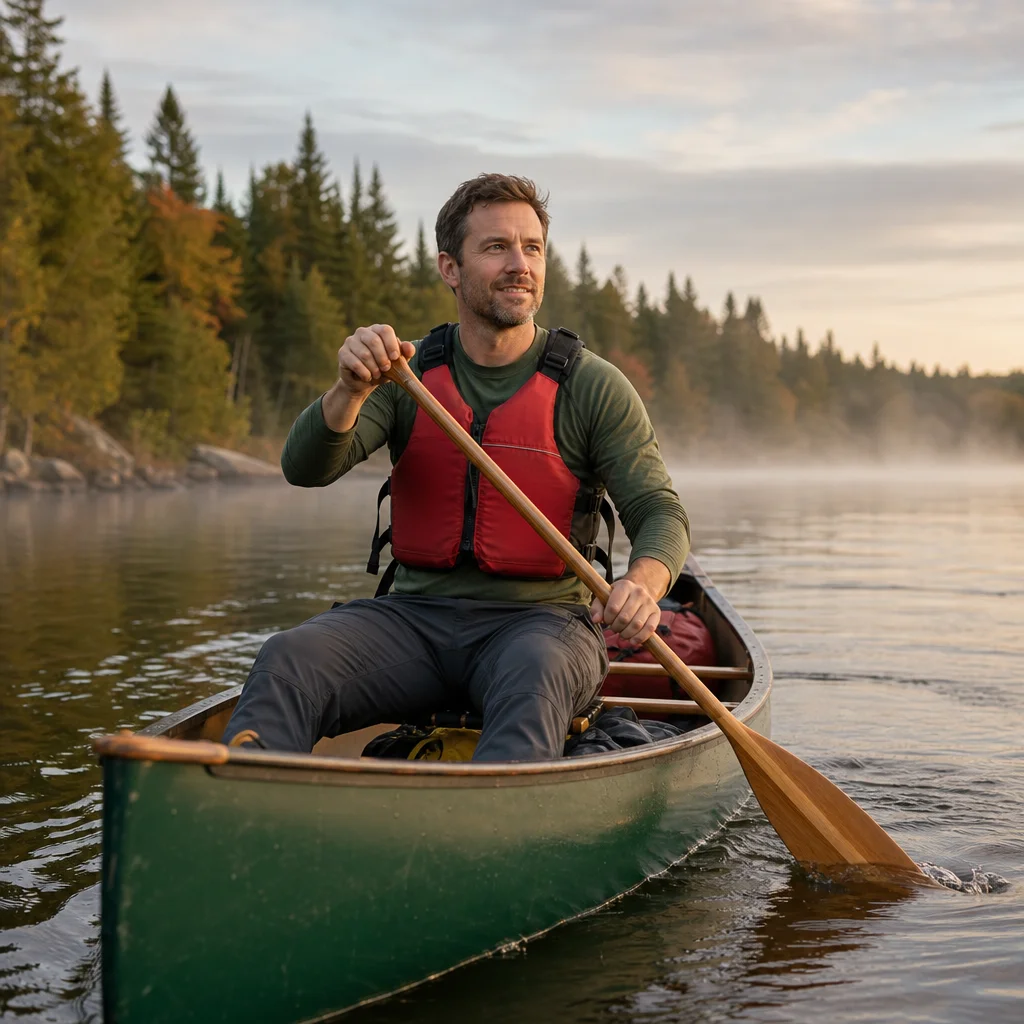
Taking a dog canoeing for the first time is less about teaching the dog to paddle than deciding whether the dog can stay calm in a small, moving boat. A rushed launch, an excited dog, or too much gear can make a simple outing unnecessarily difficult.
The safest approach is to treat the first trip as a controlled test. Introduce the canoe on land, bring only the essentials, choose forgiving water, and keep the outing short enough that you can finish while things are still going well.
Decide Whether Your Dog Is Ready
A canoe is a confined space with unfamiliar movement, noise, and limited traction. Some dogs settle quickly. Others pace, lean over the side, bark at wildlife, or try to jump out when the boat moves.
Before planning a launch, look at how your dog handles these situations:
- New environments and unusual surfaces
- Being close to water
- Wearing a properly fitted flotation vest
- Staying in one place for several minutes
- Sudden movement or mild rocking
- Waiting calmly while you handle equipment
A dog doesn’t need to be perfectly obedient, but a reliable response to “sit,” “stay,” “come,” or an equivalent cue is useful. The most important quality is recoverability: after a small surprise, can the dog settle again rather than escalating into frantic movement?
Size alone doesn’t determine suitability. A small dog can still destabilize a canoe if it darts from one end to the other, while a large, calm dog may be manageable in a boat with enough room. Consider your dog’s body shape, energy level, swimming ability, age, and health—not just its weight.
A dog that is elderly, injured, highly anxious, or prone to motion sickness may need a different kind of outing. Ask a veterinarian about relevant health concerns, especially if the dog has breathing, joint, heart, or heat-tolerance problems.
Introduce the Canoe on Shore
Don’t make the launch the first moment your dog sees the canoe. Put the canoe on stable ground and let the dog investigate it without pressure. Keep the first session brief and calm.
Start with the canoe upright and empty. Reward the dog for looking at it, walking near it, and eventually stepping inside. You can use treats, praise, or a favorite toy, but avoid dragging or lifting the dog into the hull unless there is a clear safety reason.
Once the dog is comfortable, practice a few simple routines:
- Step into the canoe when invited.
- Settle in a designated spot.
- Remain there while you touch the gunwales and move a paddle.
- Exit only when released.
- Repeat the exercise with the flotation vest on.
A short session that ends calmly is more useful than a long session that produces resistance. If the dog pants heavily, freezes, scrambles, or repeatedly tries to escape, stop and try again another day with less difficulty.
Next, create gentle movement while the canoe remains on shore. Rock it slightly by holding the gunwales, then pause and reward calm behavior. The goal isn’t to make the dog tolerate large movements. It’s to introduce the sensation gradually so the first launch isn’t a complete surprise.
Keep the Gear Minimal
Extra equipment takes up room, creates loose items, and can make the canoe harder to balance. For a first outing, pack only what supports control, comfort, and a safe return.
Useful essentials usually include:
- A properly fitted dog flotation vest with a sturdy handle
- A leash for land use and launch control
- Fresh water and a collapsible bowl
- A small towel or nonslip mat
- Waste bags
- A basic first-aid kit appropriate for people and pets
- A dry bag for keys, phone, and other essentials
- Food or treats in a sealed container
The flotation vest should fit snugly without restricting breathing or movement. A handle is helpful if you need to lift or steady the dog, but it isn’t a substitute for supervision or swimming ability. Don’t leave a leash trailing from the dog while the canoe is moving; it can snag on equipment or vegetation.
A nonslip surface is particularly useful. A wet canoe floor can be unstable for paws, and a dog that keeps sliding may stand, reposition, and shift its weight repeatedly. A small, secured mat can give the dog a clear place to settle without filling the hull with bulky bedding.
Bring water even if you expect to be on a freshwater lake or river. Dogs may drink contaminated water, swallow water while swimming, or become thirsty from heat and exertion. Avoid relying on the dog’s ability to find its own drinking source.
Arrange the Load for Stability
The dog should have a defined position, and you should be able to reach the paddle and essential gear without leaning awkwardly. Keep the heaviest items low and near the canoe’s center, secured so they can’t roll or slide.
Where the dog sits depends on the canoe, the paddler arrangement, and the dog’s size. In a tandem canoe, a calm dog may ride in the middle area or at the feet of the front paddler if there is enough room and the position doesn’t interfere with leg movement. In a solo canoe, the dog’s position may need to counterbalance your own weight.
Avoid placing the dog on top of loose bags or unstable gear. Don’t let the dog move freely from bow to stern. Each crossing changes the boat’s trim and can make the canoe feel unexpectedly tippy.
Before launching, sit in the canoe with the dog and all essential gear. Check whether you can paddle normally, reach the dog, and get out without stepping on equipment. If the canoe feels crowded on land, it will feel more crowded on the water.
Choose a Low-Consequence First Outing
The first trip should be short enough that you can return before the dog becomes tired, cold, overheated, or overstimulated. Choose a sheltered launch with easy access and calm conditions. A small, familiar body of water is generally a better test than a remote river, open lake, or route with strong current.
Look for:
- A simple launch and landing area
- Minimal boat traffic
- Little or no current
- Protected water with limited wind exposure
- A nearby route back to shore
- A place where dogs are permitted
- A weather forecast with a comfortable margin for change
Plan the outing around an easy exit rather than a mileage goal. You may paddle for only a few minutes, return to shore, and still have a successful first session. The purpose is to learn how the dog behaves in the canoe—not to complete a particular route.
Give the dog a chance to relieve itself and walk calmly before loading. Avoid feeding a large meal immediately before paddling if your dog is prone to motion sickness, but follow your veterinarian’s advice for dogs with specific dietary or medical needs.
Check the launch rules and conditions: Before you leave, confirm current local requirements for dogs, flotation equipment, leash use, access fees, water conditions, and any restrictions at the launch or destination. Rules differ among parks, waterways, provinces, states, and municipalities.
Manage the Launch and Landing
The launch is often the most awkward part of the trip. One person should control the canoe while the other manages the dog when possible. If you’re alone, keep the process simple and choose a launch that allows you to stabilize the boat before bringing the dog aboard.
Put the dog’s flotation vest on before approaching the water. Load the dog only after the canoe is steady, and keep the dog’s position consistent. Once seated, give the dog a brief chance to settle before pushing away from shore.
Landing deserves the same care. Bring the canoe alongside the shore, stabilize it, and release the dog only when you can prevent an uncontrolled leap. A dog jumping early can swamp or destabilize a canoe, even in shallow water.
Never assume a dog will understand that the canoe is the safest place to be. If the dog jumps out, stay calm, secure the paddle and canoe, and use the vest handle if you need to assist the dog. Don’t wrap a towline or leash around the dog, canoe, or your body.
Watch for Trouble Early
Early warning signs may include constant standing, pacing, whining, shaking, excessive panting, drooling, repeated attempts to climb out, or an inability to respond to familiar cues. These signals can indicate fear, heat, motion sickness, or simple fatigue.
If the dog is unsettled, head toward shore while you still have energy and room to maneuver. Don’t wait for the behavior to become dangerous. A short, uneventful return is a better foundation for the next attempt than pushing through distress.
Watch your own position, too. If you’re repeatedly twisting to hold the dog, reaching over the gunwale, or bracing against sudden movement, the arrangement needs to change. You should be able to paddle and control the canoe without sacrificing your own balance.
Build Up Gradually
After a successful first test, increase only one difficulty at a time. You might stay on the same water and paddle longer, or visit a new launch while keeping the outing short. Avoid changing the location, weather, distance, traffic, and duration all at once.
Keep the same mat, vest, settling position, and launch routine when possible. Familiarity helps the dog understand what is expected. If the dog struggles on a later trip, return to the last setup that worked instead of assuming the dog has permanently rejected canoeing.
For most first-time dog passengers, the minimalist setup is the reliable one: a calm dog, a fitted flotation vest, a nonslip place to settle, drinking water, basic safety items, and a route with an easy exit. Everything else can wait until the dog has shown that it can ride quietly and safely.
Practical Next Steps
Before your first launch, run through this short checklist:
- Has your dog calmly entered and exited the canoe on shore?
- Can the dog settle while the canoe moves slightly?
- Does the flotation vest fit and stay in place?
- Is the dog’s position clear and free of loose gear?
- Can you paddle, steer, and reach the dog without leaning dangerously?
- Is the route short, sheltered, and easy to abandon?
- Have you checked current local access rules and conditions?
If any answer is no, postpone the water outing and simplify the preparation. The first canoe trip doesn’t need to be impressive. It needs to teach both of you that the canoe is a controlled, comfortable place to spend time together.