Introducing Children to Canoeing Without Making Them Sit Still for Hours
Children enjoy canoeing when the outing matches their attention span, comfort, and abilities. I’ll show how short routes, meaningful jobs, shore breaks, and simple safety habits fit together into a calmer first experience.
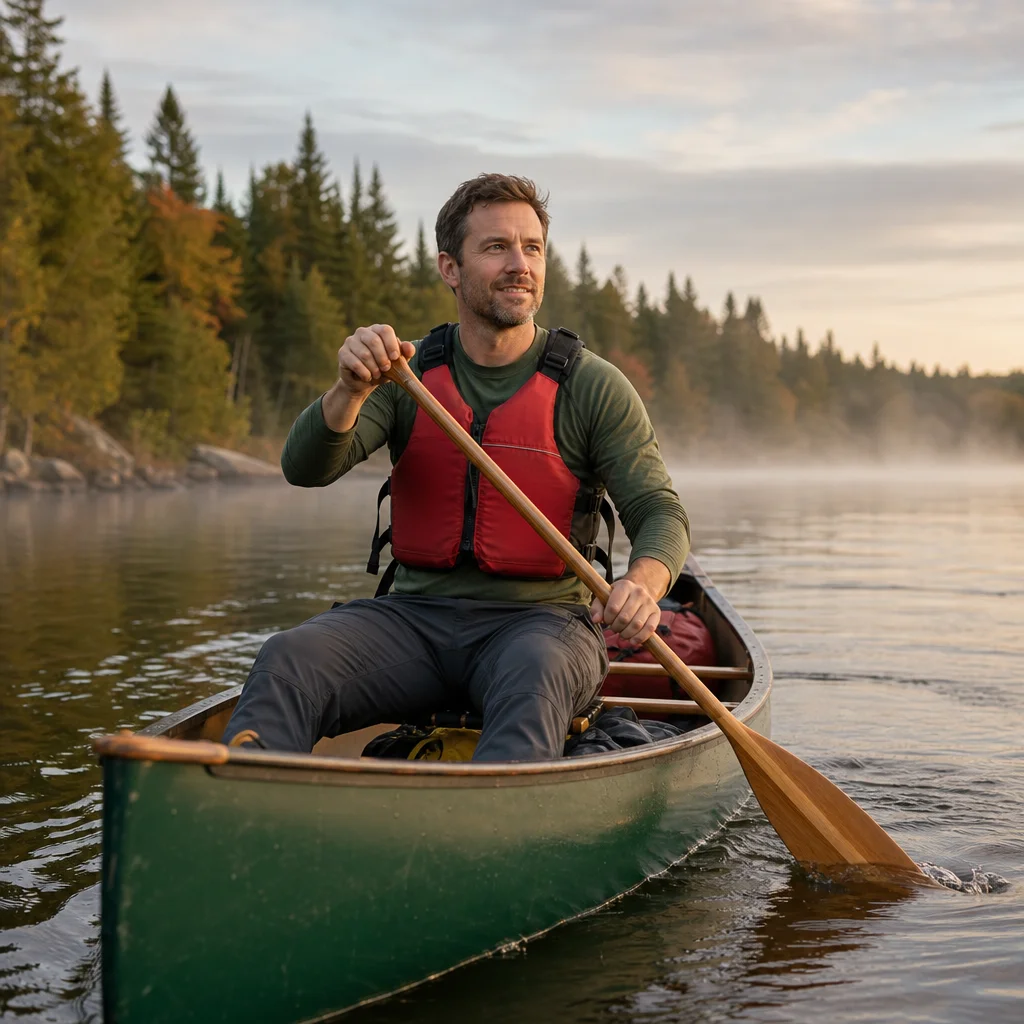
The biggest mistake when introducing children to canoeing is treating a family outing like an adult trip with smaller passengers. A long route, steady paddling, and hours away from shore may sound manageable to a caregiver, but a child can become bored, uncomfortable, hungry, cold, or restless well before the canoe reaches its destination.
A better first outing is short, flexible, and built around participation. The goal isn’t to cover impressive mileage. It’s to help children associate the canoe with curiosity, manageable challenges, and time together on the water.
Start with the outing, not the distance
For a first trip, choose a route where you can turn back or land easily. A protected pond, calm section of a lake, or slow-moving water with accessible shorelines is usually more forgiving than a remote route or exposed crossing.
Plan in minutes rather than miles. Children may enjoy ten minutes of paddling, a look at a frog, and a snack on shore more than a continuous hour in the canoe. A short outing also gives you a useful way to learn how the child responds to motion, heat, spray, and the constraints of a small boat.
Keep the first trip deliberately modest:
- Choose a launch close to the vehicle or an easy landing spot.
- Allow time for exploration on shore before and after paddling.
- Avoid making the outing depend on reaching a particular destination.
- Leave enough time to return before everyone is tired.
- Have a backup plan if weather, mood, or comfort changes.
I’d rather end a first trip while the child is still interested than continue until everyone is frustrated. A successful short outing creates a better reason to go again than an ambitious trip that ends in tears.
Give children real jobs
Children are more likely to stay engaged when they have a role that matters. The role should be appropriate to their age and the conditions, but it doesn’t have to involve powerful or technically correct paddling.
You might ask a child to:
- Help choose between two safe shore stops.
- Hold a sponge or small bailer where it can’t be dropped overboard.
- Look for birds, turtles, interesting rocks, or floating objects.
- Help count paddle strokes for a short game.
- Point out landmarks on the return route.
- Decide when it’s time for a water or snack break.
- Practice placing a paddle across the canoe when asked.
Older children may be ready to learn basic strokes, but instruction works best in short pieces. Demonstrate one movement, let them try it, and then stop before correction becomes the main activity. A child who splashes, paddles backward, or makes the canoe turn in circles is still learning how the boat responds.
Avoid giving a child a job that creates a safety problem. They shouldn’t stand in the canoe, move around suddenly, reach far over the side, or handle equipment that could interfere with steering. Participation should increase attention and confidence, not reduce stability.
Build breaks into the plan
A shore break shouldn’t be treated as a failure of the paddling portion. For many children, it’s the part that makes the outing enjoyable.
Look for a route with realistic landing options before you launch. On shore, children can stretch, eat, examine natural features, and reset without the canoe’s limited space. Even a five-minute pause can prevent the restlessness that leads to rocking, arguing, or unsafe movement.
Use breaks before the child is exhausted. Warning signs include repeated requests to go home, slumping, irritability, shivering, unusual quietness, complaints of headache or nausea, or difficulty following simple instructions. Hunger and heat can look like bad behavior, so respond to the underlying need first.
Keep food simple and secure. Small portions that are easy to eat are less distracting than a complicated meal. Pack water where an adult can reach it without asking a child to lean or move suddenly. A sealed container helps keep snacks from becoming wet or turning the canoe floor into a slippery surface.
Make comfort part of safety
Children often have less tolerance for cold, heat, wind, and wet clothing than adults expect. A calm-looking day can still feel chilly when a child is sitting still, and sun reflecting off the water can make a mild outing feel intense.
Dress for the conditions and the possibility of getting wet. Depending on the season, useful items may include:
- A properly fitted, approved personal flotation device (PFD) worn throughout the outing.
- Quick-drying clothing and a warm layer kept in a dry bag.
- Sun protection, including a hat, sunscreen, and shade when available.
- Water and familiar snacks.
- A towel and complete change of clothes stored away from splashes.
- Insect protection suited to the child and the local conditions.
A PFD should fit the child according to its manufacturer’s size and weight guidance, with all fasteners secured. Test the fit on land and make sure it doesn’t ride up over the face when gently lifted at the shoulders. Don’t substitute an inflatable pool toy or casual water float for a child’s PFD.
Check your local child-boating requirements: Before launching, confirm current PFD, age, equipment, and boating rules with the relevant state, provincial, territorial, or local authority. Requirements vary across North America and may differ by waterway, vessel, and child’s age.
Comfort also affects judgment. If a child is cold, overheated, frightened, or motion-sick, the right response is to shorten the trip and get comfortable—not to persuade them to endure it because the plan is already underway.
Explain a few rules before launch
Children don’t need a long safety lecture. They do need a small number of rules they can remember and repeat.
Before getting in, explain that:
- Everyone keeps their PFD on while near or in the water.
- Everyone stays seated unless an adult has brought the canoe to shore and says it’s safe to move.
- Paddles stay in the canoe unless an adult gives permission to use them.
- A child tells an adult immediately if they feel cold, sick, scared, or uncomfortable.
- The adult decides when to land, turn around, or stop.
Practice the most important behavior on shore: how to get in, where to sit, how to keep hands inside the canoe, and how to stay still while the boat is moving. If you plan to let a child paddle, show them where the paddle can go when they’re finished.
Use calm, specific instructions during the outing. “Keep your bottom on the seat” is easier to follow than “Be careful.” “Put both hands on the paddle” gives a child a clear action instead of a general warning.
Avoid common planning mistakes
Mistake: choosing a route for the adults
A scenic route that requires steady paddling for several hours may be enjoyable for experienced adults but unsuitable for a child’s first outing. Choose the route based on the youngest participant’s likely comfort and the easiest way to leave the water.
Mistake: assuming swimming ability solves every problem
A child who can swim still needs a PFD and close adult supervision around a canoe. Swimming ability doesn’t prevent cold stress, panic, injury, or separation from the boat. It also doesn’t make capsizing predictable or convenient.
Mistake: relying on entertainment screens
A phone may keep a child occupied briefly, but it can distract from instructions and is easy to damage. Simple observation games usually fit the setting better: find three bird calls, identify changing colors along the shore, or notice how the paddle changes the canoe’s direction.
Mistake: packing too much gear and too little flexibility
Extra equipment can crowd the canoe and make movement more difficult. Prioritize flotation, weather protection, water, food, communication, and a way to manage minor problems. Leave room for the child to sit comfortably and for an adult to handle the canoe.
Mistake: making the child paddle continuously
Paddling is tiring and repetitive, especially for smaller arms. Treat it as an activity to sample rather than a duty. Let the child paddle for a short stretch, then switch to observing, resting, or helping with a simple task.
Mistake: treating a refusal as misbehavior
A child who refuses to get in, wants to land, or becomes upset may be communicating a real concern. The water may feel unfamiliar, the canoe may be unstable from their perspective, or the weather may be uncomfortable. Listen, investigate, and be willing to stop.
Let confidence build in stages
The next outing can add one new challenge, not five. After a comfortable short trip, you might try a slightly longer stay on protected water, a new landing, or a few minutes of basic paddling practice. Keep the familiar parts—similar launch routine, known snacks, and predictable safety rules—while changing only one major variable.
A simple progression might look like this:
- First outing: shore exploration, a brief paddle, and an easy return.
- Second outing: a little more time on the water with a planned shore break.
- Later outings: short navigation games, basic strokes, or a new calm location.
- More advanced trips: only after the child can stay comfortable, follow instructions, and respond reliably to changing conditions.
There’s no requirement to move quickly. Some children want to paddle immediately; others need several visits before the canoe feels familiar. Both responses are normal.
A simple pre-launch checklist
Before leaving the shore, I’d confirm:
- Is the water and weather appropriate for the least experienced person?
- Can we reach shore quickly from the planned route?
- Does the child’s PFD fit correctly and stay on?
- Do we have water, food, weather-appropriate clothing, and dry storage?
- Does the child know the few rules that matter most?
- Can we end the outing without depending on the child to remain cheerful or cooperative?
If the answer to the last question is no, shorten the plan or choose a more accessible location.
Introducing children to canoeing works best when the canoe is only one part of the experience. Short paddling periods, meaningful jobs, comfortable clothing, shore time, and clear boundaries give children several ways to enjoy the outing. Start close to shore, stop while the day is still going well, and let each trip provide the information you need for the next one.