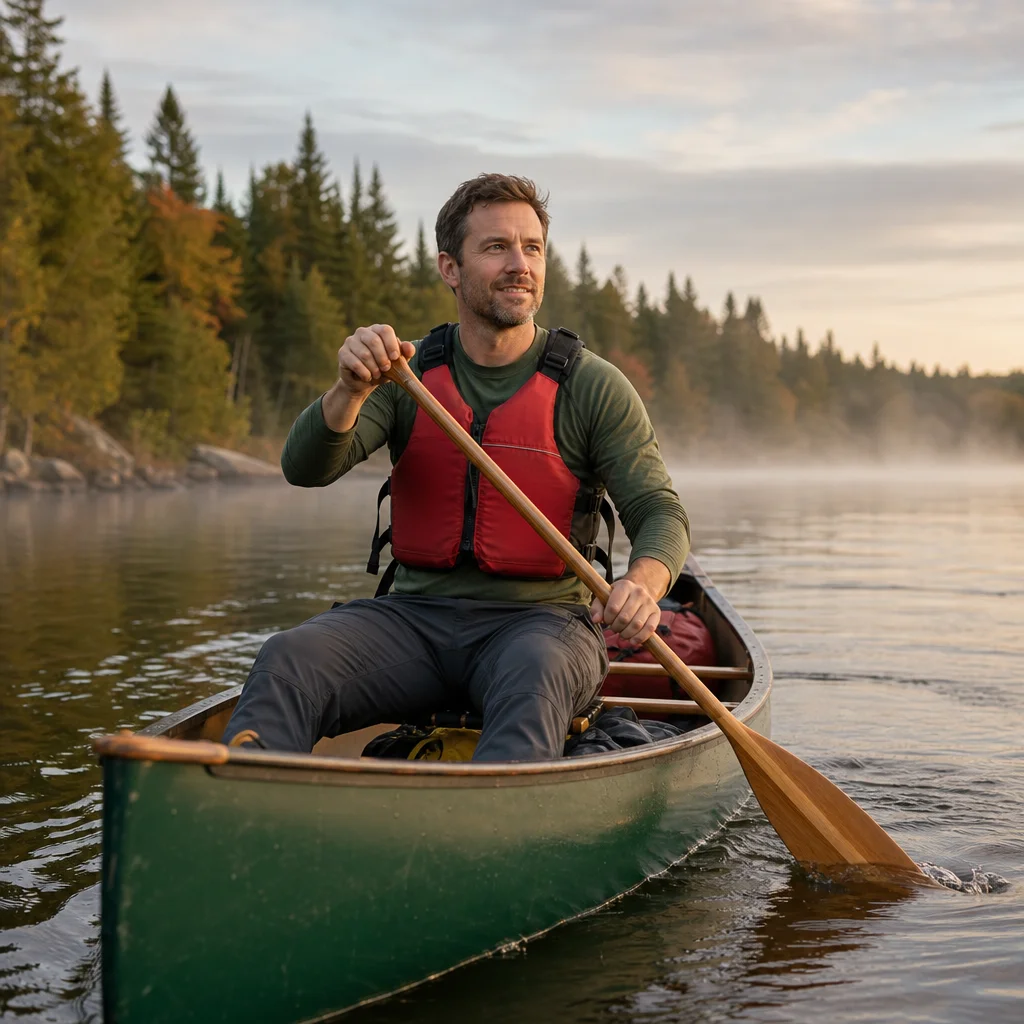
I'll explain how to avoid the common mistake of dressing only for the launch temperature, with a flexible canoeing system for changing forecasts, cold water, rain, and the awkward problem of wet gear.
Read article →
Staying with the canoe is usually more useful than rushing for shore, but the safest choice depends on injuries, current, and water temperature. I’ll walk through a calm recovery sequence that protects people, gear, and your remaining options.
Read article →
Drying gear in full sun and packing it wet are both poor options when tomorrow’s launch is close. I’ll show you how to triage, clean, dry, and repack canoe-camping equipment when time and weather are working against you.
Read article →
Changing forecasts are easier to manage when departure limits, update times, and retreat options are decided in advance. I’ll show how to connect forecast uncertainty with your route, group, and canoe so you can make a calm, resource-efficient call.
Read article →
I’ll compare shoreline piloting, compass bearings, and phone or GPS navigation so you can choose the right approach when a large lake’s islands and bays start to look identical. You’ll learn how to confirm position without treating any one tool as foolproof.
Read article →
A pry stroke works best when body position, paddle leverage, and timing share the load instead of your knees. I’ll explain how to make the correction, recognize when it’s too forceful, and switch to a gentler option when the canoe needs more control.
Read article →
A canoe’s thwart can offer a useful point of contact during boarding or landing, but only when you treat it as a light steadying aid rather than a ladder rung. I’ll explain where to place your hand, how to shift your weight, and when another approach is safer.
Read article →
When a two-day paddle leaves no room for a cooler, food still has to be filling, simple, and tolerant of heat. I’ll lay out a compact shelf-stable menu with portions, cooking and cleanup strategies, and choices that hold up between launches.
Read article →
A loaded tandem canoe turns best when trim, momentum, and paddler roles work together instead of against one another. I’ll explain how to coordinate the bow and stern, use a controlled lean, and make turns with less effort and fewer surprises.
Read article →
A short portage can be quick for adults but lengthy with children, rest stops, and gear shuttles. I’ll show you how to build a realistic time estimate without making the outing feel like a race.
Read article →