How Much Time Should You Leave for a Canoe Portage With Children?
A short portage can be quick for adults but lengthy with children, rest stops, and gear shuttles. I’ll show you how to build a realistic time estimate without making the outing feel like a race.
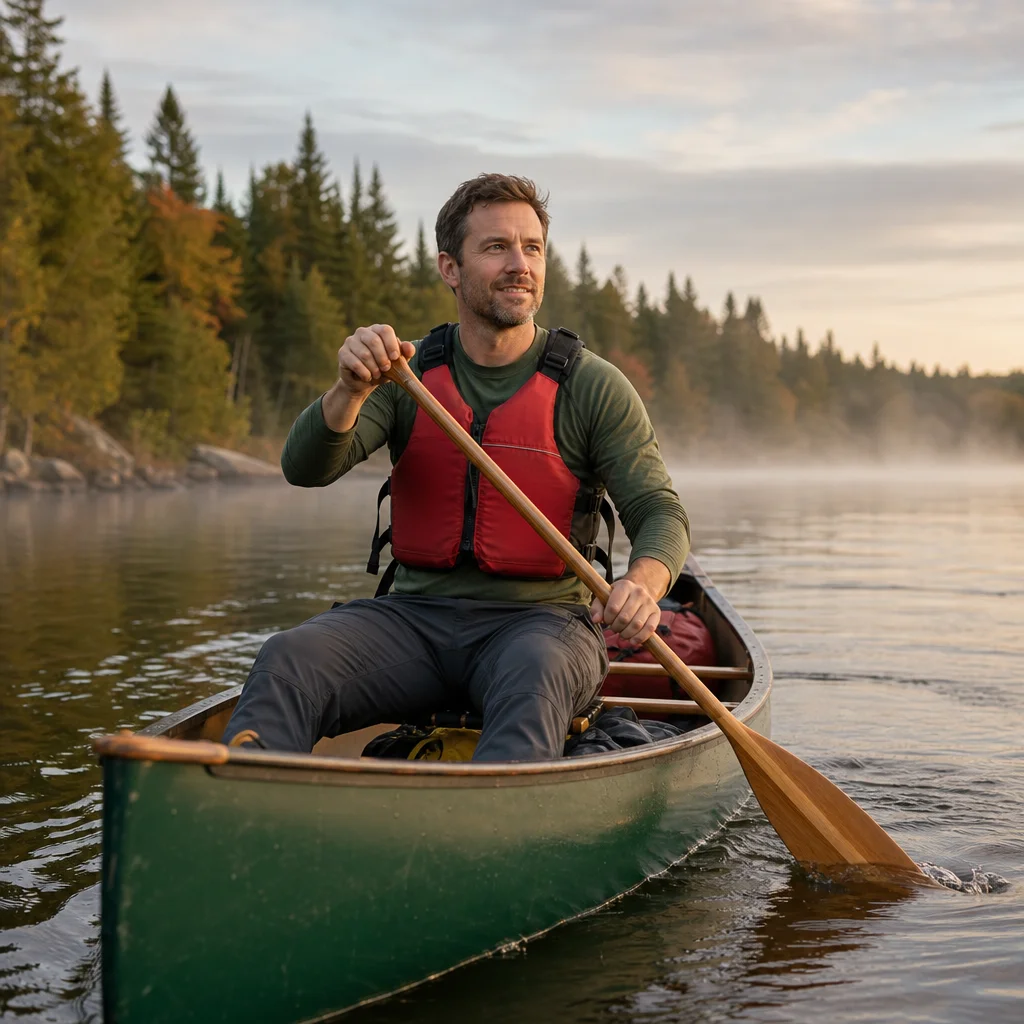
A portage that takes an adult paddler 20 minutes can take a family much longer. Children need breaks, gear rarely moves in one trip, and the trail may include mud, roots, steep slopes, or an awkward canoe launch at the far end.
The goal isn’t to predict the exact minute you’ll reach the other side. It’s to create enough margin that a normal delay stays normal instead of turning into a rushed, tiring, or unsafe section of the trip.
Start With the Adult Moving Time
Portage signs and route descriptions often list a distance, but not the time required. Begin by estimating how long a reasonably fit adult would take to walk the trail while carrying one load.
A rough walking pace on a smooth, level trail might be about 15 to 20 minutes per mile without a canoe. A canoe carry is slower. Uneven ground, a heavy boat, and the need to watch footing can make a short portage feel substantially harder than its distance suggests.
For planning, use the trail’s character rather than distance alone:
- Easy and level: about 15 to 25 minutes per mile with a manageable load
- Moderately rough: about 25 to 40 minutes per mile
- Steep, rocky, muddy, or root-covered: 40 minutes per mile or more
These are starting points, not promises. A 100-yard trail with a steep rock step may take longer than a flat quarter-mile path.
If you already know the route, use your own moving time as the baseline. If you don’t, use the route description, map contours, photographs, and recent local reports to choose a conservative estimate.
Account for Multiple Carries
Most families can’t move a canoe, paddles, packs, and safety equipment in one trip. The number of carries is usually the biggest reason a portage estimate goes wrong.
A simple formula is:
Portage time = walking time × number of loaded trips, plus loading, unloading, and regrouping time.
For example, imagine a 400-yard portage that takes an adult about 8 minutes to walk while carrying the canoe or a pack. If the family needs three loaded trips, the walking portion alone is approximately 24 minutes. Add time to set down and pick up loads, turn around, help children, and organize equipment, and the actual portage may be closer to 35 or 45 minutes.
The return trips matter even when they’re unloaded. A person carrying the canoe to the far end still has to walk back for the next load. If children are too young to wait safely at one end, an adult may need to escort them, which changes the whole calculation.
Before the trip, list the loads you expect to carry:
- Canoe
- Main packs
- Food and cooking equipment
- Small dry bags and loose items
- Paddles, personal flotation devices, and other equipment
Then decide which loads can be combined without making them too heavy or unstable. Fewer trips save time, but an overloaded pack or awkward canoe carry can increase fatigue and the risk of a fall.
Use a Family Multiplier
Children don’t need to be treated as a problem to be solved. They simply change the pace and logistics of the group. A family estimate should include their walking speed, curiosity, fatigue, and need for supervision.
As a broad planning method, take the adult-only moving estimate and apply a multiplier:
- Children who walk steadily and carry small items: 1.5 times the adult estimate
- Mixed ages, frequent breaks, or moderate terrain: 2 times the adult estimate
- Toddlers, steep terrain, or a group needing close supervision: 2.5 times the adult estimate or more
Apply the multiplier to the whole portage process, not just the first walk. If adults must make several trips and children can’t safely remain at either end, the family may need to travel together for every movement of gear.
For instance, an adult-only estimate of 30 minutes might become 45 minutes for an experienced family with older children. With younger children and three loads, planning for 60 to 90 minutes may be more sensible.
The multiplier isn’t a test of how athletic your family is. It’s a way to make room for the things that happen on nearly every family outing: someone needs a drink, a boot comes off, a stick becomes briefly important, or the group stops to figure out which trail continues toward the water.
Add Planned Rest Stops
A rest stop is easier to manage when it’s part of the plan rather than a sign that something has gone wrong.
For a short portage, allow one brief break after the first loaded trip or midway through the carry. For a longer or difficult trail, plan a break approximately every 15 to 20 minutes of active walking, adjusting for the children’s ages and the weather.
A useful break doesn’t have to be long. Five to ten minutes may be enough for water, a snack, a quick check of footwear, and a calm regroup. Add more time if the trail is hot, exposed, steep, or especially demanding.
Keep snacks and water accessible rather than buried in the largest pack. A child who has to wait while an adult unpacks everything is more likely to become tired and impatient before the break even starts.
Plan for the Slowest Safe Pace
The right pace is the fastest pace at which everyone can move with reliable footing and enough attention for the terrain. That may be much slower than the adult carrying the canoe would prefer.
Children can trip when they’re tired, distracted, or trying to keep up. Adults carrying boats or heavy packs also have less ability to react quickly. Leave room for the group to stop before a steep section, cross a slippery area one person at a time, or adjust a load that is shifting.
If the portage includes a steep descent to the water, budget extra time at the end. The final few yards may involve a slippery bank, rocks at the shoreline, or a canoe that needs to be lowered and turned before it can be launched.
Confirm the portage before departure: Check the current map, park or land-manager information, and recent local conditions for closures, washed-out sections, water levels, hazards, and any group or camping rules that could affect your timing. Conditions and regulations can change even when a route description looks familiar.
Build in a Delay Buffer
After estimating walking, carries, breaks, and loading time, add a buffer. For a straightforward short portage, 15 to 20 minutes may be enough. For a longer route, an unfamiliar trail, or a family with young children, adding 25 to 50 percent is more realistic.
Here’s one example:
- Adult moving time for one loaded trip: 8 minutes
- Three loaded trips: 24 minutes
- Unloaded returns and gear handling: 12 minutes
- Two family breaks: 15 minutes
- Loading and launching at both ends: 15 minutes
- Delay buffer: 15 minutes
Estimated total: about 80 minutes
The exact numbers will vary, but writing them down exposes the parts of the estimate that are easy to overlook. It also makes it easier to decide whether the portage fits the day’s route.
Decide Whether to Change the Plan
A realistic estimate may show that the portage is manageable—or that it doesn’t belong in this particular outing.
Consider shortening the route, paddling from a different launch, choosing a lighter gear setup, or making the portage the main activity rather than one section of a long day. A portage that takes 90 minutes might be perfectly reasonable early in the morning, but a poor choice late in the afternoon after several hours on the water.
Also consider the return trip. If the route requires the same portage on the way back, count it again. Families sometimes plan the outbound carry carefully and treat the return as an afterthought, even though everyone may be more tired and the light may be fading.
A Simple Family Portage Checklist
Before committing to the route, ask:
- How long would an adult take to walk the trail with one load?
- How many loaded trips are actually required?
- Can the children safely wait at either end, or must the group stay together?
- Where will breaks happen, and how much water and food will be accessible?
- Is the terrain likely to slow the group beyond its distance suggests?
- Have loading, unloading, and launching time been included?
- Is there enough daylight and energy for the portage in both directions?
- What is the plan if a child becomes tired or the weather changes?
The best estimate is the one that leaves your family with choices. If everyone arrives with enough energy to drink, eat, and enjoy the next stretch of water, the extra margin was worthwhile. Start with the adult walking time, multiply for the real group and terrain, count every load, and add more buffer than your optimistic calculation says you need.