How to Plan a Canoe Trip Around Parking, Portages, and Pickup Time
I’ll show you how to plan beyond the waterline so a canoe trip doesn’t unravel at a locked gate, an underestimated portage, or a pickup vehicle that arrives after dark. The worksheet approach helps you match access, carrying effort, and timing before launch day.
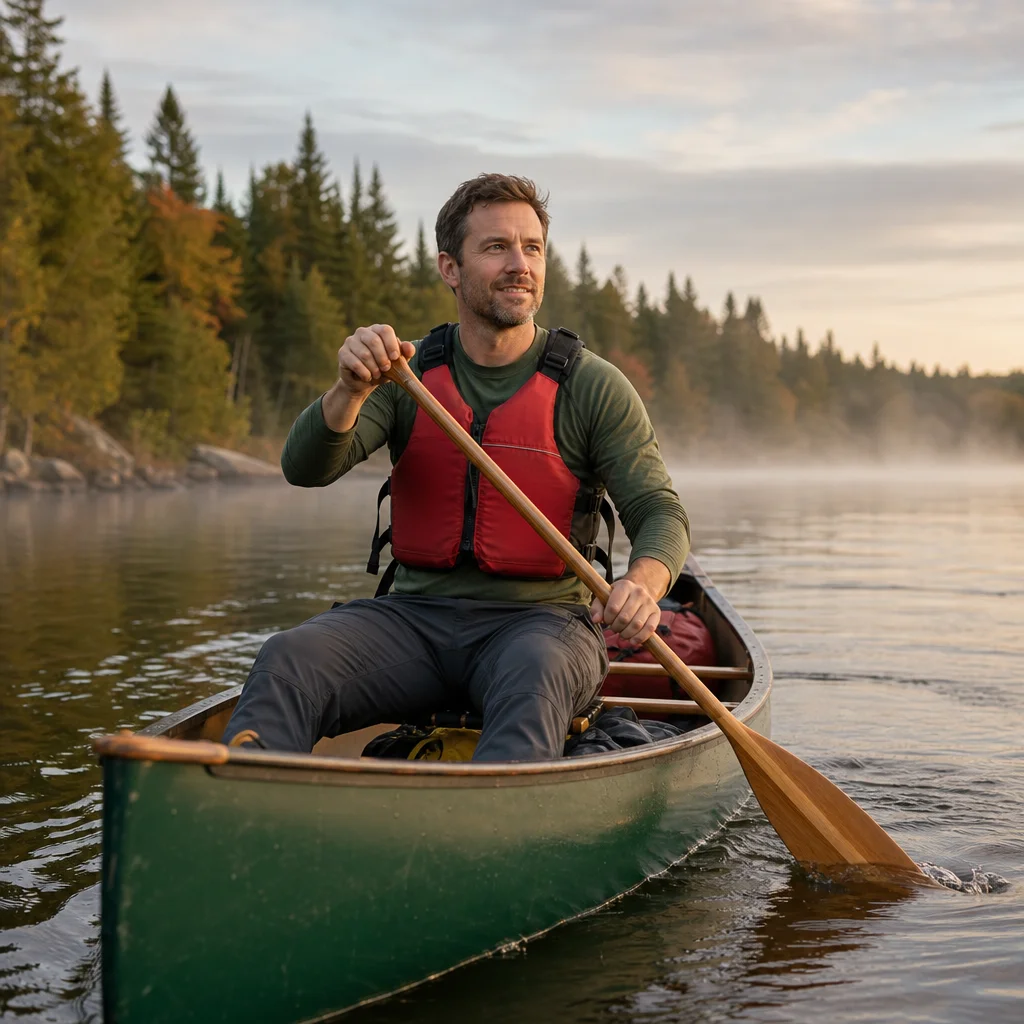
A canoe route can look short on a map and still become a logistical puzzle. The launch may be a long walk from the parking area, the portage may take several trips, and the vehicle needed at the takeout may be delayed by a dead zone, a locked gate, or a driver who underestimated the return time.
I plan these details as part of the route rather than as errands around it. That means treating parking, carrying, and pickup as connected parts of the trip—and building a schedule that still works when one part takes longer than expected.
Start with the route’s access points
Before judging whether a route fits a day, identify four locations:
- Launch parking: Where the canoe and gear enter the water.
- Takeout parking: Where the canoe and gear leave the water.
- Portage entrances and exits: Every place the boat must be carried, not just the longest carry.
- Backup access: A realistic alternate launch, takeout, or exit if the planned endpoint becomes impractical.
A map pin isn't necessarily a usable access point. A marked landing may be reached by a rough road, a private drive, a seasonal road, or a trail that separates the parking area from the water. Look for the final approach, not just the destination symbol.
Record the following for each access point:
| Item | Launch | Takeout | Backup |
|---|---|---|---|
| Road and surface | |||
| Parking distance from water | |||
| Gate or access hours | |||
| Space for the vehicle | |||
| Cell service or contact option | |||
| Fees, permits, or restrictions | |||
| Alternative if unavailable |
This catches a common mistake: planning a one-way route when the actual transportation problem is still a round trip. If one vehicle must be moved from the launch to the takeout, the route needs a shuttle plan. If two vehicles are available, both parking locations need to be safe and legal for the planned duration.
Confirm the access details: Before leaving, check the managing agency, landowner, or facility for current gate hours, parking rules, permits, fees, seasonal closures, and overnight restrictions. These details can change even when the water route hasn't.
Measure the carry, not just the portage
A portage distance is usually quoted as a single number, but the real effort includes loading, walking, unloading, and returning for more gear. A short carry can be awkward if it is steep, muddy, rocky, or crowded with equipment. A longer, level trail may be easier to schedule.
For each portage, note:
- approximate distance;
- surface and elevation changes;
- narrow, wet, or slippery sections;
- whether the canoe can be carried comfortably by one person;
- whether paddlers will need multiple trips;
- space to stage gear without blocking other users;
- distance between the water and the actual trailhead.
Then estimate the number of carries. For example, a group with one canoe might make these trips:
- carry the canoe;
- carry paddles and personal gear;
- return for remaining supplies, if necessary;
- return to retrieve a pack or loose item left at the starting point.
That is four walking legs for a single portage, not one. If the route requires two people to carry the canoe, the number of person-trips changes, but the elapsed time may not fall as much as expected because gear still has to be moved and staged.
A simple planning formula is:
Portage time = loading and staging + forward carries + return walks + unloading and relaunching
Use a range rather than a precise guess. For instance, estimate 25 to 40 minutes for a portage based on the group’s equipment and conditions. Schedule the longer figure, then keep the shorter figure as useful margin. If a route contains several carries, add them individually. Small optimistic errors become a large late afternoon.
Separate paddling time from transport time
A route planner often calculates paddling distance and stops there. A day-trip schedule should include every period when the canoe isn't moving through the water.
Create a basic time budget:
| Activity | Planned time |
|---|---|
| Drive to launch | |
| Parking, unloading, and staging | |
| Launch and orientation | |
| Paddling | |
| Portages and carries | |
| Meals, rests, and navigation checks | |
| Weather or group-delay margin | |
| Takeout and loading | |
| Drive or shuttle to the other vehicle |
Paddling speed varies with wind, current, boat load, skill, and how often the group stops. A loaded canoe moving into a headwind shouldn't be scheduled like an empty boat on calm water. If the trip includes a narrow channel, a large lake crossing, or a route-finding section, give that portion its own margin rather than hiding it inside one average speed.
The same principle applies to the end of the day. Takeout isn't complete when the bow touches shore. You may need to carry gear up a slope, secure the canoe, change clothes, load the vehicle, return for forgotten equipment, and drive to the second vehicle. Those tasks are especially slow when everyone is tired.
Build the pickup plan backward
Pickup time should be calculated from the latest sensible arrival, not from the hoped-for paddling finish.
Start with the time you need to be at the launch or parking area after the trip. Work backward through:
- the drive from the takeout to the launch vehicle;
- loading and securing the canoe;
- the takeout carry;
- the planned water time;
- breaks and portages;
- the launch setup;
- the drive to the launch.
For example, suppose the launch parking area is 45 minutes from the takeout. Add time to load at the takeout and allow for a slow road, a wrong turn, or a brief stop. If that transfer needs 70 minutes in a realistic estimate, a 4:30 p.m. launch-vehicle return target means the canoe must be ready to leave the takeout well before 3:20 p.m. The water portion must end earlier still.
This backward calculation exposes routes that seem possible only because the pickup has been treated as free time.
Use three arrival times
I find it useful to write down three separate times:
- Target arrival: when the group expects to reach the takeout.
- Latest comfortable arrival: when there is still daylight, energy, and enough time to load and move the vehicle without rushing.
- Hard stop: the time when the group must change plans, turn around, or use the backup exit.
The hard stop should account for conditions that make the final section slower, such as fading light, wind, cold, a tired paddler, or an unfamiliar landing. It shouldn't be the moment when the group is already overdue.
Share these times with everyone, including the person handling pickup. A vague instruction such as “meet us late afternoon” leaves too much room for different interpretations.
Plan for vehicle problems and late arrivals
A pickup plan can fail even when the paddling plan is sound. Consider what happens if:
- the driver is delayed by road construction or a flat tire;
- the takeout is occupied or difficult to identify;
- the vehicle is parked farther from the water than expected;
- a gate closes before the group reaches it;
- the group has no reliable phone service;
- a paddler needs to leave the route early;
- the canoe can't be loaded safely in wind or darkness.
Choose a response for each major problem. A useful plan might say:
- If we aren't at the midpoint by the checkpoint time, we skip the optional side channel.
- If we miss the planned takeout window, we use the marked alternate landing.
- If the pickup driver is late, we stay together at the agreed public location rather than splitting up.
- If communication fails, the driver follows the prearranged waiting location and time.
- If darkness is approaching, we stop trying to complete the original route and switch to the safest accessible exit.
Don't make the backup depend on a resource that may already have failed. “We’ll call someone” isn't a complete alternative if the area has unreliable service or the phone battery is nearly empty. Write down road names, access descriptions, gate information, and important contact details before leaving service.
Account for unusual access arrangements
Advanced planning matters most when the route has an edge case. Check for these before committing:
One-way roads and timed gates
A road may be open for entry but closed for exit at a particular time, or it may be restricted to certain users. A gate that is normally unlocked can also have seasonal or weather-related changes. Make the gate location and closing time part of the schedule, not a note in the margin.
Separate launch and parking areas
Some sites require a long walk between parking and the water. Decide whether the canoe, carts, and packs can all make that connection safely. If a cart is useful, confirm that the path is suitable; loose sand, stairs, roots, and narrow bridges can make a wheeled solution less helpful than carrying.
Limited parking
A small lot may fill early, especially on weekends or during popular seasons. Have a legal overflow option identified in advance. Never assume a roadside shoulder is acceptable merely because another vehicle is using it.
Private or shared access
A route that crosses private land, a club property, or a managed facility may have conditions that aren't obvious from a general map. Treat access permission as a requirement, not a courtesy you can sort out after arriving.
Vehicle transfer without a shuttle service
If the route requires moving a vehicle, decide who drives, who watches the canoe and gear, and where the group waits. Avoid leaving equipment unattended at an isolated landing unless the plan and local conditions make that reasonable. Keep the transfer simple enough that no one has to make a hurried decision at the end of a long day.
Use a route worksheet on the day
A compact worksheet keeps the plan useful when conditions change. Include:
Route: ____
Date: ___
Launch access and parking: __
Takeout access and parking: __
Backup exit: __
Longest portage: __
Expected number of carries: __
Target takeout time: __
Latest comfortable arrival: __
Hard stop: __
Pickup driver and phone: __
No-service meeting plan: __
Gate or access deadline: __
Turnaround checkpoint: __
Weather or water condition that changes the plan: _____
Give a copy to the pickup person and someone who isn't on the water. The second person doesn't need to manage the trip; they simply need enough information to recognize an overdue return and understand the agreed response.
Make the final decision before launch
At the launch, compare the actual conditions with the worksheet. Check the road, parking situation, weather, group energy, and available daylight. If one detail is worse than expected, reduce the route rather than hoping to recover the lost time later.
The best route isn't necessarily the longest one the group can paddle. It is the one that leaves enough capacity for carrying, loading, driving, and making a calm decision when the day doesn't follow the map.
Before launching, confirm five things:
- The vehicle can be retrieved within the planned window.
- Every portage has a realistic carry estimate.
- The group knows the target arrival and hard stop.
- A backup exit and communication plan exist.
- Someone outside the canoe knows where the group is expected to be.
Once parking, portages, and pickup are included in the route calculation, the trip becomes much easier to manage. You can then spend the day watching the shoreline instead of doing arithmetic beside an unfamiliar gate.