How Much Time Does a Portage Really Add to a Canoe Trip?
I’ll help you estimate how much a portage will add to a canoe trip by accounting for terrain, load carries, group size, footwear changes, and the breaks that map distance leaves out.
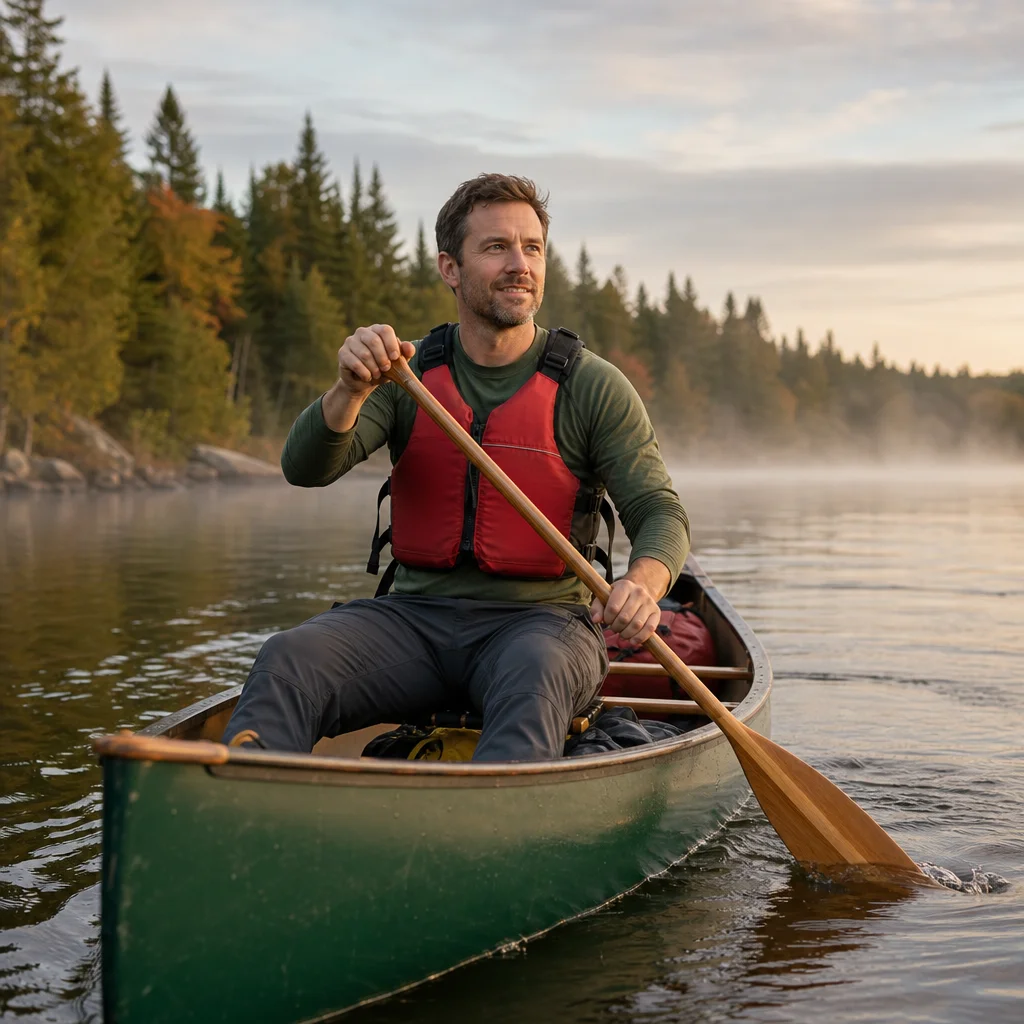
A portage can look short on a map and still consume most of an afternoon. The distance between two lakes is only one part of the job; the real clock includes how many loads you carry, how rough the trail is, and how often the group stops to reorganize.
A useful estimate should help you make decisions, not create false precision. If a portage seems likely to take 45 minutes, planning for an hour or more may be sensible once carrying, water, footwear, and a short recovery break are included.
Start with the carrying plan, not the trail length
First determine how many trips your group will make between the water and the end of the portage. A “one-trip portage” means each person carries gear and a canoe in one movement, while a “two-trip portage” means gear is staged partway or at the far end before someone walks back for another load.
The number of loads often matters more than the posted distance.
A simple planning formula is:
Total portage time = loaded walk time × number of carries + return walks + loading and unloading + breaks
For example, a two-person group with one canoe and camping equipment might divide the work into three loads:
- One person carries the canoe while the other carries a pack.
- Both return or walk back for the remaining gear.
- The final load is carried to the next launch.
That can mean several traversals of the same trail. A half-mile portage may therefore involve two miles or more of combined walking, depending on the load plan.
Count the canoe separately
A canoe usually requires one person, which can make it the awkward item in a small group. If one paddler carries the canoe, the other may need to handle a heavy pack and loose equipment. If the canoe is too large, unstable, or uncomfortable to carry for the full distance, plan for more frequent exchanges or a staged carry.
Don't assume that a group can move faster simply because it has more people. More paddlers can reduce the number of loads, but they can also increase the time spent sorting gear, waiting at narrow sections, and deciding what goes where.
Estimate walking time from terrain
Use the portage’s listed distance as a starting point, then adjust for the surface and elevation. A short, level trail with firm footing may move quickly. A similarly short trail with mud, roots, rocks, steep steps, or water crossings can take much longer.
A practical set of planning categories is:
- Easy: level or gently rolling, clear footing, few obstacles.
- Moderate: uneven ground, roots, mud, rocks, or occasional steep sections.
- Difficult: sustained climbs, slippery rocks, boggy ground, exposed roots, tight turns, or obstacles that require careful footing.
For a first estimate, think in terms of walking time per loaded crossing rather than an exact pace. A strong, familiar group carrying balanced loads may move efficiently on an easy trail. A mixed group carrying bulky packs on rough ground may move at less than half that pace.
The slowest person and the most awkward load usually set the group’s practical speed. That isn’t a criticism; it’s the condition the schedule needs to accommodate.
Add an obstacle allowance
Map distance rarely shows every feature that slows a carry. Add time for:
- Steep sections where the group uses hands for balance
- Narrow trails that require single-file movement
- Fallen trees or rock shelves
- Mud that makes each step deliberate
- Stream crossings or wet low spots
- Turns where a long canoe must be lifted, rotated, or passed around obstacles
- Trail-finding pauses at confusing junctions
A modest, well-maintained trail may need only a small adjustment. A rough or unfamiliar route deserves a larger cushion. If the description uses words such as “rugged,” “challenging,” or “poorly maintained,” treat those as time warnings rather than colorful scenery notes.
Account for group size and load count
Group size changes the arithmetic in two opposite ways. More people can carry more gear per trip, but they may also bring more gear. The best estimate comes from the number of actual loads, not the number of paddlers alone.
Here are common patterns:
Solo paddler
A solo paddler may need several gear carries in addition to the canoe. This can turn a short portage into a repeated shuttle. If the canoe must be left unattended while gear is moved, the paddler also needs a plan for keeping equipment together and secure.
Two-person group
Two paddlers can often carry a canoe and a pack together, then return for additional gear. Whether the portage is efficient depends on pack size, canoe weight, and whether both people are comfortable making the return walk.
Larger group
A larger group may reduce the number of traversals, especially when loads are divided sensibly. It still needs a clear staging system. Gear left at the trailhead, midway point, or far shore should be kept together and out of the way of other users.
If you’re unsure how many loads are realistic, physically count them before leaving home. Include food barrels, paddles, fishing equipment, water containers, and small bags. “We’ll just take the rest next time” is how a short portage acquires a sequel.
Don’t forget footwear and launch transitions
Changing footwear can be a small task or a major part of the schedule. A muddy launch may require removing wet shoes, putting on boots, adjusting socks, or securing sandals before the walk. At the far end, the group may need to reverse the process before loading the canoe.
Add time for:
- Pulling the canoe clear of the shoreline
- Draining or wiping out water
- Removing and replacing portage packs
- Changing footwear or adding traction gear
- Organizing paddles and loose items
- Carrying the canoe to a safe staging spot
- Relaunching and loading without tipping gear into the water
For a quick, dry crossing, these transitions may be minor. In cold rain, deep mud, or rocky shallows, they can become a meaningful part of the portage. Plan them as real activities rather than invisible minutes.
Build in rest and regrouping breaks
A portage isn’t finished when the last person reaches the far end. People may need water, a snack, dry socks, or a few minutes to settle their breathing before getting back on the water.
Breaks are especially important when:
- The group is carrying heavy or awkward equipment
- The trail is hot, exposed, steep, or humid
- Someone is new to portaging
- The route follows a long paddling day
- The next lake has difficult landing or launch conditions
A useful schedule separates moving time from recovery time. If the loaded carries total 50 minutes, adding 10 to 20 minutes for regrouping may be more realistic than calling the portage a 50-minute task. A tired group may need more, particularly if the portage is only one part of a demanding day.
Before You Commit to the Crossing
Check the latest local trail description, landing information, and conditions for the route you’re using. Confirm whether water levels, storms, flooding, closures, or recent maintenance could change footing or access. Carry water, keep loads manageable, and don’t continue if fatigue or slippery terrain is making safe movement difficult.
A repeatable estimation method
Use this process when planning an unfamiliar route:
- Record the listed distance. Treat it as the length of one crossing, not the total distance your group will walk.
- Describe the terrain. Note elevation, mud, rocks, roots, water crossings, and likely obstacles.
- Count the loads. Include the canoe and every separate gear carry.
- Estimate loaded crossings. Use the slowest likely person and the least convenient load as your reference.
- Add return walks. A second or third load usually requires someone to walk back or the group to shuttle gear.
- Add transitions. Include landing, staging, footwear, loading, and launching.
- Add breaks. Allow time for water, food, navigation, and regrouping.
- Add a contingency. Give yourself extra time when the route is unfamiliar, conditions are wet, or the schedule has a hard deadline.
If the result conflicts with your planned arrival time, change the plan rather than hoping for a faster group. Reduce gear, leave earlier, shorten the day, or choose a route with fewer carries.
Worked example: why a short portage expands
Suppose a two-person group faces a portage listed as 0.4 miles. The trail is moderately rough, and the group has one canoe plus four gear loads.
The group might make these movements:
- Canoe and one pack to the far end
- Walk back
- Two packs to the far end
- Walk back
- Final pack to the far end
That is five trail crossings: three loaded and two unloaded. The group also needs time to pull the canoe out, organize packs, take a short water break, and relaunch.
The map shows 0.4 miles. The group may actually walk about two miles in total, much of it carrying equipment. If each crossing takes roughly 10 to 15 minutes under the conditions, the walking alone could occupy 50 to 75 minutes. Add transitions and a break, and a planning window of roughly 75 to 100 minutes may be more honest than the distance suggests.
Those numbers are an example, not a universal standard. A fit group on a smooth trail may finish sooner; a group on a wet, rocky trail may take substantially longer.
When the estimate starts going wrong
The first carry feels easy, but the return slows down
Fatigue accumulates quickly when the group repeats the same climb. Recalculate after the first full cycle. If the return walk is already slower than expected, extend the schedule before the heaviest loads are moved.
Gear is scattered at both ends
Scattered equipment creates extra sorting and searching. Stage loads in one visible, secure area and use a simple count so nothing is left behind.
The canoe is harder to carry than expected
A poor yoke fit, shifting load, or slippery trail can make the canoe the limiting item. Stop and adjust the carry rather than compensating with hurried steps. If necessary, exchange carriers more often or use a shorter carry between rests.
The landing is consuming the schedule
A muddy or rocky shoreline can add as much time as the trail itself. Move slowly, keep the canoe stable, and identify a safe place for packs before beginning the next carry.
The group reaches the far end exhausted
The portage may have been completed, but the trip still has to continue. Leave enough energy for paddling, navigation, cooking, and setting camp. If the portage has used more time or effort than planned, adjust the day’s destination.
Practical next steps
For your next trip, write down four figures before you leave: portage distance, number of loads, estimated crossings, and a realistic buffer. Then check the result against daylight, weather, and the distance still remaining on the water.
The most reliable estimate is usually the one that assumes ordinary delays: a pack that needs repacking, a muddy step, a footwear change, and someone who needs a drink. Plan for those moments, and a portage becomes a manageable part of the route instead of the surprise that controls the whole day.