How to Rent a Canoe Without Choosing the Wrong Setup
The right rental setup depends on your route, paddlers, load, and return plan—not just the canoe available at the dock. I’ll show you the questions to ask so you can avoid mismatched seating, inadequate flotation, unsuitable paddles, and unpleasant surprises at checkout.
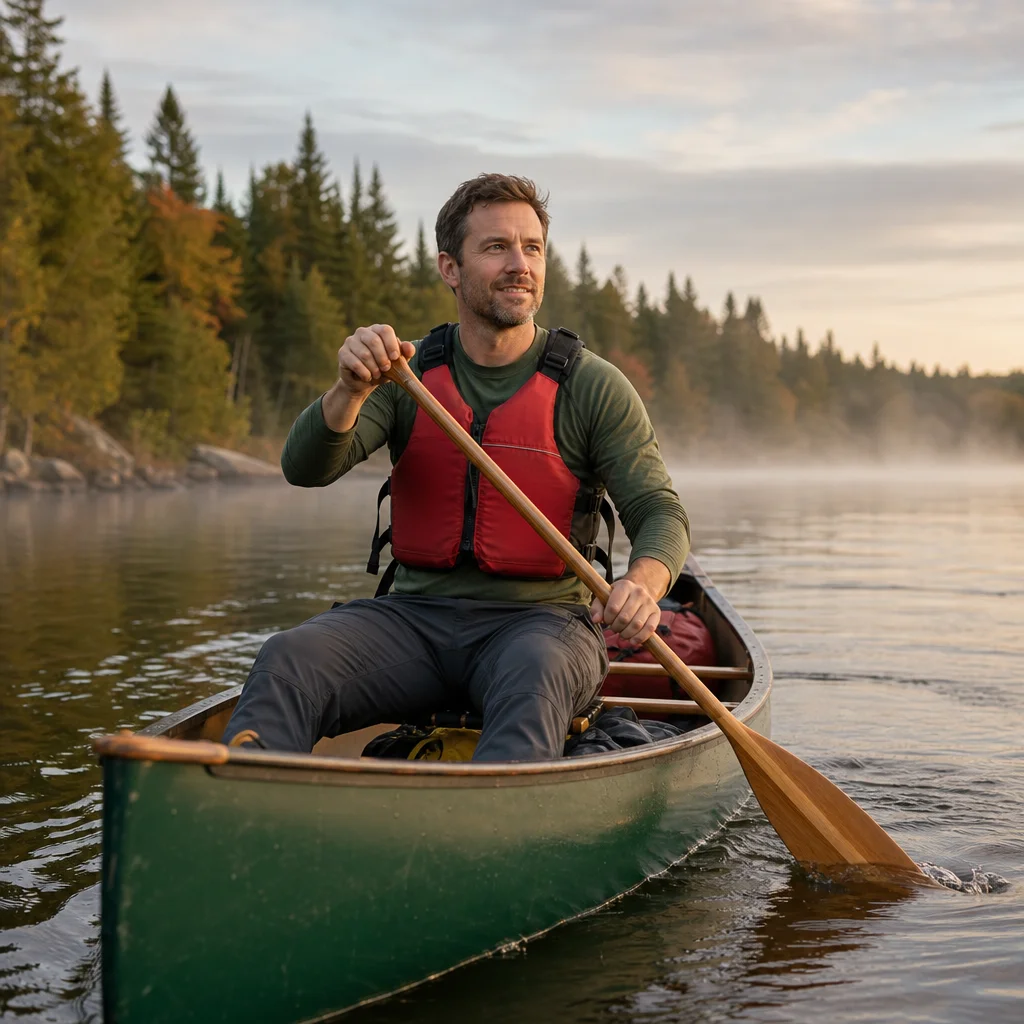
Choosing a rental canoe by appearance or availability can create problems before you leave the launch. A boat that seems roomy may handle poorly when overloaded, while a short recreational canoe may feel unstable on a windy lake or moving river. Even the paddles, flotation equipment, route advice, and return arrangements can affect whether the outing is comfortable and manageable.
I use the rental conversation to match the entire setup to the trip—not merely to reserve a canoe. The goal is a simple one: give the staff enough information to recommend an appropriate boat and make sure you understand what is included.
Start with the trip, not the canoe
Before asking about length or brand, describe the outing in practical terms:
- How many adults and children are paddling?
- What is each person’s approximate size and paddling experience?
- Will you bring a cooler, camping gear, fishing equipment, or a dog?
- Is the route a quiet pond, a large open lake, a narrow river, or moving water?
- How long will you be on the water?
- Are you returning to the same location, or traveling between two launch points?
A rental employee can make a better recommendation when the shop knows the complete load and route. “Just two people on a lake” leaves out important details if one person is a large adult, the lake is exposed to wind, and the pair plans to carry lunch and dry bags for six hours.
If you’re uncertain about the route, ask what conditions are typical for the time of day you plan to paddle. Wind can make a broad lake feel very different from a sheltered cove, and a river’s difficulty can change with water level.
Ask which canoe size fits the load
Canoe length affects capacity, tracking, maneuverability, and transport. A longer canoe often offers more room and tracks efficiently, but it may be harder to turn and handle at a small launch. A shorter canoe can be easier to maneuver but may have less capacity and feel less efficient on a long crossing.
Ask the shop:
- What is the manufacturer’s listed capacity?
- Does that capacity include paddlers and all equipment?
- How much usable capacity do you recommend for this route?
- Would this canoe be appropriate for our combined weight and gear?
- Does the boat have one, two, or three seats, and are the seats fixed?
Treat the published capacity as a limit, not as a target. A canoe loaded close to its maximum may sit low in the water, leaving less freeboard to resist waves and splashes. A boat with room for a third person may be a sensible choice for two paddlers carrying equipment, but a larger hull isn’t automatically better if the paddlers are inexperienced or the launch is awkward.
Tell the shop whether you want a tandem canoe, a solo canoe, or a boat that can accommodate a child between adults. Some canoes have a center seat or removable seating; others don’t. Don’t assume that a boat advertised as a “three-person canoe” will provide three comfortable paddling positions.
Check the seating arrangement
Seating affects balance and control as much as hull size. In a tandem canoe, the heavier or more experienced paddler usually sits in the stern, where that person can help steer. The front paddler contributes power and rhythm but has less control over direction.
Ask whether the seats are:
- Fixed benches, molded seats, or adjustable outfitting
- Positioned for two adults or for an adult-and-child arrangement
- High enough to make kneeling uncomfortable or low enough to improve stability
- Suitable for the weight distribution you described
A high seat can feel comfortable at first but may raise the paddler’s center of gravity. A low seat or kneeling position can offer more stability, though it may be less comfortable for someone with limited mobility. If anyone in your group has knee, hip, or back concerns, mention that before accepting a boat.
Also ask whether the shop allows seat adjustments. If it does, have an employee explain how to secure them. A loose or incorrectly positioned seat can shift weight and create a handling problem.
Confirm the paddles are appropriate
Rental paddles are often treated as an afterthought, but the wrong length can make an otherwise suitable canoe tiring to handle. Ask which paddle length the shop recommends for your seating position and paddling style. The answer may differ for a low kneeling position and a higher bench seat.
Check that each paddle is in good condition:
- The shaft should be straight and free of cracks.
- The grip should be secure and comfortable.
- The blade shouldn't be badly warped, split, or loose.
- Tandem paddlers should receive paddles of suitable, reasonably similar size.
Ask whether the rental includes spare paddles. A spare can be useful if a paddle is lost, damaged, or dropped. If the shop doesn’t provide one, ask what its procedure is for reporting a lost paddle and whether you should bring your own backup.
You may also need a child-sized paddle or a paddle suited to a smaller adult. A very long or heavy paddle can make basic strokes unnecessarily difficult for a new paddler.
Ask what flotation and safety equipment is included
Find out exactly what the rental supplies rather than assuming that every safety item comes with the canoe. Ask about personal flotation devices, often called PFDs, for every person and whether the shop has sizes that fit each paddler correctly. A PFD should be appropriate for the wearer’s size and intended activity, and it should fit snugly enough that it doesn’t ride up when adjusted.
Ask about other included equipment, such as:
- A bailer or pump
- A throw bag or rescue line, where appropriate for the waterway
- A whistle or other sound-producing device
- Tie-downs or straps for transport
- Dry storage or waterproof containers
- A spare paddle
- A map, route sheet, or communication equipment
Don't rely on a general statement such as “the canoe has safety gear.” Have the employee point out each item and explain where it is stored. Confirm whether you’re expected to provide anything yourself, including drinking water, sun protection, navigation tools, or a phone in a waterproof case.
Confirm the day’s requirements: Before you leave the shop, verify current local rules, launch restrictions, required safety equipment, rental coverage, and any water-level or weather-related warnings for your specific route. Regulations and operating policies vary by jurisdiction and can change.
Match the boat to the route difficulty
Ask the rental staff to describe the route in terms you can act on. “Easy” may mean calm water under favorable conditions, not that the route remains easy in wind, current, cold water, or heavy boat traffic.
Useful questions include:
- Is the route suitable for first-time paddlers?
- What hazards should we expect?
- Are there areas where we need to cross open water?
- How strong is the current, and are there strainers, rapids, dams, or portages?
- How long does the route usually take at a relaxed pace?
- Where can we turn around if conditions worsen?
- Is there a reliable way to get help if we’re delayed?
For a first rental, I’d favor a sheltered route with straightforward shoreline access over a more ambitious distance. A stable recreational canoe is useful, but stability doesn’t remove the risks created by cold water, wind, current, or poor judgment. If the staff describes moving water, ask whether the route requires skills or equipment beyond a basic recreational rental.
If the forecast looks marginal, ask whether the shop offers flexible cancellation or rescheduling. Policies differ, so get the answer before paying.
Clarify transport and launch details
A canoe rental can go wrong on land if you aren’t prepared to move it. Ask whether the price includes delivery, loading assistance, roof-rack equipment, or launch-site fees. If you’re transporting the canoe yourself, confirm that your vehicle is suitable and ask the staff to demonstrate the tie-down method.
You should know:
- Where pickup and return occur
- How early you should arrive
- Whether the canoe is already loaded
- Which straps or cradles are supplied
- Whether you need a second person to carry it
- Where you may park during the trip
- What happens if weather or road conditions delay you
Never improvise with unsuitable rope, loose straps, or an unsecured canoe. If you’re unsure how to tie it down, ask for help before leaving the rental location.
Understand return logistics and costs
Ask for the complete cost, including deposits, taxes, delivery, launch fees, late-return charges, cleaning fees, and damage policies. Find out when the rental clock starts and ends. Some businesses measure time from pickup; others use launch or reservation windows.
Ask what condition the canoe should be in when returned. Clarify whether you need to remove sand, drain water, take out trash, or report damage. Photographing existing scratches or dents at pickup can help both you and the shop maintain a clear record, especially when the rental process is busy.
Also ask what to do if you’re running late, can’t reach the planned takeout, or discover damage on the water. Keep the shop’s phone number accessible in a waterproof location rather than assuming you can search for it later.
Use a quick pre-launch check
Before pushing off, inspect the setup with the rental employee if possible. Confirm that the canoe is free of significant damage, drain plugs are secure if fitted, seats are stable, paddles are present, and PFDs fit everyone. Place heavy gear low and near the center of the canoe, and secure loose items so they don’t float away after a capsize.
Then review the first few minutes of the route. Identify where you can land, what direction you’ll travel initially, and what conditions would make you turn back. A short shoreline test can reveal an uncomfortable seat, awkward paddle length, or poor trim before you’re far from the launch.
A simple rental decision checklist
Before accepting the setup, make sure you can answer yes to these questions:
- Does the canoe suit the number and size of paddlers?
- Is there enough capacity for people and gear without loading it too low?
- Does the seating arrangement fit everyone’s comfort and ability?
- Are the paddles suitable and in good condition?
- Does every paddler have a correctly fitting PFD?
- Do you understand the route’s hazards and realistic duration?
- Do you know the current requirements, fees, and return procedure?
- Can you transport, launch, and recover the canoe safely?
The best rental choice is rarely the longest, newest, or cheapest canoe. It’s the setup that matches your group, route, abilities, equipment, and fallback plan. Give the rental shop specific information, ask direct questions, and take a few minutes to check the details before launching. Those small steps prevent most of the mistakes that turn a simple paddle into a difficult day.