What to Practice in a Canoe Before Leaving Protected Water
A calm protected-water session can expose awkward starts, weak stops, poor communication, and uncertain landings before they matter on a bigger lake or river. I’ll walk you through a short practice plan that builds control without turning preparation into an ordeal.
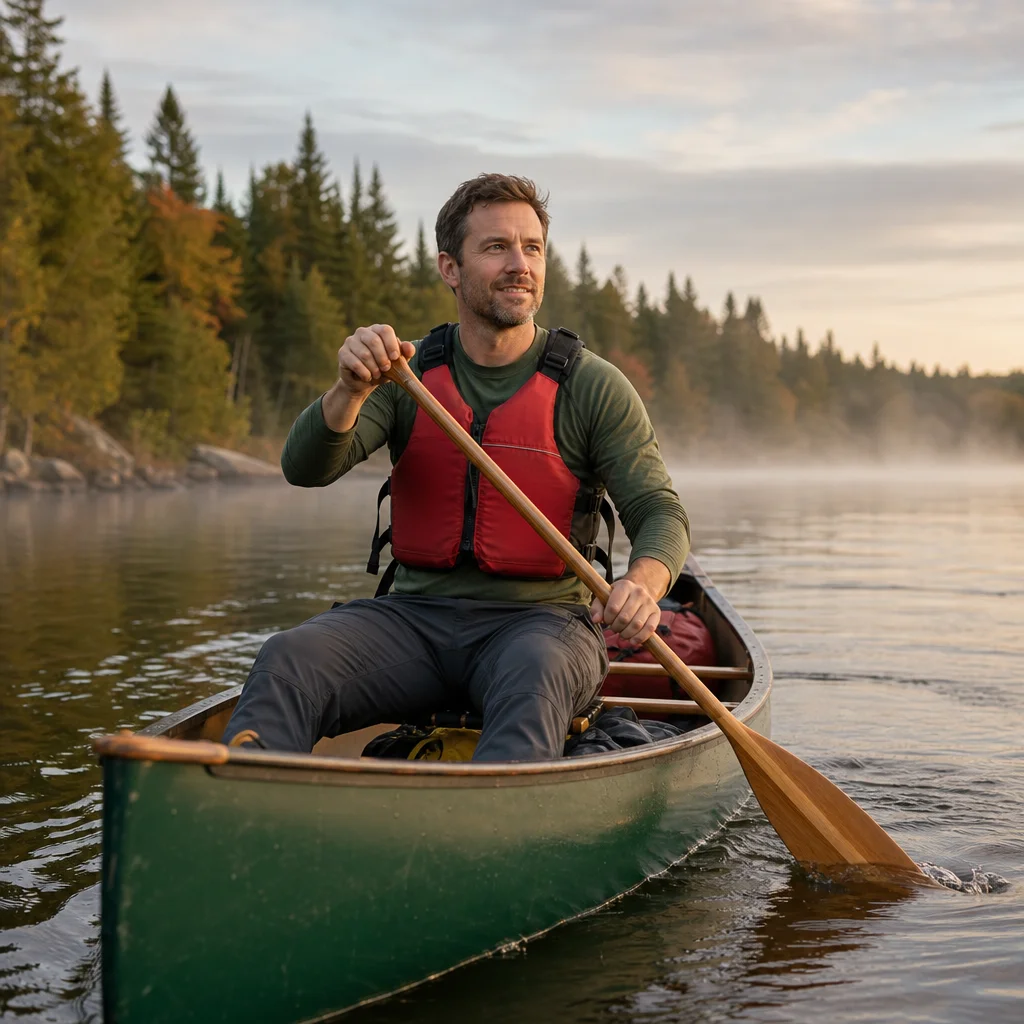
The first-season paddler’s biggest mistake is often leaving protected water before the canoe feels predictable. A larger lake or moving river gives you less room to sort out a late stop, a confused turn, or a landing that suddenly becomes urgent.
You don’t need an elaborate course to prepare. A focused session near shore can help you and your paddling partner learn how the canoe responds, agree on simple commands, and identify the skills that still feel awkward. The goal isn’t polished technique. It’s having enough control to make sensible decisions when conditions are less forgiving.
Choose a useful practice area
Look for a quiet stretch of water with easy access, a clear shoreline, and enough room to maneuver without boat traffic. A small pond, calm bay, or sheltered section of a larger lake can work well. The water should be protected, but not so cramped that every turn ends at the bank.
Avoid practicing near swimmers, docks, submerged obstacles, steep banks, or areas where wind funnels through narrow gaps. Even calm-looking water can have a current, unexpected boat wakes, or a muddy bottom that makes a swim more difficult.
Wear your properly fitted personal flotation device throughout the session. Bring the same paddle, canoe, and basic clothing you expect to use on your first larger outing. Familiarity with the actual equipment is more useful than practicing with an ideal setup you won’t take along.
Confirm the local basics: Before launching, check the current requirements for flotation devices, lights, registration, access, and any restrictions that apply to your waterway. Rules and launch conditions vary by location, and a quiet practice area may still have specific requirements.
Start with a short briefing on shore. Decide who will steer if you’re paddling tandem, which words you’ll use for basic commands, and what either person will do if the canoe feels unstable. A minute of agreement can prevent a great deal of mid-lake conversation.
Begin with straight-line control
Push off gently and let the canoe glide. Before trying turns, notice how it accelerates, how quickly it slows, and how much the wind moves it. Both paddlers should take a few easy strokes while the canoe remains pointed in the same direction.
In a tandem canoe, the bow paddler usually supplies information about what lies ahead, while the stern paddler has a stronger influence on direction. That doesn’t mean the front paddler is just a passenger. The bow paddler can provide steady forward power and help initiate turns, but both people need to understand their roles.
Practice these basics:
- Start from rest with three or four smooth strokes.
- Paddle at a relaxed pace for a short distance.
- Stop paddling and observe the glide.
- Make small corrections without switching frantically from side to side.
- Paddle in a straight line toward a visible point, then stop near it.
The important lesson is how little input the canoe needs once it’s moving. Beginners sometimes make a small directional error, then correct too strongly and create a second error. Softer, earlier corrections are usually easier to manage.
Practice starting and stopping
A start should feel deliberate rather than rushed. Sit or kneel in a stable position, place the paddle cleanly in the water, and use controlled strokes. If the canoe swings when you begin, note whether one paddler is applying more power or whether the first stroke is angled too far away from the hull.
Next, practice stopping from different speeds. A simple stop may involve both paddlers stopping their forward strokes and allowing the canoe to glide. If you need to stop sooner, a backward stroke can reduce forward movement, but it may also affect the canoe’s direction.
Try stopping beside a chosen shoreline point or marker without touching it. Repeat at a slow pace, then at a moderate pace. Don’t turn this into a speed test. The useful question is whether you can predict how much distance the canoe needs to lose momentum.
In a tandem canoe, agree on a clear stopping command, such as “stop” or “hold.” Use the word before the situation becomes urgent. If a command means something different to each paddler, settle that on protected water rather than during an approach to rocks or a busy landing.
Learn the turns you’ll actually need
You don’t need a catalog of advanced strokes before your first bigger trip. You do need to turn away from an obstacle, adjust your heading, and bring the canoe alongside a landing area.
Wide turns
Begin with a gradual turn. Paddle forward on one side while the other paddler uses a mild corrective stroke, or simply pauses if the canoe naturally responds. Watch how much space the canoe needs. A wide turn is often the safest option when you have room.
Repeat the turn in both directions. Many paddlers discover that one side feels much less coordinated. That’s useful information, not a reason to force perfect symmetry. Spend extra time on the weaker direction until you can make a controlled change of heading.
Tight turns
Practice turning around a visible point, such as a floating marker or an imaginary spot on the water. Use a combination of forward and reverse strokes rather than trying to twist the canoe with one dramatic movement.
Keep your body centered over the canoe. Leaning far to make the turn can reduce stability, especially for a new paddler who is already looking over a shoulder. Turn your head and torso as needed, but avoid sudden movements.
Turning away from trouble
Set up a harmless scenario: paddle slowly toward an open area, then use a command to turn away before reaching it. This reinforces the habit of recognizing a problem early. The exercise isn’t about pretending to be in danger; it’s about making the first corrective action familiar.
Rehearse landing without stepping out too soon
Many awkward moments happen at the shoreline. Waves, wind, soft mud, and uneven ground can make a simple landing unstable.
Approach a gently sloping bank at a shallow angle and reduce speed before you arrive. Keep the canoe pointed where you want it to go. One paddler can make small adjustments while the other prepares to steady the canoe only after it’s close enough.
Don’t use the paddle as a rigid support while standing up. A paddle can slip, bend, or pull you off balance. Keep your weight low, bring the canoe parallel or nearly parallel to shore when appropriate, and make sure the landing area is clear before anyone exits.
Practice leaving the shore as well. Push off without scraping the hull over rocks, then move away from the bank before settling into a normal paddling rhythm. If your launch requires one person to hold the canoe, decide who gets in first and how the canoe will be kept steady.
Try two or three different landing approaches if the site allows it. A landing that works in calm water may be awkward with a side wind. You’re learning how to adapt, not memorizing one exact angle.
Establish simple tandem communication
Good communication should be brief and predictable. You might use commands such as:
- “Forward” for normal forward strokes
- “Stop” or “hold” to pause forward paddling
- “Back” for reverse strokes
- “Left” or “right” for a turn, with agreement about whose perspective those words use
- “Landing” to announce an approach to shore
- “Wait” when one paddler needs a moment to adjust position or equipment
Choose words that you can hear over wind and conversation. Avoid relying on gestures that the other paddler may not see. Practice the commands while moving slowly, then use them during starts, turns, and landings.
A useful rule is that either paddler can call for a pause if something feels wrong. That pause isn’t an admission of failure. It gives both people time to look, communicate, and choose a safer option.
Solo paddlers should practice scanning and decision-making out loud if it helps establish a rhythm: identify the intended heading, check the wind and shoreline, then choose the next maneuver. Solo canoe control demands more anticipation because there isn’t another person to share the workload or point out an approaching problem.
Add a controlled recovery discussion
Before attempting a larger trip, talk through what you’ll do if someone falls out or the canoe capsizes. Knowing the plan is valuable even if you don’t deliberately capsize during this first skills session.
If you want to practice entering and emptying the canoe, use a suitable controlled location with competent supervision and enough warmth, support, and open space for the conditions. Don’t treat a surprise capsize in cold or deep water as a training exercise. A recovery plan should include staying with the canoe, accounting for both people, signaling for help, and getting out of the water when possible.
You can rehearse the first steps without getting wet: call out what happened, confirm that both paddlers have their flotation devices, identify the nearest safe shore, and decide who will handle communication or signaling. The exact recovery method depends on the canoe, water depth, weather, and available assistance.
Know when the session is successful
End the practice when fatigue begins to affect coordination. Repetition is useful only while you can pay attention. Before leaving, ask a few practical questions:
- Can we start without swinging the canoe unexpectedly?
- Can we stop before reaching a chosen point?
- Can we turn in both directions with room to spare?
- Can we approach and leave shore without rushing?
- Do we understand the same commands?
- Do we know what we’ll do if someone falls out?
- Which skill still feels least reliable?
You don’t need every answer to be perfect. You do need to know the weak spots and choose a first larger outing that gives you room to manage them. A sheltered section of a bigger lake may be a sensible next step; exposed open water or moving current may not be.
Take the next step gradually
After the session, write down the two or three skills that need more work. Practice those first on your next outing instead of repeating everything equally. If stopping is inconsistent, work on speed control. If landings are tense, visit a quieter access point. If communication breaks down, simplify the commands.
Then check the forecast and the waterway’s current conditions before choosing a larger route. Wind, temperature, water level, current, traffic, and exit options matter as much as the distance. Choose a route where you can turn back early and reach shore without depending on a single difficult landing.
Protected-water practice won’t remove every surprise. It can make the first response calmer, the decisions earlier, and the canoe more familiar under you. That is enough preparation to make the move beyond sheltered water more measured—and considerably less likely to end with an avoidable swim.