How to Keep a Canoe From Sliding on a Sloped Shoreline
A canoe can be easier to control floating just offshore than resting on a steep bank, and I’ll explain simple landing, tie-off, and recovery techniques for muddy, rocky, or sloped shorelines.
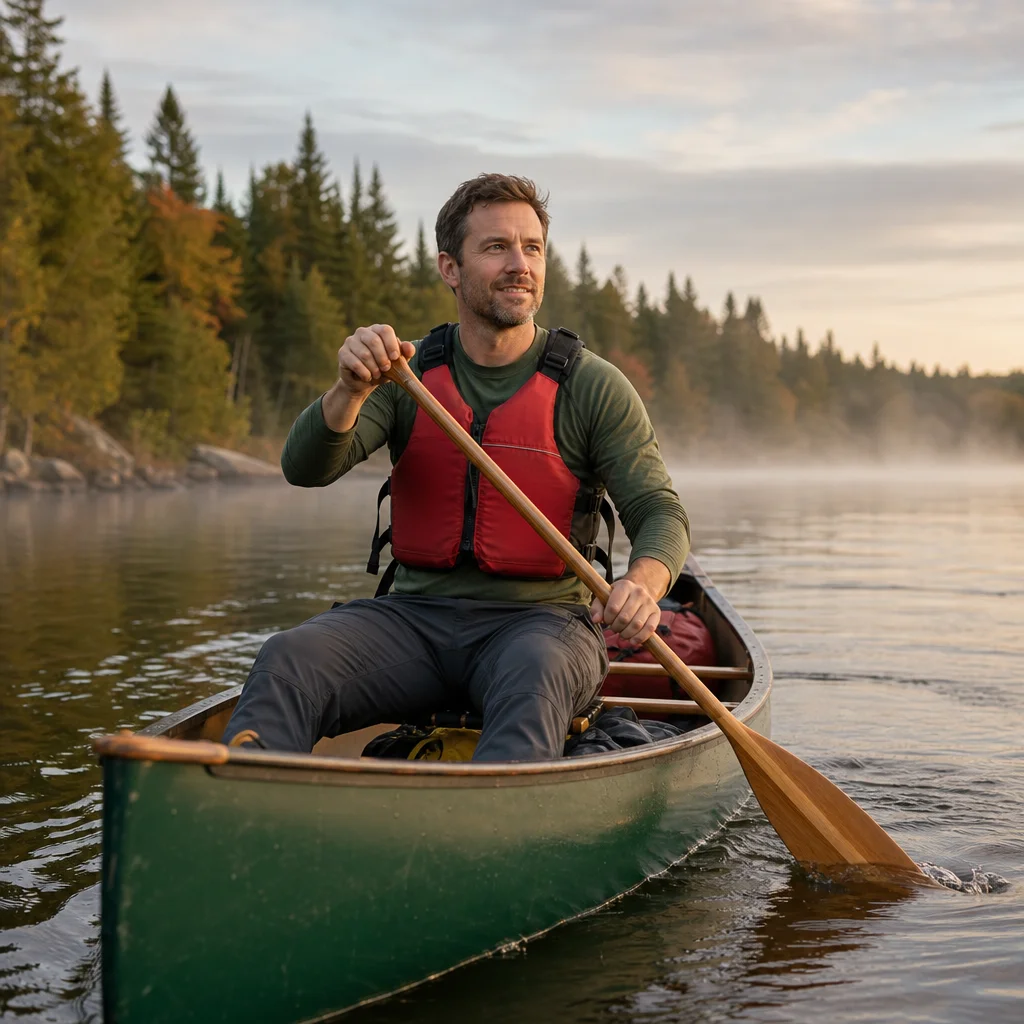
A canoe can be easier to control floating just offshore than resting on a steep bank. I’ll explain how to land, unload, and secure it so a small slope doesn’t turn into a runaway boat—or a hurried scramble after one.
Why canoes slide on sloped shorelines
A canoe doesn’t need much force to move downhill. Its rounded hull has little resistance on mud, wet grass, gravel, or smooth rock, especially when the boat is loaded. Water also reduces friction under the hull, so a canoe that seems stable at first can start drifting as the shoreline shifts beneath it.
The risk isn’t limited to losing the canoe. A sliding boat can pull on a painter, swing its bow into someone’s legs, or pin a paddle and cause a fall. An unattended canoe may also drift into current or wind before you can reach it.
The basic solution is to control the canoe with a line and a person before anyone begins unloading. Treat the shoreline as a temporary landing area, not automatically as a safe parking spot.
Prepare before the bow touches shore
Keep a painter ready
A painter is a short line attached near the bow or stern of the canoe. It gives you something to hold or tie off without grabbing a slippery gunwale. Before approaching a steep bank, make sure the painter is free of knots, feet, paddles, and loose gear.
Keep enough line available to reach a solid tie-off point above the waterline. A line that is only a few feet long may be adequate on a flat beach but useless on a muddy bank where you need to keep the canoe floating offshore.
Don’t wrap the painter around your hand or body. Hold it in a loose grip, and keep excess line out of the water and away from the propellers of nearby boats, if applicable.
Decide whether landing is necessary
On a steep or unstable bank, the safest choice may be to keep the canoe floating while you unload. One person can hold the painter from shore or from the shallows while the other removes packs and loose equipment.
This approach avoids dragging the full weight of the canoe and its gear onto a surface that offers poor traction. It also gives the hull some buoyancy instead of allowing the entire load to press it into mud or gravel.
If current, wind, cold water, or slippery footing makes standing offshore unsafe, don’t improvise a wading operation. Look for a flatter landing nearby or use a second person to control the canoe from a secure position.
Check the landing before unloading: Look for current, waves, unstable rocks, deep mud, and a tie-off point you can reach without stepping between the canoe and the bank. If the approach is awkward while the canoe is empty, it will be less forgiving with people and packs aboard.
A controlled landing technique
For a normal shore landing, use this sequence:
- Approach slowly. Reduce your momentum before the bow reaches the bank. A gentle approach gives you time to correct the angle instead of bouncing off rocks or climbing too far up the slope.
- Keep the painter in hand. The bow paddler or a person designated to handle the landing should control the line as the canoe reaches shore.
- Bring the bow only as far up as needed. Don’t drive the canoe high onto the bank if the slope will make it slide back or sideways.
- Stabilize the canoe before stepping out. Keep one person holding the boat while the other exits from the more secure side. Avoid stepping onto a loose rock or muddy patch simply because it is close.
- Tie off before unloading. Secure the canoe to a solid point, then remove packs and equipment in a controlled order.
On a sloped shoreline, the canoe may try to swing sideways as the bow touches. Keep it pointed generally up the slope rather than allowing the hull to lie diagonally across it. A diagonal canoe has both downhill and sideways movement available, which makes it harder to control.
That said, don’t force the bow uphill if doing so requires climbing onto unstable ground. A floating canoe held with a painter can be safer than a beached canoe that is technically pointed in the right direction.
How to tie the canoe securely
Use a sturdy, low-risk anchor point such as a substantial tree trunk, a fixed mooring ring, or a properly placed ground anchor. The point should be strong enough to resist the canoe’s weight and any pull from wind or current.
Tie the painter so the canoe can’t slide into deeper water or swing into people. Leave enough room for normal water movement, but not so much slack that the canoe can reach a current, drop over a ledge, or rotate around the tie-off point.
If the shoreline offers no reliable anchor, have one person remain with the canoe. A paddle stuck into soft mud isn't a dependable anchor, and a small branch can pull free without warning. Don’t tie to dead limbs, loose shrubs, or rocks that can roll.
For a short stop on a gentle bank, a person holding the painter may be enough. For unloading, a break, or any situation where the canoe might be left alone, use a real tie-off or move to a better landing.
Unloading without starting a slide
Unload heavy items first only if doing so won’t make the canoe unstable. In many situations, removing the largest pack while the canoe is still supported by water reduces the load and makes the boat easier to manage. Keep the remaining gear low and centered.
A useful order is:
- Secure the painter.
- Stabilize the canoe from shore or in shallow water.
- Remove loose paddles and small items that could roll or float away.
- Move heavy packs one at a time, keeping them close to the centerline.
- Carry gear well clear of the slope before handling the canoe again.
Don’t pull a loaded canoe uphill by yanking the painter. The bow can rise suddenly while the stern slides sideways, and the line may jerk the person holding it off balance. If the canoe must move up the bank, use two people where possible: one controls the bow and one steadies or lifts the stern.
For a two-person carry, communicate before moving. Agree on who gives the commands, where you’re stepping, and where the canoe will rest. Short, simple calls are better than trying to coordinate while sliding on wet ground.
If the canoe starts sliding
A sliding canoe can tempt you into a dangerous reaction: stepping directly downhill into its path or grabbing the nearest part of the hull. Instead, create space and control the line if you can do so without falling.
If it is sliding toward the water
Move to the side rather than standing directly below the canoe. Hold the painter only if you have secure footing and the line won't wrap around you. Letting the canoe float may be the best recovery once it reaches water, provided the area is free of current, rocks, and hazards.
If the canoe is still partly on shore, don’t wedge your legs under the hull or try to stop its full weight alone. Call for help, clear people from its path, and use the painter from a stable position.
If it is sliding sideways
A sideways slide is especially difficult to stop because the canoe may rotate while moving. Stay clear of the ends, where the bow or stern can swing into you. If the painter is secure, shorten the distance between the canoe and the tie-off point gradually rather than pulling sharply.
Once the canoe stops, reassess the landing. It may be safer to refloat it, move it to flatter ground, or unload it completely before trying again.
If it has drifted away
Don’t run into deep or moving water after it. A canoe can be recovered later; a fall in cold water or current can become a much larger emergency. Use a paddle, throw line, or another canoe only when conditions and your skill level make that reasonable. If the boat is moving into hazardous current or toward other people, contact local emergency services rather than taking an unnecessary personal risk.
Common mistakes to avoid
- Leaving the canoe unattended with only the bow resting on shore.
- Tying off to a weak branch, loose shrub, or rolling rock.
- Allowing painter line to trail around feet or under the hull.
- Standing downhill from a loaded canoe.
- Unloading while the canoe is angled across the slope.
- Pulling hard on a line when the canoe is partly pinned or caught.
- Assuming wet sand, mud, or grass will provide dependable traction.
- Trying to stop a sliding canoe with your legs or back.
A simple shoreline decision checklist
Before you land, ask:
- Can I keep the canoe floating while unloading?
- Is there a solid tie-off point above the slope?
- Can everyone step out without standing in the canoe’s likely path?
- Is the painter ready and long enough for this shoreline?
- If the canoe moves, where will it go?
If the answers are uncertain, look for a flatter bank or keep the canoe under control in the water. A short search for a better landing is usually easier than recovering a canoe from below a muddy slope.
The practical habit is simple: slow down, control the painter, unload only after the canoe is secured, and keep yourself out of its downhill path. When the shoreline is too steep or unstable for a clean tie-off, let the canoe’s buoyancy work in your favor instead of forcing it onto land.