Canoe Fishing Without Losing Control in Wind
When gusts start turning your canoe broadside, fishing becomes a balance problem as much as a casting one. I’ll explain how to place gear, choose a stable position, control your drift, and make safer reaches without giving up on the bite.
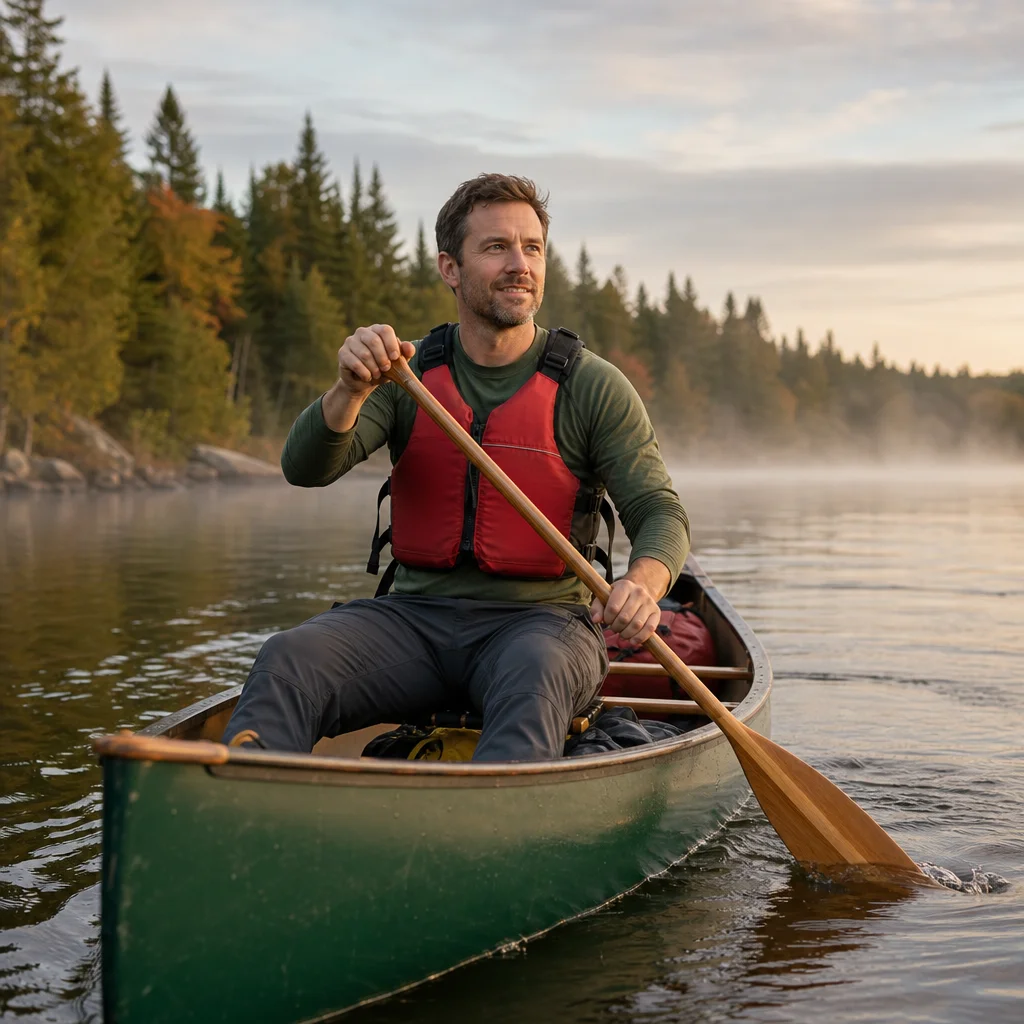
Wind can turn a calm fishing plan into a steady stream of corrections. Your line blows across the boat, the canoe swings broadside to the waves, and the tackle you need somehow ends up just out of reach. The instinct to lean, stand, or make one long grab is often what creates the real problem.
I recommend treating control as part of your fishing setup, not as something you improvise after the canoe starts moving. A stable position, tidy gear, and a simple drift plan will let you spend more time fishing and less time chasing your paddle.
Start with the conditions, not the lure
Wind isn't equally difficult in every location. A light breeze on a sheltered pond may be manageable, while the same wind crossing a broad lake can build waves that make a canoe difficult for a beginner to control. Wind blowing against current, around points, or through narrow channels can also create confused water.
Before launching, look at more than the forecast number. Notice the direction of the wind, the distance it has to travel across open water, and whether the route offers sheltered areas. Check how quickly you can reach shore if conditions deteriorate. A fishing plan that works near a protected bank may not work in the middle of a large lake.
Check the day’s water before loading the canoe: Confirm the local forecast, wind direction, small-craft or waterway advisories, access restrictions, and any current rules for the specific lake or river. Conditions and requirements vary by location, and a calm launch can become a difficult return if the wind strengthens.
For a first windy outing, choose a route with nearby landing options and avoid making the open-water crossing the most important part of the trip. If the wind is already producing waves that make you uncomfortable while paddling, fishing will usually make the situation harder.
Arrange the canoe so nothing requires a big reach
Good tackle placement reduces the number of balance decisions you have to make. Keep commonly used items within easy reach, but don’t spread them around the canoe where they can become foot hazards.
A useful beginner arrangement includes:
- A tackle box or soft tackle bag secured low and near the paddler.
- A landing net placed where it can be grabbed without twisting far.
- Pliers, line cutters, and a small tool attached or stored in one consistent pocket.
- Spare lures and bait in closed containers rather than loose on the floor.
- A paddle resting within immediate reach, preferably secured in a way that still allows quick use.
- Essential safety equipment accessible without opening multiple bags.
Keep heavy items low and near the center of the canoe. A cooler, battery, water container, or large tackle box placed high or at one end can make the canoe more sensitive to leaning and trim changes. Distribute weight so the bow and stern sit at a sensible level rather than allowing one end to ride unusually high.
Secure loose gear with simple retention straps or closed bags. The goal isn't to make the canoe immovable; it’s to prevent a sudden wave or gust from sending a tackle box sliding under your knees. Leave enough uncluttered floor space to paddle and, if necessary, get your body into a safer position.
Choose the most stable fishing position
For a beginner, sitting low is the safest default. A canoe seat, kneeling pad, or low seating position gives you more stability than standing and leaves your center of gravity closer to the hull. Standing to cast may feel convenient, but it reduces your margin for error when a gust, wave, snag, or hooked fish pulls unexpectedly.
In a tandem canoe, the stern paddler usually has the clearest responsibility for steering and correcting the canoe. The bow angler may cast and fish, but both paddlers need to agree on which direction the canoe should face and how they’ll communicate. Short instructions such as “paddle left,” “back,” or “hold” are more useful than a running conversation while a gust is pushing you toward trouble.
In a solo canoe, position yourself near the center of the usable hull rather than automatically sitting in the stern seat. Many solo paddlers kneel just behind the center for better trim and more control, but the best position depends on the canoe’s design, your weight, and the load. Test it with the paddle in hand before committing to a fishing spot.
Keep your torso facing the work. Turn the canoe or move your feet instead of twisting your shoulders far behind you to reach a rod or lure. If an item is outside a comfortable reach, the correct response is usually to paddle closer or pause the drift—not to stretch until the opposite gunwale becomes your support.
Face the wind with a purpose
A canoe is easier to control when you decide which direction it should point. Letting it drift broadside to waves can make rolling motion more noticeable, while pointing directly into strong wind may require constant paddling. A slight angle is often a useful compromise: enough to reduce the side-on push, but not so much that you’re fighting the wind with every stroke.
Use small corrective strokes rather than waiting until the canoe has swung completely around. A short draw stroke can pull the bow or stern toward you. A sweep stroke can turn the canoe. A few controlled strokes followed by a pause will usually preserve your fishing position better than frantic paddling after the boat has already crossed the desired line.
If you’re fishing with a partner, agree on which way the canoe should face before you begin casting. One person changing orientation while the other is leaning to land a fish is a recipe for confusion. The stern paddler can often make minor steering corrections while the bow angler keeps the line clear, but both people should be ready to stop fishing and stabilize the canoe.
Manage the drift instead of trying to eliminate it
A controlled drift is often better than trying to hold one exact position in wind. Start by identifying the path you want: along a weed edge, across a shallow flat, or past a rocky shoreline. Begin upwind of that area, then let the canoe move through it at a speed that still allows you to cast and retrieve safely.
Cast in a way that matches the movement. If the canoe is drifting toward your target, cast ahead of the boat so the lure has time to reach the intended water. If the wind is pushing your line across the canoe, lower the rod angle and keep the line path clear of your partner and paddle. Shorter casts are easier to manage while you’re learning how the wind affects the lure and line.
Use occasional paddle strokes to correct the course. You don’t need to stop the canoe every time it moves. You only need to prevent the drift from carrying you into hazards, out of your planned area, or into a position where a reach becomes necessary.
A drift sock or similar drag device can slow movement in suitable open-water conditions, but it adds another object to manage. Use only equipment appropriate for your canoe and conditions, keep its line clear of people and the paddle, and make sure you can release it promptly. Never create a setup that could trap a person or prevent a quick return to paddling.
Avoid tying the canoe to an anchor, branch, dock, or shoreline feature unless you understand the specific hazards and have a safe release method. A fixed line can pull the canoe sideways, catch on underwater objects, or become dangerous in current and waves. Never attach a tether to your body.
Make the high-risk movements boring
Most unstable fishing moments are ordinary movements performed from a poor position. Build a pause into each one:
- Stop paddling and let the canoe settle.
- Keep your hips centered and your shoulders low.
- Hold the paddle where you can use it quickly.
- Move one hand or foot at a time.
- Return to a balanced position before resuming the cast or retrieve.
To change rods, place the active rod where it can't spring into the water, then retrieve the second rod without twisting. To grab a tackle item, bring the container toward you rather than reaching across the canoe. To land a fish, guide it alongside the canoe first and use a net if one is available. Avoid leaning over the gunwale to scoop a fish that is still pulling away.
If you snag the bottom, don’t lean over the side and pull hard. Point the rod toward the snag, maintain a stable posture, and use a controlled method to free the lure. If it won’t come loose, breaking off is safer than turning a lost lure into a capsize.
When the wind increases
Set a clear limit before you launch. For example, you might decide that increasing waves, repeated broadside swings, difficulty keeping your paddle ready, or loss of communication with a partner means fishing is over. A limit is easier to follow when it is chosen before the excitement of a good spot or hooked fish takes over.
Put the rod away before making the return trip. Stow or secure tackle, put on any equipment that was removed, and keep the paddle available. The route back may be more difficult if the wind has shifted or strengthened, so don’t wait until the canoe is in open water to discover that the load is cluttered.
Wear a properly fitted personal flotation device while on the water. Keep a sound-producing device, bailer or pump, and a communication method protected from water and accessible. The exact equipment and carriage requirements can depend on the waterway and jurisdiction, so check local guidance rather than assuming one setup applies everywhere.
If the canoe does capsize, stay with it when practical, signal for help, and focus first on keeping yourself and your partner afloat. Cold water, distance from shore, and wind can make a short swim much more serious than it appears from the canoe.
A simple windy-day setup
For a beginner outing, I’d keep the system deliberately plain:
- One rod per angler until the canoe feels easy to manage.
- A small, closed tackle container instead of a large open box.
- A landing net and basic tools in fixed, reachable locations.
- Heavy gear low and centered.
- A low sitting or kneeling position.
- A paddle always within reach.
- A drift route with nearby shelter and landing points.
- A pre-set limit for turning back.
The best sign that your setup is working isn't that the canoe never moves. It’s that the movement is predictable, your hands can reach the paddle, and every necessary task can be completed without leaning far outside the hull.
Before your next trip, practice the sequence in calm water: pause the canoe, change rods, pick up the net, make a short corrective stroke, and put everything back. Then repeat it with a mild breeze. When those actions become routine, wind is less likely to turn a small fishing decision into a stability problem.