Heat, Sun, and Dehydration on Slow Summer Water
Hot, slow-moving water can make sun exposure, effort, and dehydration add up before a paddler notices. I’ll explain how water, shade, clothing, timing, breaks, and early warning signs work together on summer flatwater trips across the South and Southwest.
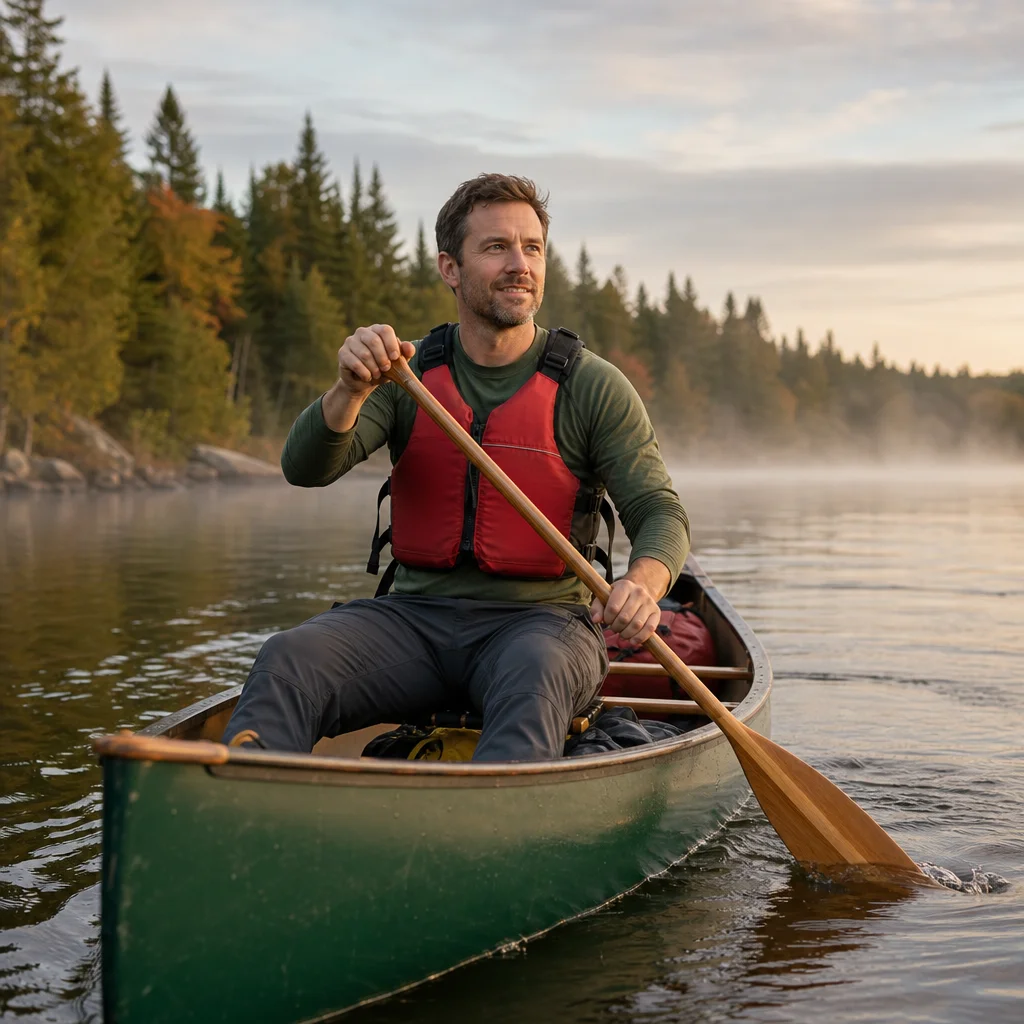
Slow flatwater can feel easy because there’s no current to fight and, often, a breeze to cool your skin. But in the Southern and southwestern United States, that same breeze can mask sweat loss while reflected sunlight and steady paddling quietly raise your heat load. The safest plan balances several choices rather than relying on one large water jug or a single midday break.
Start with the route, not the cooler
Heat management begins before you choose what to pack. A short morning outing with nearby takeouts gives you more options than a long afternoon crossing with no shade. Look at the route’s exposed sections, landing points, rest areas, and places where you can get off the water safely.
For hot-weather canoeing, the most comfortable schedule is often an early start, a long break during the hottest part of the day, or an evening finish where local conditions allow. That approach may conflict with fishing plans, launch availability, or a group’s preferred pace. The trade-off is straightforward: a less convenient schedule can reduce the amount of time you spend working in peak heat.
Check the forecast for more than air temperature. Heat index, humidity, wind, cloud cover, smoke, and the chance of thunderstorms all affect the day. In desert areas, low humidity may make the air feel tolerable while increasing evaporative water loss. In humid areas, sweat may not evaporate efficiently, so you can become overheated even when the thermometer doesn’t look extreme.
Confirm the day’s conditions: Before launching, check the current forecast, heat advisories, waterway notices, access hours, and any local restrictions. Conditions and rules vary by location, and a shaded map from a previous trip isn’t a substitute for today’s information.
Plan water with a margin
Bring enough drinking water for the planned outing, plus extra for delays, wrong turns, a slower-than-expected pace, or a partner who needs more than expected. Don’t treat the water in the river, lake, or reservoir as drinking water unless it has been properly treated; clear water can still contain harmful organisms or pollutants.
There isn’t one universal amount that fits every paddler. Body size, exertion, temperature, humidity, clothing, food, and individual medical needs all matter. A useful habit is to drink regularly instead of waiting until you feel intensely thirsty, while avoiding the idea that more water is always better. Excessive water intake without adequate electrolytes can also create a medical emergency.
Pack water where you can reach it without standing or making a complicated maneuver. A bottle in a dry bag at the bow is less useful if accessing it requires leaning across the canoe. A hydration reservoir can encourage frequent sips, but a wide-mouth bottle is often easier to refill, inspect, and clean.
Keep a separate reserve sealed until it’s needed. If your primary supply leaks, gets left at a rest stop, or is shared faster than planned, that reserve can turn a bad calculation into a manageable one. On remote routes, carry enough capacity for the possibility that help or a refill point is farther away than expected.
Use shade as a real resource
Shade isn't merely a pleasant place to eat lunch. It lowers direct solar exposure and can make a break more effective, especially when paired with water, reduced activity, and airflow. Mark likely shaded landings on your route, but don’t assume every tree-lined bank is accessible. Private property, steep banks, mud, thick vegetation, and wildlife can turn a promising spot into an unsafe landing.
A canoe canopy or umbrella can help on open water, but each has costs. A canopy provides broad shade while paddling, yet it can catch wind, obstruct your view, interfere with fishing, and make a capsize more complicated. An umbrella is simple for some calm conditions but can be awkward to control and offers less reliable coverage.
If you use any shade system, test it before the trip. Keep it low enough to preserve visibility, make sure it doesn’t block paddle strokes, and have a plan for securing or removing it quickly if wind increases. On exposed water, the ability to pack away a shade device may matter more than maximum coverage.
Choose clothing that manages heat and sun
Lightweight, loose-fitting clothing with good sun coverage usually offers a better balance than bare skin. A long-sleeved shirt, lightweight trousers or shorts, a broad-brimmed hat, sunglasses, and sunscreen can reduce direct exposure. Fabrics that dry quickly are useful after splashes, but “quick-dry” doesn’t mean a garment is automatically cool or protective; check its fit, breathability, and stated ultraviolet protection where that feature matters.
A hat with a brim protects more of your face and neck than a baseball cap. A neck gaiter or sun flap can add coverage, although it may feel too warm in humid conditions. Choose what you can comfortably keep wearing. Clothing left in a dry bag can't protect you while you’re paddling.
Sunscreen is one part of the plan, not a replacement for clothing and shade. Reapply it according to the product directions, especially after sweating or getting wet. Protect commonly missed areas such as ears, the back of the neck, hands, and the tops of feet when wearing sandals.
Make breaks frequent and useful
A break is most effective when it happens before the group is struggling. Stop to drink, get out of direct sun, eat something, and assess how everyone is doing. Waiting for a person to become exhausted can make a short pause inadequate.
During a break, loosen restrictive clothing, move into shade, and avoid turning the stop into another strenuous task. A landing that requires dragging the canoe a long distance may consume more energy than it saves. On shallow water, you might be able to rest with the canoe secure, but don’t let a cooling stop create a separate risk from unstable footing or a drifting boat.
Food matters too. Paddling on an empty stomach can leave you feeling weak, while heavy meals may feel uncomfortable in the heat. Pack familiar, easy-to-eat options such as sandwiches, fruit, crackers, nuts, or other foods that fit your dietary needs. Salty foods or electrolyte drinks can be useful during prolonged sweating, but they aren’t a cure for heat illness and may not suit everyone.
Recognize early warning signs
Pay attention to changes in behavior and coordination, not just complaints of thirst. Headache, unusual fatigue, dizziness, weakness, nausea, muscle cramps, irritability, confusion, and a sudden drop in paddling ability can all signal that someone needs to stop and cool down. A person who becomes confused, has a seizure, loses consciousness, or has very hot skin requires emergency action.
If someone shows concerning symptoms, get off the water if you can do so safely, move them into shade or a cooler place, remove excess clothing, and begin cooling while contacting emergency services. Follow the dispatcher’s instructions. Don’t leave a severely ill person alone, and don’t make them continue paddling to reach a more comfortable destination.
Heat illness can overlap with dehydration, sunburn, low blood sugar, exhaustion, and other medical problems. If symptoms are severe, worsening, or unclear, treat the situation seriously rather than trying to diagnose it from the canoe. Paddlers with medical conditions, those taking medications that affect sweating or fluid balance, and anyone with individual hydration restrictions should ask a healthcare professional for personalized advice before a hot-weather trip.
Check your response plan: Before departure, confirm how your group will call for help, share its location, reach the nearest exit, and respond if someone becomes confused or unable to paddle. Cell coverage can be inconsistent, so don’t assume a phone alone solves a remote-water emergency.
Balance comfort against unnecessary gear
You don’t need a complicated cooling system for every summer outing. For a short, accessible trip, a reliable water supply, sun-protective clothing, sunscreen, a hat, food, and a way to communicate may be enough. A longer or more isolated route justifies greater water capacity, better shade options, navigation backups, and a more deliberate emergency plan.
Cooling towels, battery fans, misting bottles, and large canopies can help in some settings, but each adds weight, clutter, or failure points. Prioritize equipment that works when wet, can be secured in the canoe, and doesn’t interfere with a safe exit. A heavy cooler may keep drinks cold but can become an awkward load during a carry or capsize.
Keep essential items secured but accessible. Water, first-aid supplies, communication devices, sun protection, and emergency information shouldn't be buried under lunch and spare clothing. Waterproofing helps, but no container replaces a sensible plan for keeping people cool and getting them off the water.
A simple hot-weather decision check
Before launching, ask:
- Is the route short and close enough to a safe exit for today’s conditions?
- Does each paddler have accessible drinking water, with a reserve for delays?
- Where can the group find shade or stop safely?
- Is everyone dressed for sun protection and heat management?
- What time will the group turn around or stop, regardless of how far it has traveled?
- What symptoms will trigger an immediate break or an early return?
- How will the group get help if a paddler can't continue?
The goal isn’t to eliminate every uncomfortable moment. It’s to prevent discomfort from becoming impaired judgment, heat illness, or a rescue problem. Start earlier when possible, drink steadily, use shade before you desperately need it, and treat a slower pace or an early takeout as a sensible decision—not a failed trip.