What to Do When a Canoe Capsizes Far From Shore
I’ll explain how to respond when a canoe capsizes far from shore, including how to keep people together, protect flotation, assess cold water and conditions, and choose between waiting, signaling, or moving toward safety.
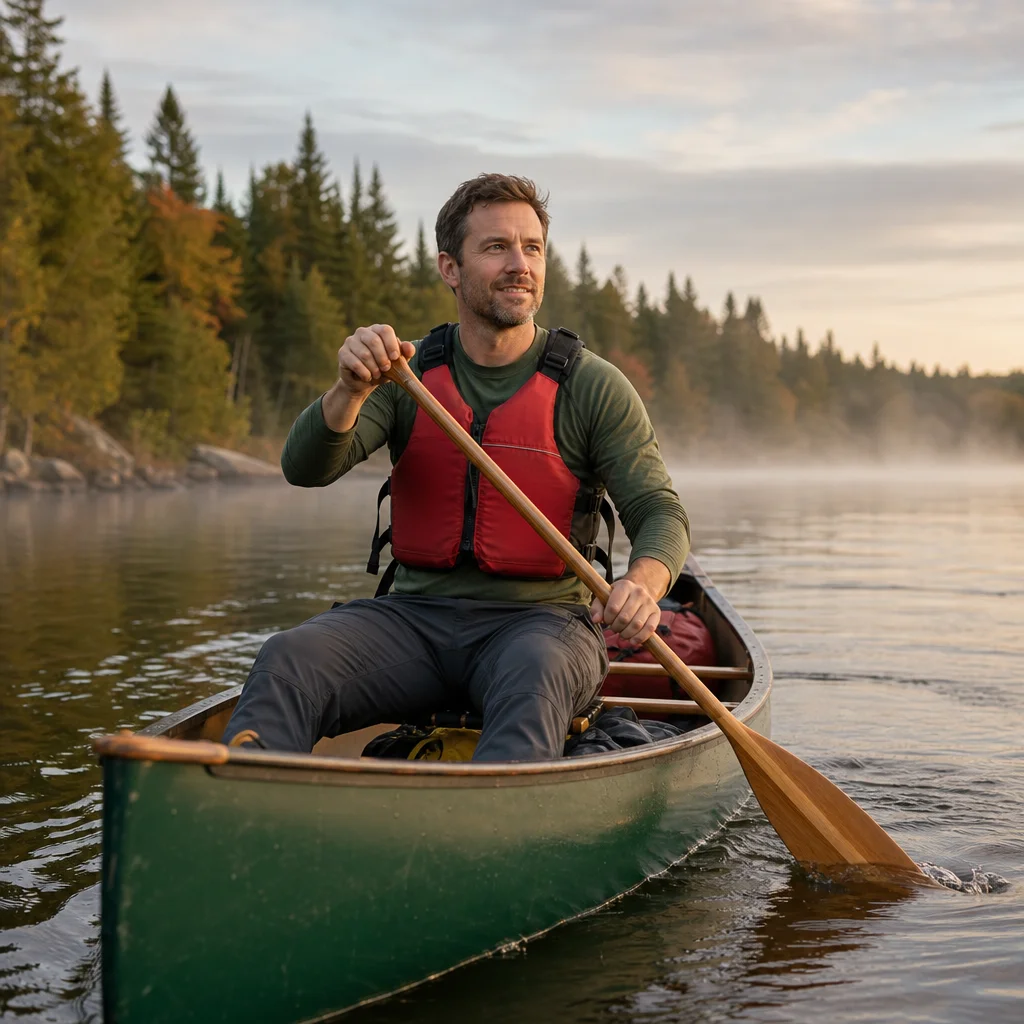
A capsize far from shore can make every decision feel urgent, but the safest response usually starts with doing less, not more. Keep people together, keep hold of flotation, get clear of immediate hazards, and assess the situation before anyone attempts a long swim.
The canoe is useful equipment, but it isn’t a substitute for a properly worn personal flotation device (PFD). Your first priority is keeping people’s heads above water and preventing a difficult situation from becoming a separation or cold-water emergency.
First: Stop the situation from getting worse
As soon as the canoe overturns, take a breath and give clear instructions. Panic wastes energy and makes people harder to account for.
A useful sequence is:
- Keep your PFD on and stay with the canoe. Don't remove it to swim more comfortably or to climb back in.
- Account for every person. Call names, point, and confirm that nobody is trapped under the canoe or separated from the group.
- Move away from immediate hazards. These may include rocks, strainers, boat traffic, surf, steep drops, or a strong current pulling toward danger.
- Keep hold of the canoe, a secured flotation bag, or another reliable item. Avoid chasing loose paddles or equipment if doing so separates you from people or flotation.
- Signal for help early if there’s any doubt. A whistle, waterproof light, phone, marine radio, or visible clothing can make the group easier to locate.
A capsized canoe is often easier for rescuers to see than a swimmer’s head. If the canoe is floating and the conditions aren’t actively carrying it into danger, staying with it is generally the conservative choice.
Keep everyone together
The group should form the smallest practical cluster. Strong swimmers shouldn’t leave weaker swimmers behind, and a person who appears calm shouldn’t be allowed to disappear toward shore alone.
Use short, direct communication: “Stay with the canoe,” “Hold this line,” or “We’re waiting for help.” In cold water, people may become confused or exhausted before they recognize how serious their condition is.
If someone is injured, trapped, struggling to breathe, or showing signs of cold stress, make that person the center of the response. Keep the group in physical contact when possible, but don’t create a tangle of arms, painter lines, or loose straps that could hold someone underwater.
Never wrap a rope around a person or tie yourself to a canoe in moving water. A line can become a dangerous entanglement if the canoe catches on an obstruction or swings broadside to the current.
Protect your flotation
A canoe can support several people only under the right conditions. An empty or properly outfitted canoe may remain visible and buoyant, while a swamped canoe can sit low, roll easily, or become difficult to control.
Keep the hull from drifting away if you can do so without taking on additional risk. Hold a grab handle, seat, painter line, or gunwale where available. Don’t rely on a painter line as a tow rope unless you understand how it can snag and you can release it quickly.
Secure loose gear only if the task is simple and safe. Losing a dry bag is frustrating; losing contact with the group is more serious. If the canoe is floating upside down, trying to flip it in open water may exhaust you and can push people apart. It may be better to use the overturned hull as visible flotation while waiting for assistance.
Assess the real hazards
Before deciding whether to swim, evaluate four things: distance, conditions, people, and help.
Distance and destination
Shore can look deceptively close from the water. A tired swimmer may cover less distance than expected, especially while towing or supporting another person. Estimate whether the nearest shore is actually reachable, not merely visible.
Ask what lies between you and shore. A gently sloping beach is different from a rocky bank, a marsh, a cliff, a dock, or a busy channel. The closest shoreline may not be the safest landing point.
Wind, waves, and current
Wind can push a canoe and swimmers in different directions. Waves can repeatedly roll an overturned canoe and make reentry attempts exhausting. Current can carry the group toward hazards faster than it appears from the surface.
In moving water, avoid standing up unless the water is shallow, slow, and free of obvious foot-entrapment hazards. A person who falls can be swept under a canoe or against an obstruction. Follow the safest local moving-water position for the setting, and treat strainers, hydraulics, rapids, and low-head dams as immediate hazards rather than routes to shore.
Water temperature and clothing
Cold water changes the decision. Even a strong swimmer can lose useful coordination, strength, and judgment. Keep as much of your body out of the water as possible, conserve energy, and avoid unnecessary swimming.
If the water is cold, don’t assume a short distance is safe. The risk includes cold shock at entry, rapid fatigue, and hypothermia after prolonged immersion. Heat loss continues even after reaching shore, so a plan that ends at the bank still needs a way to get dry and warm.
People and equipment
Consider the least capable or most vulnerable person in the group, not the strongest swimmer. Account for children, non-swimmers, injuries, fatigue, bulky clothing, and anyone whose PFD doesn’t fit correctly.
A phone in a waterproof case, a marine radio, a whistle, signal mirror, light, and brightly colored clothing can change the rescue timeline. Use what you have early rather than waiting until everyone is exhausted.
Confirm your emergency route before launching: Check the local emergency number, marine-radio procedures, coverage limitations, park or waterway rules, and any current advisories for the specific lake, river, or coastal area. Regulations, communications coverage, and rescue resources vary across North America.
Decide whether to swim or wait
The default choice in a capsize far from shore is usually to stay with the canoe and wait for help, especially when:
- everyone is together and wearing a PFD;
- the canoe remains visible and provides flotation;
- the group isn’t being swept toward an immediate hazard;
- help has been contacted or can be signaled; and
- the water is cold, rough, or difficult to cross.
Swimming may be reasonable only when the destination is clearly reachable, the route is safer than remaining where you are, and the group can make the move without abandoning someone. A shore that is technically reachable may still be a poor destination if it requires crossing a current, landing on rocks, or leaving an injured person without support.
If the group must move, agree on the destination first. Keep people together, use the canoe as support when possible, and move steadily rather than racing. Don’t tow a person who can't assist unless the group has the equipment, strength, and conditions to do it safely.
If conditions worsen, return to the canoe or regroup rather than continuing a swim that is becoming unmanageable. A decision can be revised; fatigue makes later decisions harder.
If help is coming
Make the group visible and predictable. Stay with the canoe if it’s safe, raise a paddle or bright item, blow the whistle in repeated signals, and use a phone or radio to update rescuers if your location changes.
Share a precise position if you can: a GPS location, shoreline landmark, island name, channel marker, launch site, or direction and distance from a known point. Report the number of people, injuries, PFD use, water conditions, and whether the canoe is still with you.
Don’t assume that a call has succeeded because it connected briefly. Confirm that the message was understood, preserve battery power, and keep the phone protected from water. If using a marine radio, follow the applicable distress procedure and remain available for questions.
When a rescue craft approaches, follow its instructions. Keep hands and limbs clear of lines and propellers, and don’t try to climb aboard in a way that could capsize the rescuing boat.
Common mistakes to avoid
Swimming for gear
Paddles and dry bags can be replaced. Don’t split the group or lose canoe contact to retrieve them.
Trying to empty the canoe in deep water
A swamped canoe is heavy and unstable. Repeated lifting or flipping can exhaust everyone and may not restore enough flotation for safe reentry.
Separating the strongest swimmer
A strong swimmer may seem like the obvious person to send for help, but separation makes both people harder to find. Use signaling and communication first unless remaining together is more dangerous.
Removing a PFD
A PFD is most valuable when someone is cold, injured, tired, or unexpectedly knocked unconscious. Keep it secured and properly fastened.
Underestimating cold water
Shivering, clumsy hands, confusion, unusual quietness, and worsening fatigue are warning signs. Treat them as reasons to signal urgently and reduce exertion, not as evidence that the person is coping well.
After reaching safety
Once everyone is out of immediate danger, keep wet people sheltered from wind and get dry insulation around them. Handle suspected hypothermia gently, monitor breathing and responsiveness, and seek emergency medical help for serious or worsening symptoms.
Report the incident as required by the local authority, especially if emergency services were involved or someone was injured. Later, inspect the canoe, PFDs, flotation, lines, and dry bags. Identify what caused the capsize and what would have made the response easier: better flotation, more visible clothing, a waterproof communication method, or a simpler route.
The next trip should include a short rescue review rather than a promise to “be more careful.” Practice staying with the canoe, signaling, and communicating a location. In a real capsize, those simple actions are easier to remember than an elaborate rescue plan.