Cold-Water Canoeing: Deciding Whether the Risk Is Worth the Trip
I’ll compare the decisions that make a spring or fall canoe trip reasonable or reckless, from water temperature and clothing to group skill, shoreline access, and bailout options. You’ll get a practical way to decide when to launch—and when to wait.
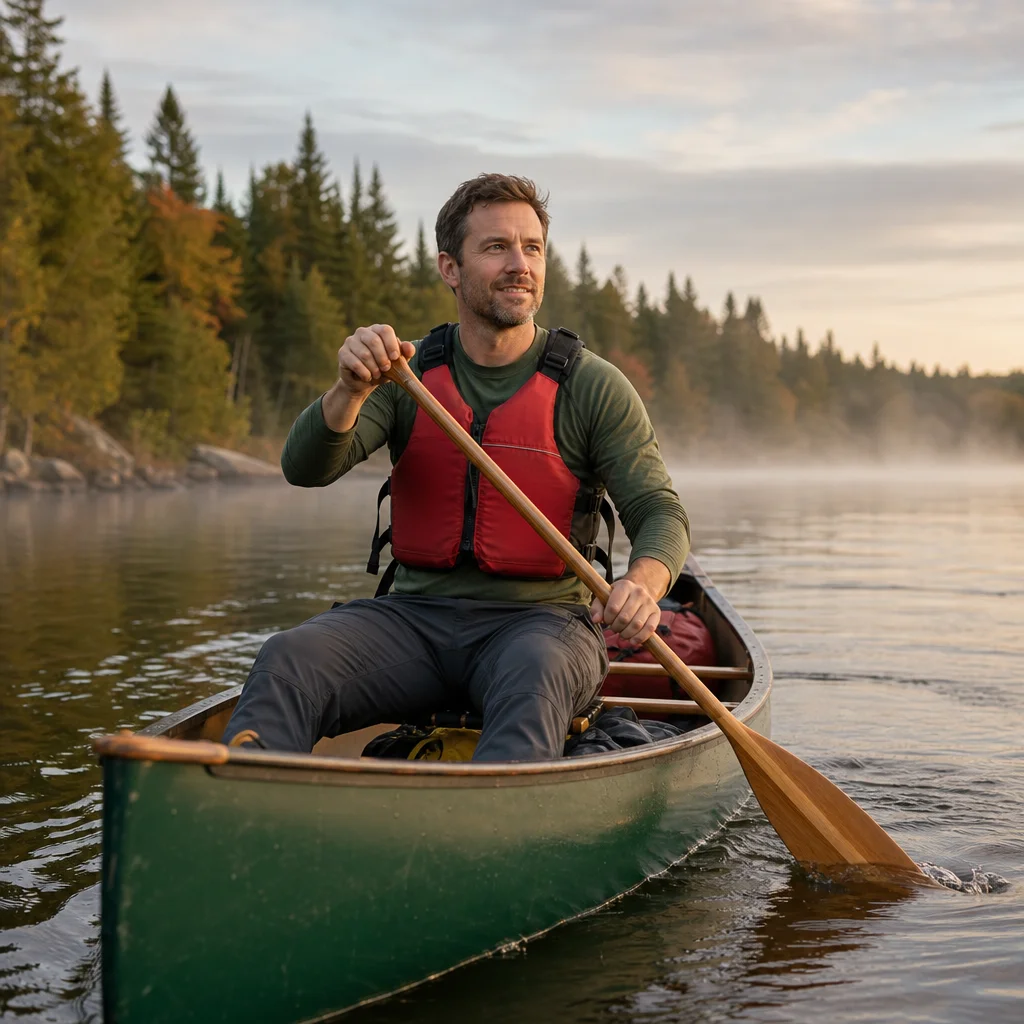
Cold water can turn an ordinary canoeing mistake into a rescue problem before you have time to feel embarrassed about it. The important decision isn’t simply whether the air feels pleasant; it’s whether you can survive an unexpected swim and get out of the water quickly.
I look at cold-water risk as a chain of decisions. Water temperature matters, but so do clothing, distance from shore, wind, route difficulty, canoe stability, group ability, and the quality of your recovery plan. If several of those factors are unfavorable, a beautiful spring or fall day may not be worth the trip.
Start with the water, not the weather
Air temperature is easy to notice and easy to overvalue. A sunny 60°F day can still involve dangerously cold water, especially early in spring or after a stretch of cool weather. Water warms and cools more slowly than air, and shaded lakes, deep rivers, and snowmelt-fed waterways can remain cold well into the season.
Many paddling organizations use about 60°F (15°C) as a useful point at which to treat water as cold. It isn’t a magic line. A confident swimmer may manage water above that temperature, while a tired, injured, or heavily clothed paddler may struggle in warmer conditions. Consider the temperature a risk indicator, not a guarantee of safety.
The colder the water, the less forgiving a capsize becomes. The first problems may include an involuntary gasp, rapid breathing, pain, reduced coordination, and difficulty thinking clearly. Later, fatigue and loss of strength can make swimming, climbing onto a canoe, or helping another paddler much harder.
Check the water before choosing the route: Look for a recent, relevant water-temperature reading from a local authority, watershed agency, outfitter, or reliable monitoring station. If you can’t find one, assume the water is colder than the air suggests and plan accordingly.
Use a cold-water decision framework
Before launching, rate the trip across six questions. A weak answer in one category may be manageable; several weak answers together should usually change the plan.
1. What happens if I’m in the water?
Ask how long it would take to reach shore, a dock, a safe landing, or a person who can help. “The shoreline is visible” isn’t the same as “the shoreline is reachable.” Steep banks, dense vegetation, current, breaking waves, and private property can make a short distance difficult.
A good cold-water route keeps you close to usable exits. That might mean a sheltered shoreline, frequent landing places, or a series of short crossings rather than one long open-water traverse.
2. Can I stay warm before and after the capsize?
Cotton clothing is a poor choice for a cold-water trip because it loses much of its insulating value when wet. Ordinary fleece, wool, and synthetic layers can help, but they may not provide enough protection during a prolonged swim or a windy recovery.
A wetsuit or drysuit is a more deliberate cold-water choice. A wetsuit provides insulation by trapping a thin layer of water against the body; it must fit properly to work well. A drysuit keeps water out when paired with suitable insulating layers underneath, but it requires correct use, compatible footwear, and practice.
Neither suit makes a capsize harmless. A wetsuit can restrict movement if poorly fitted, and a drysuit can be uncomfortable or limiting if the wearer hasn’t practiced in it. Clothing should support a recovery plan, not replace one.
Bring warm, dry clothing in a genuinely waterproof system. A plastic bag inside a non-waterproof pack may help with splashes but shouldn’t be treated as reliable immersion protection. Pack clothing so you can reach it after a capsize, not buried beneath gear that has floated away.
3. How far is the group from effective help?
A group is safer than a solo paddler only when its members can actually help one another. Everyone should know how to stabilize a canoe, assist a swimmer, call for help, and reach shore without creating a second emergency.
Consider the least experienced paddler, not the strongest person in the group. A route that is reasonable for an advanced team may be inappropriate for beginners in cold water. Also account for age, medical conditions, fatigue, panic response, and whether anyone is carrying a heavy load.
A group should agree on communication before launching. Simple signals, a turnaround time, and a plan for separating or regrouping are more useful than assuming everyone will make good decisions under stress.
4. Is the canoe and load forgiving?
A stable canoe with sensible trim gives you more time to correct mistakes. An overloaded, poorly trimmed, or unfamiliar canoe narrows that margin. Keep heavy equipment low and centered, secure loose gear, and leave enough freeboard for waves and movement.
Test the canoe near shore before committing to the route. Notice how it responds when paddlers shift position, reach for gear, or lean slightly. If the canoe feels twitchy in calm water, cold wind and bulky clothing won’t improve it.
A canoe that is easy to paddle but difficult to re-enter may still be a poor cold-water choice. Recovery should be part of evaluating the boat, not an idea reserved for training day.
Choose the route around recovery, not scenery
A safe-looking lake can become difficult when wind pushes you away from shore. Rivers add current, strainers, hydraulics, and changing water levels. Narrow waterways may offer frequent landings but create hazards around fallen trees and steep banks.
For a cold-water trip, favor routes with:
- Protected water and manageable wind exposure
- Frequent, reachable landing places
- Minimal current or known current hazards
- A clear turnaround point
- Short crossings instead of long open-water sections
- Road or trail access for an emergency evacuation
- A bailout option if weather, fatigue, or equipment changes
Check the forecast for wind, precipitation, and changing temperatures rather than looking only at the morning conditions. Weather and water conditions can shift during the trip. Local closures, access restrictions, water-level warnings, and required safety equipment can also change by season or location.
Verify the launch-day details: Check current local rules, access conditions, weather, water levels, and emergency contacts before you leave. Regulations and hazards vary between states, provinces, parks, and waterways; carry the safety equipment required where you’ll paddle.
Don’t confuse preparation with recovery skill
Carrying a bilge pump, throw bag, spare paddle, communication device, and first-aid kit is sensible. Knowing where those items are and how to use them matters more than owning them.
Practice the following in warmer conditions before depending on them in cold water:
- Keep hold of the canoe or paddle after a capsize rather than swimming away from it.
- Help a swimmer stay calm and keep their airway clear.
- Empty or stabilize a swamped canoe.
- Re-enter or assist with a canoe-over-canoe recovery.
- Paddle or tow the group to shore after equipment is wet.
- Contact emergency services and describe your location clearly.
A person in cold water may not behave as expected. They may gasp, become confused, or struggle to follow instructions. The group should prioritize keeping the swimmer’s face above water, getting them out quickly, and preventing other paddlers from capsizing during the rescue.
If a recovery attempt is failing, change the goal. Getting everyone to shore may be safer than fully emptying and reloading the canoe on open water. If someone is injured, unable to climb out, or showing signs of serious cold stress, call for professional help rather than repeatedly exhausting the group.
When the risk probably isn’t worth it
Postpone or shorten the trip when:
- The water is cold and no one has appropriate immersion protection.
- You’re relying on swimming to reach shore.
- Wind or waves could push you away from landing options.
- The route has strong current, strainers, or difficult banks.
- The canoe is overloaded or unfamiliar.
- The group lacks practiced capsize and rescue skills.
- A phone is the only emergency plan and may not have service.
- Anyone is tired, ill, impaired, or uncomfortable with the conditions.
You don’t need a dramatic forecast to make a conservative decision. Cold water removes margin from small errors, and an easy trip can become difficult through a simple combination of wind, wet clothing, and distance from shore.
When a shorter trip may be reasonable
A cold-water outing can be a sensible choice when the group is properly equipped, trained, and close to reliable exits. Keep the first trip of the season modest: paddle near shore, avoid unnecessary crossings, and use the route to evaluate clothing, boat handling, and group communication.
Treat discomfort as information. If bulky layers limit your stroke, if gloves make it hard to grip the paddle, or if a drysuit causes overheating before launch, solve those problems before going farther. Equipment that is technically appropriate but practically unusable isn't adequate equipment.
A final launch decision
Before you push off, answer these questions honestly:
- Do I know or conservatively estimate the water temperature?
- Can I stay protected during an unexpected swim?
- Can everyone reach a safe exit quickly?
- Can the group perform a recovery without creating another capsize?
- Is the canoe loaded and trimmed for the conditions?
- Are wind, current, and weather within the group’s ability?
- Do we have a realistic bailout and communication plan?
If the answers are strong, choose the route that preserves those advantages throughout the day. If several answers are uncertain, move closer to shore, shorten the outing, improve the equipment or training, or wait for warmer water. The trip isn’t wasted when you turn around at the launch; you’ve made the decision that gives you the best chance of enjoying the next one.