How to Help a Paddler Who Is Panicking Without Making It Worse
I’ll clarify how to support a panicking canoe partner with calm words, stable boat positioning, simple choices, and safer shoreline decisions. The focus is reducing risk without crowding, arguing, or turning a stressful moment into a rescue emergency.
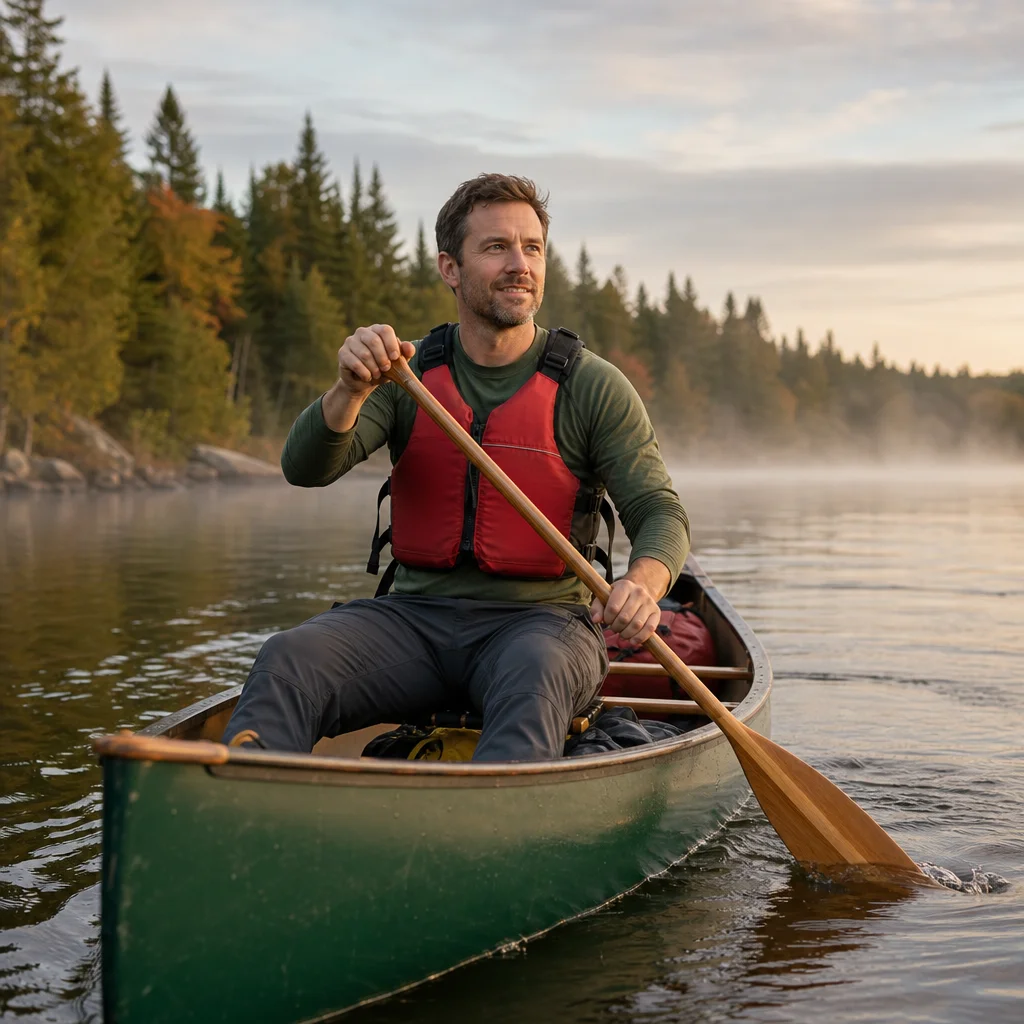
Panic on the water can make a manageable problem feel immediately dangerous. A paddler may stop hearing instructions, grab the wrong part of the canoe, paddle randomly, or insist on a choice that increases the risk of capsizing.
The helper’s job isn’t to win an argument or deliver a long safety lecture. It’s to reduce stimulation, keep the canoe as stable as possible, and guide the next safe action one step at a time.
Start by stabilizing yourself
Use a low, steady voice and slow your movements. A panicked paddler will often take cues from the person who appears most composed. Speaking loudly, giving several commands at once, or showing visible frustration can make the fear spread through the canoe.
Keep your instructions short:
- “Look at me.”
- “Keep your hips centered.”
- “Hold the paddle across your lap.”
- “We’re moving toward that shore.”
- “One step at a time.”
Avoid phrases that dismiss the fear, such as “You’re fine,” “There’s nothing to worry about,” or “Stop panicking.” They may be intended to reassure, but they don’t give the paddler anything useful to do. Try acknowledging the feeling while directing attention to an action: “I know this feels scary. Keep looking at me and keep both hands inside the canoe.”
If you’re the stern paddler, your calmness matters even more because your movements and steering affect the boat. If you’re in the bow, avoid twisting around repeatedly or reaching toward the panicked person. Keep your weight low and centered unless you have a specific reason to move.
Reduce the number of decisions
Panic narrows attention. The paddler may not be able to process a route choice, a technical explanation, and a warning at the same time. Give one instruction, wait for it to happen, and then give the next one.
A useful sequence is:
- Stabilize: “Keep your body centered and stay seated or kneeling.”
- Control equipment: “Put the paddle across your lap.”
- Orient: “Look at the canoe, not the water beside you.”
- Choose a direction: “We’re going to the calm shoreline on our right.”
- Move deliberately: “When I say paddle, take two easy strokes.”
Use concrete landmarks rather than vague directions. “Toward the sandy bank beyond that fallen tree” is easier to follow than “Go over there.” If the paddler is too distressed to paddle, don’t insist that they keep contributing. A stable, quiet passenger is often safer than an erratic paddler.
Don't ask open-ended questions in the middle of the crisis. “What do you want to do?” may place a decision on someone who can’t make one clearly. Ask questions that help you assess immediate needs instead: “Are you hurt?” “Are you cold?” “Did you fall?” “Can you follow one instruction?”
Keep the canoe stable
Most attempts to help go wrong when the helper makes a sudden movement. Reaching across the canoe, standing up, leaning toward the frightened paddler, or grabbing their paddle can shift weight and raise the chance of a capsize.
Unless there’s an immediate danger, keep both paddlers low and near the centerline. Tell the panicked paddler what you’re about to do before moving: “I’m turning us slowly to the left.” Predictable movement is less alarming than a sudden correction.
If the canoe is drifting or turning, use gentle corrective strokes. Avoid powerful strokes that make the boat lurch. A panicked person may interpret a quick turn as loss of control, even when the maneuver is technically sound.
If the paddler is attempting to climb over the gunwale, stop the movement with a clear, calm instruction: “Stay inside the canoe. Keep your weight low.” Don’t wrestle with them or lean hard in the opposite direction. If they’re physically unable to follow instructions, treat the situation as an escalating safety problem and prioritize getting to a safe landing area or contacting emergency help.
Decide whether to continue or land
The safest destination isn't always the nearest visible shore. A steep bank, private property, dense brush, strong current, surf zone, or rocky shoreline may be more hazardous than remaining in calm open water for a short time.
Look for a landing area that is:
- Close enough to reach without crossing dangerous current or waves
- Sheltered from wind and boat traffic
- Gently sloped, if possible
- Free of obvious strainers, submerged branches, or unstable rocks
- Accessible without requiring the paddler to jump from the canoe
If the canoe is stable and the water is calm, it may be reasonable to paddle slowly toward a suitable shore. If conditions are deteriorating, the person can't follow instructions, or the canoe is taking on water, treat the incident as more than ordinary anxiety. Signal for assistance or contact emergency services when appropriate.
Once ashore, don’t immediately push the person back onto the water to “get over it.” Move the canoe above the waterline, check for injury and signs of cold stress, and let the paddler settle. A trip can end without being a failure. Continuing after someone has lost the ability to participate safely is usually a poor trade.
Check the local rescue plan: Before a trip, confirm the applicable emergency number, waterway access points, communication coverage, and local rules for life jackets and boating. Requirements and response options vary across North America, and a phone may not work where you launch.
If the paddler is afraid of tipping
Fear often grows when the paddler can’t tell what the canoe is doing. Explain only the immediate behavior: “The canoe is floating level,” or “We’re turning slowly.” Don’t promise that it can't capsize. Absolute reassurance can damage trust if the boat rocks again.
Ask the paddler to keep their eyes on a stable reference, such as the opposite shoreline or your face, rather than staring at the water beside the canoe. Encourage relaxed breathing without turning it into a complicated exercise: “Breathe in slowly, then let it out. Keep your hands inside.”
Avoid using the gunwales as handholds for balance unless the canoe’s design and situation make that appropriate. Gripping high and pulling against the side can contribute to instability. A centered posture and low weight are generally more useful than a tense upper body.
If the canoe does capsize, give short instructions before attempting to move: “Stay with the canoe. Hold onto the boat. Keep your head above water.” Don’t tell a person to swim for shore automatically; distance, current, water temperature, obstacles, and their swimming ability all matter. A canoe is easier for rescuers to see than a separated swimmer, and it can provide flotation.
Help without crowding
A panicked paddler may need space as much as reassurance. Keep your voice available, but don’t repeat the same sentence continuously. Repetition can sound like pressure and may prevent the person from processing the instruction.
Use their name if it helps focus them. Assign one person to communicate if there are several helpers. Multiple voices offering different solutions create confusion, especially in a tandem canoe or family group.
Avoid blaming language during and immediately after the incident. Questions such as “Why did you do that?” or “Didn’t you listen?” can make the paddler hide symptoms, resist future safety decisions, or panic earlier next time. Once everyone is safe, discuss what triggered the reaction and what would make the next outing more manageable.
Possible adjustments include:
- Choosing calm, protected water
- Shortening the route
- Practicing braces and capsize responses near shore
- Using a canoe with more initial stability
- Taking a break before fatigue becomes fear
- Paddling with a more experienced partner
- Agreeing on simple commands before launching
Prevent panic before launch
A short briefing can remove much of the uncertainty that causes distress. Explain where the canoe is going, what signals mean, how to ask for a stop, and what each person should do if the boat rocks or capsizes.
Agree on plain commands such as “stop,” “shore,” and “hold.” Make sure everyone knows that saying “I need to land” is an acceptable safety decision, not an inconvenience. Families and trip leaders should also identify who carries communication equipment, who watches the weather, and who stays with a struggling paddler if the group is separated.
Wear properly fitted, approved personal flotation devices throughout the outing. A life jacket can’t remove panic, but it gives the paddler more time and support if they enter the water. Check that it fits before launching rather than trying to adjust it during a crisis.
A simple response checklist
When a canoe partner panics, remember calm, center, simplify, and choose:
- Calm: Lower your voice and slow your movements.
- Center: Keep weight low, centered, and inside the canoe.
- Simplify: Give one short instruction at a time.
- Choose: Select a safe landing area or call for help when the situation exceeds your control.
Afterward, check for injury, cold stress, exhaustion, and continuing distress. Review the event without assigning blame, then change the route, equipment, skills practice, or group plan as needed. The goal isn’t to prove that the paddler can push through fear; it’s to keep everyone safe while restoring enough control to make a sound decision.