How Wind Direction Changes a Lake Crossing Decision
A sheltered shoreline route can be safer than a short crossing when wind has room to build waves. I’ll show you how to read fetch, trim, crossing angles, and changing conditions so your lake decisions remain reliable from launch to landing.
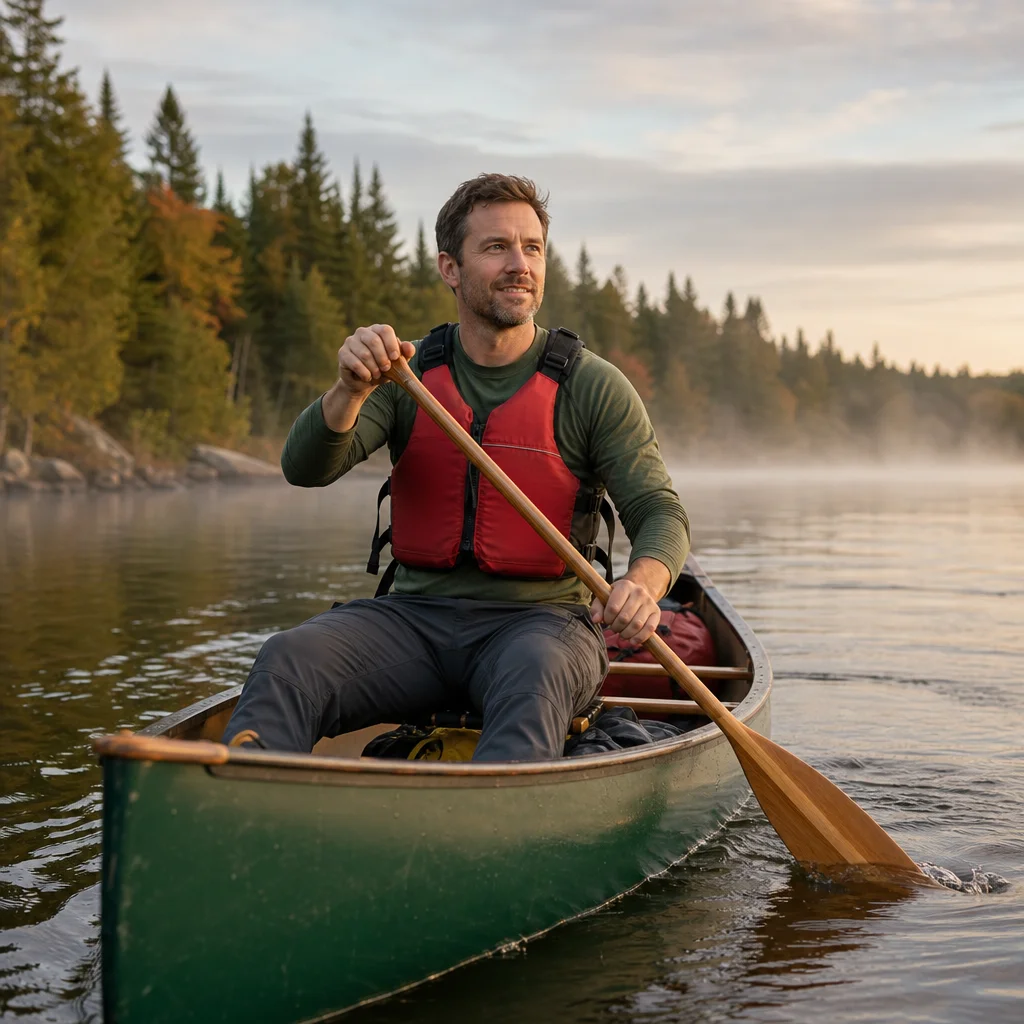
A lake crossing can look easy on a map and feel entirely different once wind has traveled across open water. The shortest route may expose a canoe to the largest waves, while a slightly longer shoreline route can keep you in calmer water and closer to useful shelter.
I treat wind direction as one part of a larger decision: how much open water lies upwind, what wave angle the canoe will meet, how the boat is loaded, and whether the conditions are likely to improve or deteriorate. A dependable crossing plan also depends on equipment that works when it matters, not just a forecast that looked reasonable at breakfast.
Start with wind relative to the route
“Wind from the west” is useful information, but it doesn’t answer the crossing question by itself. You need to compare the wind direction with the shoreline, your route, and the water you’ll cross.
A crossing can encounter several broad patterns:
- Headwind: Wind blows toward the canoe’s destination. Progress is slower, but the canoe’s bow can usually be kept pointed into the waves.
- Tailwind: Wind comes from behind. The canoe may travel faster, but waves can push the stern sideways or break over it.
- Crosswind: Wind comes from the side. This often creates the most uncomfortable angle because the canoe can roll toward incoming waves or require constant correction.
- Quartering wind: Wind comes partly from ahead or behind and from one side. This can be manageable, but the canoe may yaw, surf, or broach as wave size increases.
The same wind can produce very different conditions on opposite sides of a lake. A north wind may make the north shore rough if the water is open to the south, while the south shore could offer a relatively sheltered route. The compass direction matters less than the direction the wind has traveled across the lake before reaching you.
Understand fetch: the distance wind has to work
Fetch is the uninterrupted distance over which wind can push across water. Longer fetch generally gives waves more opportunity to grow in height, length, and energy. A modest breeze across a narrow bay may produce ripples; the same breeze across a broad section of Lake Superior or a large inland lake can create a serious crossing problem.
Fetch isn't a perfect wave forecast. Wind strength, duration, water depth, shoreline shape, and changing weather all matter. Still, it is one of the most useful map-based checks you can make before launching.
Look for:
- The longest open-water line in the wind’s direction
- Broad bays that funnel or concentrate waves
- Islands that interrupt the wind on one part of the route but not another
- Points and headlands that may create rough water on their exposed sides
- Narrow passages where wind can accelerate or become turbulent
A crossing that begins in a calm bay can become rough after passing a point. Don’t use the conditions at the launch as the only sample of what lies offshore. Study the entire route, including the water near the far landing.
Check the lake you’re crossing today: Before departure, compare a current marine or local weather forecast with observations from the launch, nearby webcams or stations when available, and reports from park or harbor staff. Wind speed, gusts, small-craft advisories, closures, and local hazards can change, so verify the information for your specific lake and date rather than relying on a general regional forecast.
Use shoreline shelter without assuming it is complete protection
A shoreline route isn't automatically calm. Trees, bluffs, islands, and points can block wind over part of the water, but the shelter may disappear around a bend or end abruptly at an exposed shoreline.
In a wind-shadowed area, you may notice lighter ripples and less spray. Near the edge of that shadow, however, wind can become uneven. Gusts may spill over a ridge, and waves may refract around a point. A sheltered cove can also conceal the rougher water waiting outside it.
When planning a route, mark the places where you can:
- Pause and reassess without being pushed away from shore
- Land safely if the wind increases
- Portage or turn around if the shoreline becomes unusable
- Reach a protected bay or island lee
- Communicate your change of plan to someone expecting you
A route with frequent safe exits is usually more reliable than a theoretically shorter route with one distant landing. On a northern lake, cold water and limited daylight make that margin especially valuable even when the air feels comfortable.
Choose a crossing angle for control, not just distance
The straight line between two points is often the shortest route, but it may put the canoe broadside to waves or expose you to the full fetch for the longest possible time. A better route may use an angled departure, a waypoint near an island, or a crossing that meets the most difficult water at a more controllable angle.
As a general principle, keep the canoe’s bow pointed into the incoming waves or somewhat toward them. Avoid allowing steep waves to strike directly on the side. A beam sea can produce uncomfortable rolling, and a following sea can cause the stern to slide sideways or the canoe to turn across the waves.
That doesn’t mean you should steer aggressively into every wave. Constant hard corrections waste energy and can make the canoe twitchy. Use steady strokes, keep your torso balanced, and make small heading changes before the canoe drifts too far off line.
If the waves are coming from behind, a slight angle to the waves may provide more control than running perfectly straight downwind. The correct angle depends on the canoe, load, skill level, and wave shape. If maintaining that angle requires frantic steering, the conditions have already exceeded the route’s comfortable margin.
Trim the canoe for the conditions
Trim is the balance of weight between the bow and stern. It affects how readily the canoe turns, how much windage each end presents, and how the hull meets waves.
A heavily bow-down canoe may bury the bow into oncoming waves and take water over the front. A bow that rides too high can make the canoe difficult to control into a headwind and may allow the wind to push the bow off course. A stern-heavy load can make the bow wander, while excessive weight high in the canoe reduces stability in any direction of wind.
For a crossing:
- Keep heavy gear low and centered as much as practical.
- Secure dry bags and packs so they can’t shift when the canoe rolls.
- Avoid creating a tall, loose stack that catches wind.
- Make small trim adjustments rather than moving suddenly while afloat.
- Reassess trim after adding water, fishing equipment, or extra cargo.
There is no universal trim setting for every canoe. Hull shape, paddler positions, load, and wave direction all change the result. Test the loaded canoe close to shore before committing to open water. A setup that feels fine on flat water may become difficult when wind presses against the bow or stern.
Decide when the crossing should become a shoreline route
A crossing should be reconsidered before it becomes an emergency. Useful warning signs include:
- Waves are beginning to break or throw spray into the canoe.
- You can’t hold a steady heading without repeated forceful corrections.
- The canoe rolls noticeably when waves strike from the side.
- The wind is increasing, shifting toward a less favorable angle, or producing stronger gusts.
- The far shore is still distant, but turning back is becoming difficult.
- A paddler is tired, cold, anxious, or no longer able to paddle effectively.
- Your planned landing is exposed, rocky, or difficult to identify in the waves.
Use a simple turnaround point before you launch. For example, decide that you’ll return to shore or follow the shoreline if the canoe becomes difficult to control, if waves exceed your comfort and skill level, or if the forecast trend is worsening. A pre-decided rule is easier to follow than a debate held in the middle of a crossing.
Turning around isn't always safer if the return route puts the canoe stern-first into steep waves. If the canoe is already in rougher water, turn gradually while keeping control, and aim for the nearest safe shore or sheltered angle rather than automatically retracing the exact route.
Make reliability part of the route plan
Wind judgment gets the attention, but neglected equipment can turn a manageable decision into a bad one. Before a lake crossing, check the parts that support recovery and control:
- Confirm that paddles are sound and that each paddler has an appropriate spare or backup plan.
- Inspect flotation, seats, thwarts, tie-downs, and grab points.
- Make sure packs and other gear are secured without blocking access to essential equipment.
- Carry a bailer or pump, signaling device, communication method, and suitable clothing for cold water conditions.
- Check that the canoe’s hull and outfitting have no damage that could worsen under load.
- Practice fitting and adjusting personal flotation devices before leaving shore.
These checks aren't substitutes for judgment, and no piece of gear makes an unsuitable crossing suitable. Their value is that they preserve options when a gust, wave, or mistake creates a problem.
Maintenance also improves decision-making. A canoe with reliable outfitting responds predictably; a loose seat or shifting load adds uncertainty when you already have enough to manage. Rinse and inspect equipment after trips, repair damage promptly, and keep a short pre-launch checklist so small defects don’t become part of your next weather decision.
A short crossing decision checklist
Before leaving the sheltered side, ask:
- Which direction is the wind traveling across the open water?
- How much fetch lies upwind of the crossing?
- What wave angle will the canoe meet on the outbound and return legs?
- Where are the safe landings and protected pauses?
- Is the canoe trimmed and loaded for those conditions?
- Can every paddler maintain control for the full distance?
- What specific change will make us turn back or stay near shore?
If the answers are uncertain, delay the crossing, shorten it, or choose the shoreline route. The best plan isn't necessarily the one that reaches the far shore fastest. It is the one that remains manageable if the wind shifts, the waves build, or the canoe and paddlers are less fresh than expected.
For future trips, record what you observed: wind direction, exposed sections, useful shelter, difficult points, and which landings were practical. A few notes from each outing can make your route planning more accurate over time—and help keep the next crossing pleasantly uneventful.