What a Small-Craft Advisory Means for a Canoeist
A small-craft advisory isn’t a universal ban, but it isn’t background noise either. I explain how canoeists can read the warning, account for local conditions, and decide when changing plans saves gear, money, and rescue effort.
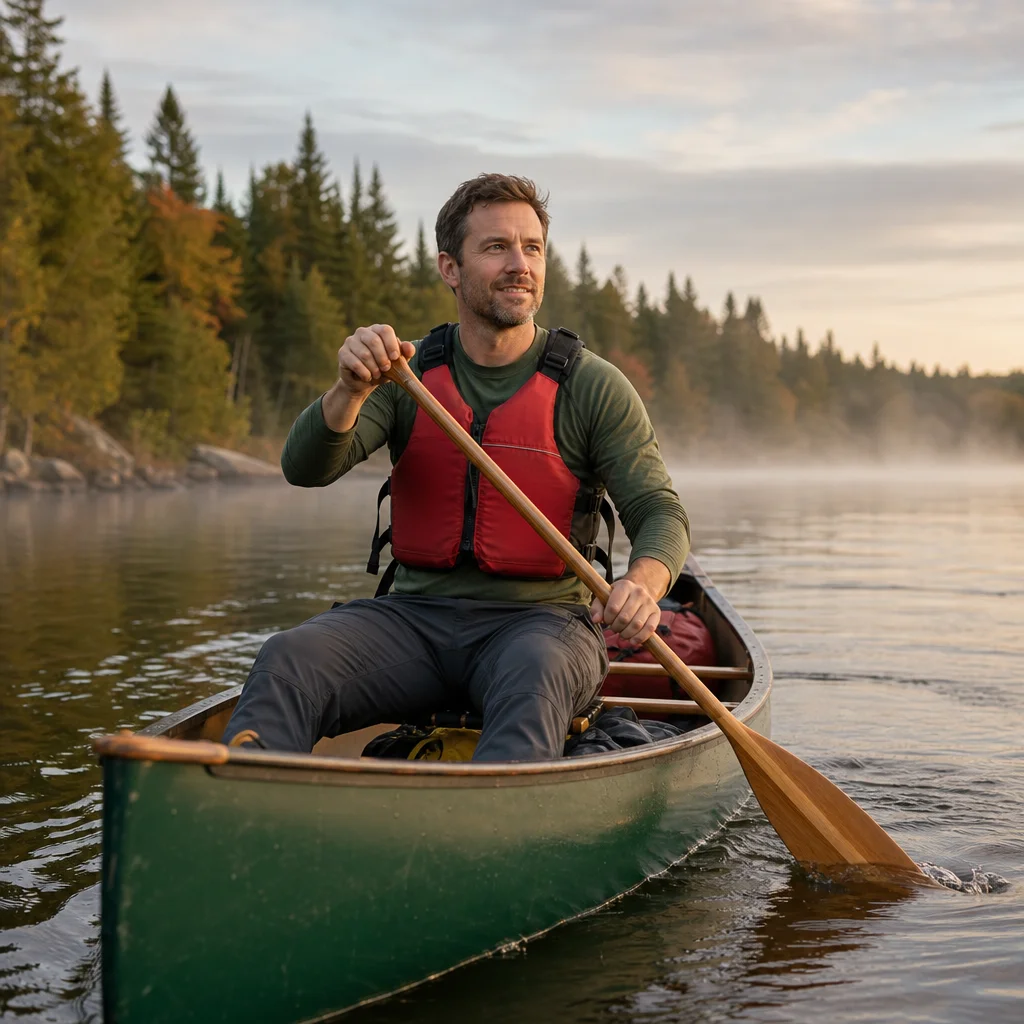
A canoe may be small, but it doesn't behave like every other small boat. A small-craft advisory is written for a broad range of vessels, and the conditions that are merely uncomfortable for a powered boat can be hazardous for a canoe with little freeboard and limited reserve stability.
The useful question isn't simply, “Can my canoe go out?” It's, “What will the wind, waves, temperature, route, and landing options demand from this particular canoeist?”
What the advisory is telling you
In the United States, the National Weather Service uses a Small Craft Advisory to identify conditions that could be hazardous to small boats. The forecast may involve wind, waves, visibility, or a combination of factors. Criteria vary by marine zone and local forecast office rather than following one universal number.
In Canada, similar conditions may be covered by a Small Craft Warning, with local marine forecasts describing the expected wind and wave hazards. Terminology and thresholds can differ between regions and bodies of water.
The advisory is therefore a risk signal, not a precise canoeing rule. It doesn't mean that every small craft will capsize, and it doesn't mean conditions will be equally dangerous at every shoreline. It does mean the forecast has crossed a level at which small-craft operators should reconsider their plans and make conservative choices.
For a canoeist, that signal deserves extra weight because a canoe generally has:
- Less freeboard than many larger boats
- Greater exposure to wind, especially when lightly loaded
- Limited ability to make headway against strong wind
- More sensitivity to waves arriving from the side
- Fewer options for staying dry after a capsize
- Greater dependence on nearby shorelines and reliable landing places
A canoe can be perfectly appropriate for calm water and a poor choice once wind builds. Those aren't contradictory assessments; they're different conditions.
Why the same forecast affects boats differently
A motorboat can often turn toward waves, increase power, and reach a protected harbor quickly. A canoeist may have to paddle hard just to hold a course. If the wind is blowing toward open water, a short crossing can become difficult to reverse.
Wind also creates a practical problem beyond its reported speed. It can push a canoe sideways, make a loaded boat difficult to control, and turn a planned shoreline route into a series of exposed crossings. Gusts may be much stronger than the average wind listed in a forecast. Waves can grow when wind has room and time to travel across the water, a distance often called fetch.
Water temperature matters just as much. A capsize in warm, shallow water near shore is a different emergency from a capsize in cold water several hundred yards from land. The advisory doesn't account for your clothing, swimming ability, companions, or rescue plan. You have to add those factors yourself.
Read the whole forecast, not just the label
Start with the official forecast for the exact lake, river reach, bay, or coastal zone. A general weather app may show conditions for a nearby town without showing the wind direction over the water, wave height, or marine headline.
Look for five details:
1. Wind speed and gusts
Average wind can hide the conditions that make canoe control difficult. Pay attention to gusts, their timing, and whether wind is expected to increase during your planned return. A comfortable morning can become a tiring afternoon if the forecast trends upward.
2. Wind direction
Direction determines whether wind pushes you toward a sheltered bank or away from it. A crosswind can be challenging on a broad lake, while an onshore wind may produce breaking waves near a beach or rocky shoreline.
A route that looks short on a map may require paddling directly into the wind on the way back. Plan around the difficult leg, not the easy outbound one.
3. Wave conditions
Wave height, spacing, and shape all matter. Closely spaced waves can be more difficult than longer, gently spaced waves of similar height. Narrow lakes and reservoirs can also develop steep, choppy waves when wind funnels along their length.
Don't assume that a sheltered launch means the entire route is sheltered. Points, islands, open crossings, and wide bays can expose you suddenly.
4. Visibility and storms
Fog, heavy rain, and thunderstorms add navigation and judgment problems. A canoe has limited visibility from a seated position, and lightning is a reason to leave exposed water rather than trying to finish a route on schedule.
5. Timing and trend
A forecast is a moving estimate. Check it before leaving, then compare the expected conditions with what you observe at the launch. If wind is already stronger than expected, postponing is a sensible use of your time and transport costs.
Check the local marine headline: Before you load the canoe, confirm the current forecast and advisory or warning for your exact waterway through the relevant U.S. or Canadian weather service. Review wind, gusts, waves, thunderstorms, and the forecast for your return time—not only the launch-time snapshot.
Decide what the advisory means for your trip
There is no honest universal answer that says every canoe trip must be canceled under every small-craft advisory. The decision depends on the water, route, canoe, group, and alternatives. Still, an advisory should raise your standard for going ahead.
Postpone when several risks stack up
Postponing is usually the lowest-cost choice when you have open water, strong or building wind, cold water, limited experience, or no nearby landing options. The same applies when you would need to cross a broad lake, paddle against the forecast wind, or rely on a tight schedule.
A trip that requires everyone to perform perfectly in worsening conditions isn't an efficient trip. It can consume equipment, energy, and emergency resources quickly if one person capsizes or becomes exhausted.
Consider a shorter, sheltered alternative
If the group is prepared and conditions are manageable, changing the route may be more useful than simply hoping the forecast improves. Choose a protected cove, narrow section, small pond, or shoreline route with frequent landing points. Keep the canoe close enough to shore that a capsize doesn't become a long swim.
This isn't a way to ignore the advisory. It's a way to reduce exposure. A sheltered route can still become unsafe if wind reaches it, waves build, or thunderstorms approach.
Don't treat a larger canoe as a complete solution
A longer or wider canoe may offer more capacity or stability, but its handling in wind depends on hull design, load placement, trim, and the skill of the paddlers. An empty canoe may catch wind readily; an overloaded canoe may sit too low and take on water.
Extra gear also creates problems if it isn't secured. A dry bag that floats away is a financial loss; loose equipment can interfere with a rescue or make the canoe harder to control.
If you go, reduce the consequences
Follow the equipment and boating requirements that apply where you launch. In the United States and Canada, required safety equipment can vary by jurisdiction, craft, location, and time of day, so check the current rules rather than relying on a generic packing list.
At a minimum, wear a properly fitted, approved personal flotation device while afloat. Dress for the water temperature, not just the air temperature. Secure essential items such as communication devices, keys, and navigation tools so they remain accessible after a capsize.
Before launching, identify:
- The most sheltered side of the route
- Several landing points
- A turnaround point before conditions become difficult
- A way to contact help
- The time when someone on shore should expect your return
Keep the load low and centered, and leave enough freeboard for waves. Avoid standing in the canoe. If wind or waves become harder to manage, head for shore early while you still have control and energy.
A canoeist who capsizes should stay with the canoe unless reaching shore is clearly safer and possible. Cold-water emergencies can progress quickly, so practice your capsize response in controlled conditions before depending on it in open water.
Common mistakes to avoid
Treating “advisory” as “optional.” The wording isn't a guarantee of disaster, but it is a prompt to reassess. Ignoring it because the water looks calm at the launch misses how quickly exposed water can change.
Using a town forecast. Inland and coastal conditions can differ sharply from the nearest land station. Use the forecast zone that covers the water itself.
Planning only the outbound route. Wind direction often makes the return trip the demanding part. Leave enough time and energy for it.
Confusing paddling ability with weather margin. Good technique helps, but it doesn't remove cold water, limited visibility, wind exposure, or lightning risk.
Spending money to solve the wrong problem. A new canoe, motor, or accessory may not make an exposed route appropriate. A postponed launch, a shorter route, or a better forecast often provides more safety for less cost.
Practical next steps
When a small-craft advisory or Canadian small-craft warning appears, use it as a decision checkpoint:
- Find the official forecast for the exact waterway.
- Compare wind, gusts, waves, visibility, and storms with your route.
- Identify the exposed sections and the difficult return leg.
- Consider postponing or moving to a genuinely sheltered alternative.
- If you proceed, shorten the route, keep landing options close, wear flotation, and tell someone your plan.
The advisory is broad, but your decision can be specific. For a canoeist, the most economical choice is often the one that preserves the boat, the gear, and the next weekend's plans.