What a Short Paddle Taught Me About Starting With the Wind
When a short canoe outing begins with a gentle tailwind, the return can demand more effort than expected. I’ll explain how to choose a direction, conserve energy, and adapt when wind conditions change.
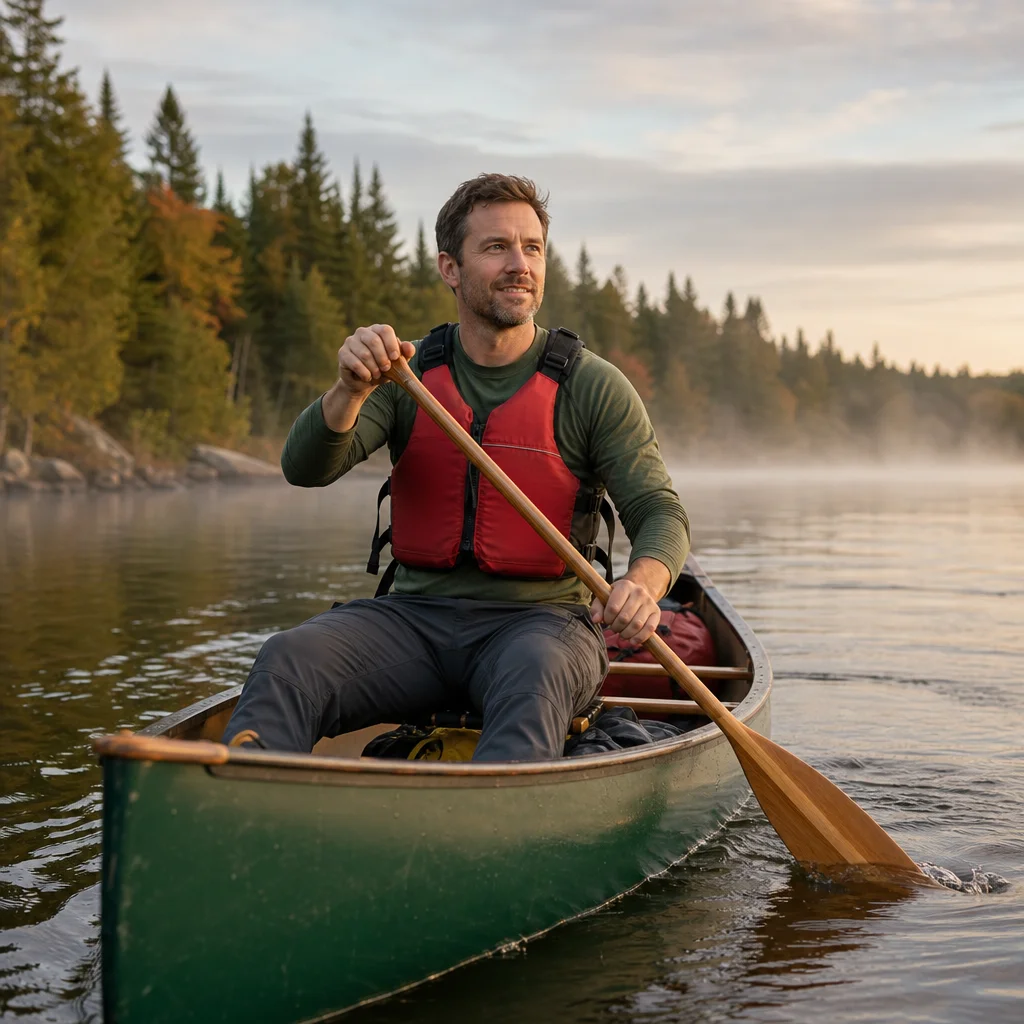
A short paddle can look too simple to require much planning: launch, travel a little way, turn around, and head back. Wind changes that calculation. An easy first hour with the wind behind you may leave the hardest work for the final stretch, when you’re farther from the launch, more tired, and less able to adjust.
The usual advice is to paddle into the wind first and return with it. That’s often sensible, but it isn’t an absolute rule. Wind direction, shoreline shape, route length, boat loading, weather trends, and your own energy all matter. The useful lesson isn’t simply “always start into the wind.” It’s to spend your limited energy where it gives you the most control.
Why the First Easy Miles Can Mislead You
A following wind can make a canoe feel unusually efficient. The hull moves easily, your strokes feel light, and the route may seem shorter than planned. That can encourage you to continue farther than your original turnaround point.
The problem appears when you turn around. You may now face the same wind that helped you earlier. If the breeze has strengthened, the return leg can become slow and wet. You’re also likely to have less energy, fewer daylight hours, and less patience for correcting a poor route choice.
This is especially noticeable in an open canoe. Canoes have considerable surface area above the water, so wind can push the bow, stern, or side of the boat. A loaded canoe may track differently from an empty one, and a solo paddler may have less ability to shift weight or maintain a strong corrective stroke for a long period.
A short trip doesn’t remove these factors. It only reduces the amount of time you have to recover from them.
The Case for Starting Into the Wind
Beginning against the wind has several practical advantages.
You test the real effort early
The first part of the route tells you what the conditions actually cost. If the wind is stronger than expected, you discover that while you’re fresh and close to the launch. You can shorten the trip without turning a planned return into an emergency effort.
You make the return easier to manage
A wind at your back can help on the way home, even if it doesn’t eliminate the need for control. A following wind may provide a welcome reduction in effort, particularly after an early start or a long approach to the turnaround point.
You protect your options
Starting into the wind often keeps the more demanding decision near the beginning. You can turn around quickly, hug a sheltered shoreline, or land if conditions worsen. Once you’ve traveled downwind for a long distance, each of those options may require more work.
This is resource efficiency in a very simple form: use your energy while it’s available, and avoid spending it all on the return.
Why the Rule Isn’t Universal
“Always start into the wind” can become too rigid. There are situations where it may be safer or more practical to begin with the wind behind you.
A cold, strong wind can make the first section exposed and unstable. If the route requires crossing open water, beginning directly into steep waves may be a poor choice even when the return looks easier on paper. A sheltered downwind route may offer better control, provided you keep it short and don’t let the easy conditions lure you too far away.
The wind may also be forecast to build, shift, or fade. If conditions are expected to worsen later, starting into the current wind may not guarantee a favorable return. The direction that matters is the one you’ll face during the most exposed or least flexible part of the trip.
Route geometry matters, too. A narrow creek, tree-lined lake, or winding shoreline can make compass direction less important than exposure. You may paddle north while protected from the wind, then turn east across an open bay and face the real challenge there.
The better question is: Which part of this route do I want to complete while I’m freshest, and where will I still have a safe escape if conditions change?
A Better Way to Plan a Short Paddle
1. Identify the exposed sections
Before launching, look for broad bays, long straight stretches, open crossings, and shorelines with few landing places. These sections deserve more attention than the route’s total mileage.
A short route with one exposed crossing can be more demanding than a longer route that stays behind islands, trees, or high banks.
2. Estimate the return, not just the outbound trip
Ask what the route will feel like after you turn around. Will you face the wind? Will waves build from that direction? Will the sun be low? Will you have enough daylight for a slower pace?
If you can’t answer those questions, choose a conservative turnaround point. The goal is to finish with energy in reserve rather than prove that the original plan was possible.
3. Set a time or location limit
A visible landmark is useful: a point, bridge, island, bend, or shoreline feature. A time limit is just as valuable. You might decide to turn around after 30 minutes, regardless of how pleasant the conditions feel.
That prevents the downwind section from silently expanding. A tailwind can make “just a little farther” feel almost free, but every extra minute may become a minute of headwind later.
4. Keep a sheltered option in mind
If the wind rises, move closer to the protected shoreline rather than trying to maintain the most direct route. This may add distance, but it can reduce wave height and make steering easier.
Know where you could land without damaging the canoe or trespassing. On some waterways, access points, shorelines, and launch rules can change, so check the current information for the specific area you plan to visit.
Check the waterway before launch: Confirm current access rules, local hazards, weather conditions, and any area-specific paddling restrictions. Wind forecasts can be useful, but conditions on the water may differ significantly from what appears at the launch.
Energy Management Is More Than Physical Fitness
Paddling into wind doesn’t mean grinding continuously at maximum effort. Use a steady cadence and keep your strokes controlled. Large, forceful strokes may feel productive, but they can tire your shoulders quickly and make it harder to maintain a straight course.
Trim can help. In a tandem canoe, the heavier paddler or more substantial gear may need to be positioned so the boat isn’t excessively bow- or stern-heavy. The best arrangement depends on the canoe, load, and conditions, but a poorly trimmed boat can respond badly to wind and require constant correction.
In a solo canoe, keep the load low and centered as much as practical. Avoid piling loose gear high where it can catch wind. Secure equipment so you don’t have to choose between steering and chasing a dry bag.
Short breaks are also a resource decision. A brief pause in shelter can restore more useful energy than stubbornly pushing through an exposed stretch. If you stop, keep the canoe stable, stay aware of drift, and avoid letting a small rest become an unplanned separation from your intended route.
What to Do When the Wind Changes
If the wind shifts after you’ve launched, reassess rather than following the original plan automatically.
First, reduce the route. Turnaround points aren't obligations. If the next section is open water and the wind is now pushing waves toward it, staying on the protected side may be the sensible choice.
Second, change your angle. Paddling directly into or away from waves isn't always the best approach. A modest angle can make the canoe easier to control, although the right heading depends on the hull, wave shape, and your skill level. Avoid making abrupt turns in rough conditions.
Third, consider landing early. A short walk back to the launch or an arranged pickup is preferable to exhausting yourself on the water. If landing isn’t possible, communicate your change of plan when you have a reliable way to do so.
Most importantly, don’t wait until you’re already struggling to make the decision. Fatigue narrows judgment. A route that was manageable 20 minutes earlier may become a poor choice after the wind increases.
The Practical Lesson
Starting into the wind is a useful default because it reveals the demanding conditions while you’re fresh and preserves an easier return when the route works as expected. But the broader lesson is more valuable: plan around exposure, energy, and escape options instead of treating direction as a rule.
For your next short paddle, identify the most exposed section, choose a conservative turnaround limit, and imagine the final 20 minutes in the least favorable reasonable conditions. If that return still sounds manageable, your plan is probably using your time and energy well. If it doesn’t, shorten the route, find shelter, or choose another day.