How to Recognize a Dangerous Strainer From a Canoe
I’ll explain how to spot a river strainer early, why branches and root systems are so dangerous, and how to choose a safer exit before the current carries your canoe into the hazard.
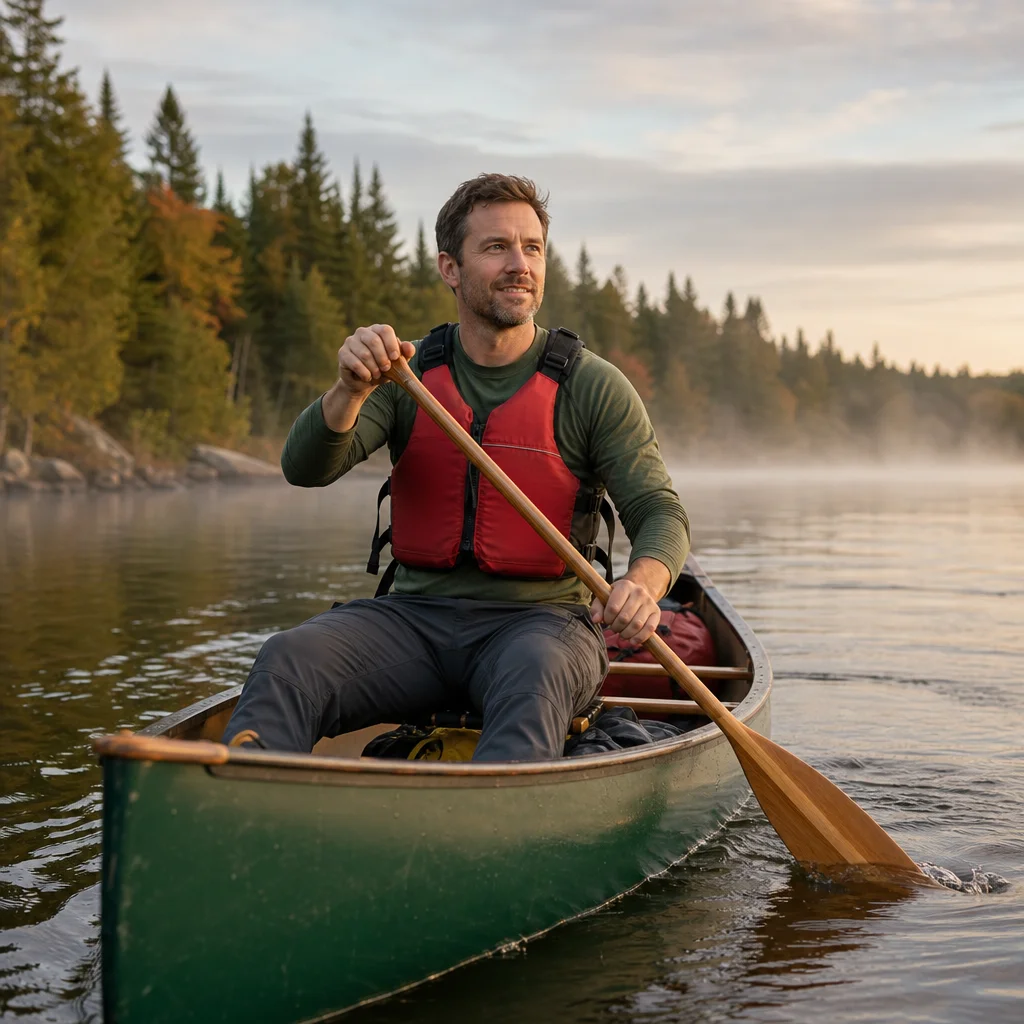
A river strainer can look like ordinary driftwood until the current turns it into a trap. The danger isn’t simply that a canoe may hit a branch; it’s that flowing water can push the boat, and sometimes a person, against openings that let water through but hold solid objects back.
Recognizing the hazard early gives you the most useful advantage: time. Once a canoe is close to a strainer, turning, stopping, or swimming away may no longer be realistic.
What a strainer is
A strainer is an obstruction that allows water to pass through while catching boats, paddles, gear, or people. Common examples include:
- Fallen trees spanning part of a channel
- Low branches extending across the current
- Root balls and exposed root systems along a cut bank
- Dense brush, vines, or flood debris lodged against a tree
- Logjams with narrow-looking gaps between branches
- Undercut trees whose roots form a hidden pocket beside the bank
- Fences, cables, or other human-made structures concealed by high water or vegetation
The term describes the effect of the obstruction, not one particular shape. A single angled branch can be a strainer if it catches a canoe and pins it against the current. A large logjam may be less dangerous if it sits completely out of the flow and has a clear route around it—but that should never be assumed from a distance.
A strainer can also be partly submerged. The visible branches may be only the upper portion of a larger mass below the surface.
Why strainers are so dangerous
Moving water creates the main problem. When a canoe contacts a solid obstruction, the current continues pressing against the hull. The boat can rotate sideways, tip, or become pinned while water pours around it.
A paddler who falls out may face a separate hazard. The current can drive a person toward the branches, where a personal flotation device may help keep the person at the surface but can't guarantee that they’ll pass over or around the obstruction. Trying to stand in fast, shallow water can also lead to a foot entrapment between rocks or debris.
Root systems create a similar risk. They may form a pocket beneath a bank or behind a tree, with water entering from one direction and limited escape space. A root ball that appears to be beside the channel can become part of the current at higher water levels.
Strainers are especially difficult because the route through them can look open. Water may be flowing between branches, but a canoe needs more room than the visible gap suggests. Submerged limbs, shifting debris, and current pressure can close that route quickly.
How to recognize one from a canoe
Scan beyond the next bend
Don’t wait until the bow is pointed at the obstacle. On a river, make a habit of looking through the next bend and beyond the immediate surface texture. Watch for dark lines, upright branches, pale trunks, and vegetation that appears to cross the channel.
The earlier you identify a possible obstruction, the more options you have. At a distance, you can slow down, move toward the inside of a bend, eddy out, or land and inspect the route. Near the hazard, your choices shrink to quick reactions.
Look for unnatural lines and piled debris
A tree that reaches into the river may be obvious, but strainers often announce themselves indirectly. Look for:
- Branches pointing downstream in a dense cluster
- Logs or twigs gathered along one bank
- Foam, leaves, and floating debris collecting in one place
- A calm-looking pocket beside fast current
- Water piling up or accelerating around an obstruction
- A channel that narrows beneath overhanging vegetation
- A tree leaning over the river with roots exposed on the bank
Floating debris isn't always a strainer, but a concentration of debris deserves attention. If the river is carrying branches, the obstruction may be hidden just below or ahead of what you can see.
Treat blind bends and high water as limited-visibility zones
A bend can hide a fallen tree until the current has already committed the canoe to that line. High water may cover low branches, sweep new debris into the channel, and make familiar landmarks misleading. After storms, rapid snowmelt, or major changes in water level, a route that was clear on a previous trip may no longer be clear.
The safest assumption isn't that every river is blocked. It’s that you should keep enough distance and speed control to respond when visibility is poor.
Notice the current, not only the object
Ask where the water would take you if you did nothing. A strainer is more urgent when the main current flows directly toward it, when an eddy pushes back into it, or when a bend funnels the channel against the obstruction.
A tree above slow water may still be hazardous, but a tree across fast current requires immediate attention. Current strength, water level, canoe angle, and distance all matter more than the size of the branches alone.
Check today’s river conditions: Before launching, confirm the current water level, recent advisories, weather, and any local closures or hazards with the relevant river manager, park, or land agency. A familiar stretch can change after high water or a storm.
The best response is an early exit
The most reliable strainer strategy is to avoid the situation before you need a rescue technique. If you can’t clearly see a safe passage, don’t commit to it.
Slow down before the hazard
Speed gives you less time to steer and more energy at impact. Reduce speed while you still have room, but don’t drift passively toward the obstruction. Keep the canoe pointed where you intend to go and use controlled strokes to maintain position.
If the current is carrying you toward the strainer, angle toward a safe bank or open area early. Waiting until the bow is only a few yards away can leave too little space for a meaningful turn.
Move to the safe side of the channel
The safe route is often away from the strongest current and away from the obstruction, but river features vary. On a bend, the outside bank commonly has faster, deeper flow, while the inside may offer slower water or a gravel bar. That pattern is useful, not absolute; a fallen tree, undercut bank, or secondary channel may make the inside equally dangerous.
Choose open water rather than a narrow gap between branches. If the route isn’t obvious, eddy out or land well upstream and inspect from shore. Never assume that a visible opening is deep, wide, or free of submerged limbs.
Portage when necessary
Getting out and carrying around a hazard isn't a failure of skill. It’s often the correct decision. Land on a stable bank or gravel bar with enough room to keep the canoe away from the current, then scout the launch point before reentering.
Avoid stepping onto unstable root balls, slick logs, or steep undercut banks. A portage that puts you beside a collapsing bank or into the current may replace one hazard with another.
Common mistakes that make strainers worse
“I can fit through that gap”
A canoe may fit between two visible branches while the current turns it broadside. The paddler’s body, paddle, and loose equipment also need clearance. Water can push the boat into submerged parts of the obstruction before the bow reaches the apparent opening.
“I’ll just paddle harder”
Powerful strokes can help when you have room and a clear line. They aren’t a substitute for an escape plan. Near a strainer, frantic paddling can cause poor balance, an unwanted turn, or a missed opportunity to reach the bank.
“The bank is safer”
A tree lying along the bank, an undercut wall, or a root system can be just as dangerous as an obstruction in mid-channel. Examine where the current is going, not merely how close the shoreline looks.
“I’ll stand up if the canoe tips”
In moving water, standing can cause a fall and trap a foot. If you capsize, keep your feet up and point them downstream when conditions allow, hold onto the canoe if it’s safe to do so, and work toward calm water or shore. A person caught against a strainer should focus on avoiding the obstruction and calling for help rather than attempting to force through branches.
The exact response depends on water depth, current, equipment, and training. River paddlers should learn capsize recovery and rescue skills in controlled conditions before relying on them in a real emergency.
A simple prevention routine
Before each moving-water section, I’d use a short scan-and-decide routine:
- Scan ahead: Look through bends, around islands, and beneath overhanging trees.
- Read the flow: Identify the strongest current and where it leads.
- Keep options open: Stay far enough upstream to turn or reach an eddy.
- Choose open water: Avoid narrow gaps through branches or piled debris.
- Stop and scout: If the route is unclear, land or eddy out before committing.
- Tell the group: Warn the paddler behind you and point out the safe line.
Wear a properly fitted personal flotation device, keep essential gear secured, and carry communication and rescue equipment appropriate to the remoteness and conditions of the trip. Group members should know where to land, how to signal, and what to do if a canoe is pinned.
Practical next steps
On your next river outing, practice identifying possible strainers from a distance without approaching them. At the launch, review the forecast and current conditions, check your route for recent changes, and agree on a signal for stopping or scouting.
The key decision is simple: if the current is carrying you toward branches, roots, or flood debris and you can’t clearly identify a safe passage, leave the channel early. A short landing or portage is inconvenient. A late decision near a strainer can become an emergency in seconds.