Canoe Trip Planning for Short Winter Days
I’ll help you plan a winter canoe outing around short daylight, realistic travel distances, cold launches, and useful escape options so the route stays manageable when conditions change or sunset arrives early.
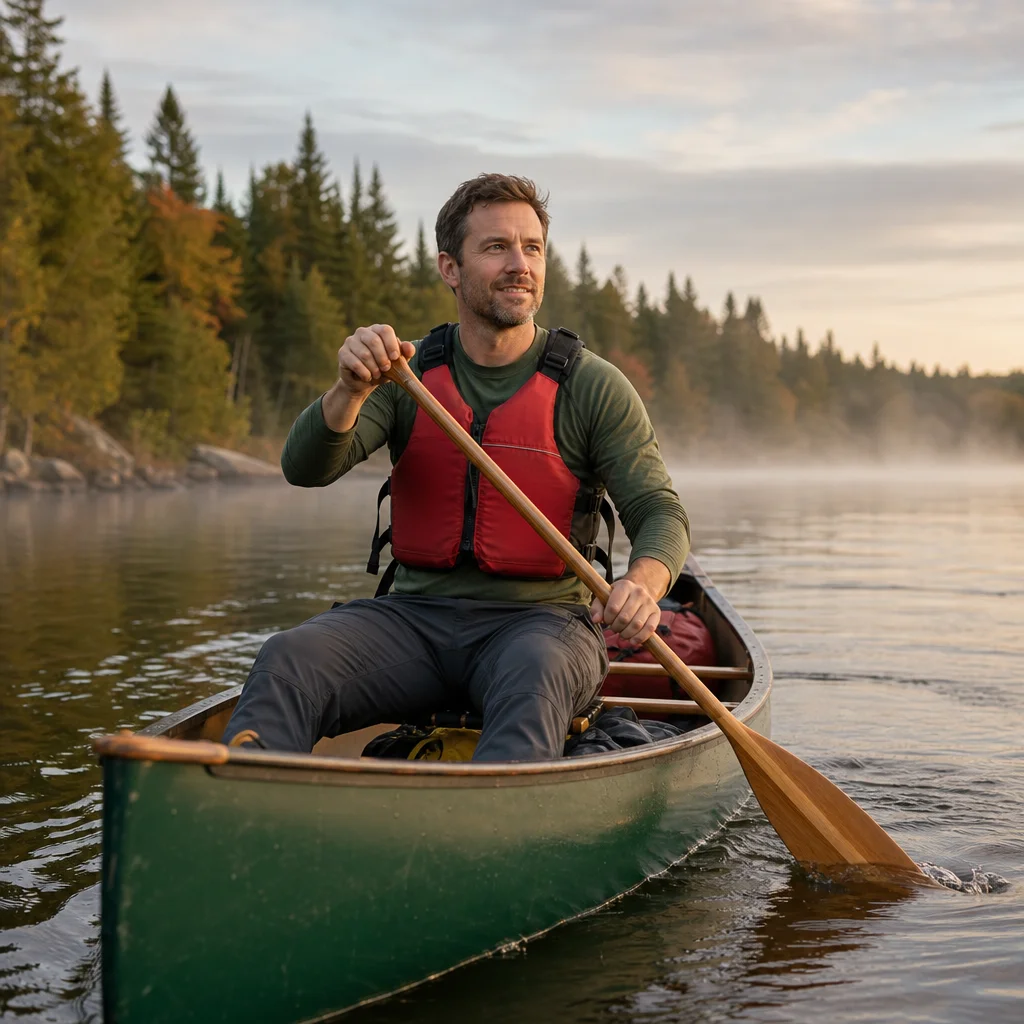
Winter canoe trips become difficult when a summer-style route meets a shorter day, colder water, and fewer forgiving options. The distance that looks comfortable on a map may leave too little time for a slow launch, wind, portages, navigation checks, or an unplanned stop.
I plan these outings backward from a conservative return time rather than forward from the route’s full distance. The goal isn’t to cover as much water as possible. It’s to finish with daylight, warmth, and enough margin to handle a problem without turning it into an emergency.
Start with the daylight you can actually use
Sunrise and sunset provide useful boundaries, but they aren’t the whole paddling day. Before launching, I allow time for parking, carrying boats and gear, checking the canoe, putting on cold-weather layers, and dealing with a stiff or awkward launch. At the end, I want enough light to land, unload, and reach the vehicle safely.
A simple planning sequence is:
- Check the local sunrise and sunset times for the trip date.
- Set a personal launch deadline and a firm turnaround time.
- Reserve a generous margin before sunset for the return and takeout.
- Estimate distance using a deliberately modest moving speed.
- Subtract time for breaks, navigation, wind, shoreline landings, and portages.
For example, if I have several hours of usable daylight, I don’t treat every one of them as travel time. A short winter outing may include more stopped time than expected because gloves make small tasks slower, clothing needs adjusting, and cold conditions encourage regular warm-up breaks.
The turnaround time matters more than the optimistic distance estimate. Once I reach that time, I head back even if the destination is close. A route that depends on making one last point before turning around is already too tight.
Confirm the winter window: Before leaving, check the current sunrise and sunset times, weather forecast, road and access conditions, closures, permit requirements, and any local warnings about ice, flooding, or water levels. These details can change by date and location.
Set a distance that leaves room for trouble
Distance estimates should reflect the slowest realistic part of the outing, not the speed of a calm-water test. Wind, current, waves, ice near shore, loaded boats, and repeated landings can all reduce progress. A canoe may move efficiently for much of a trip and then lose time at every exposed crossing or narrow channel.
I break the route into sections instead of treating it as one number:
- Launch and warm-up: carrying gear, entering the water, organizing paddles, and checking that everything is secure.
- Outbound travel: the first major section, with attention to wind and current.
- Destination or turnaround point: a realistic stopping place, not merely a feature on the map.
- Return travel: usually the most important section because tired paddlers are colder and less flexible.
- Takeout and exit: landing, unloading, changing layers, and reaching the vehicle.
For a day trip, an out-and-back route should be judged by the return, not the halfway point. If the wind is likely to build later, the return leg may take longer than the outbound leg. A one-way route can avoid that problem only if transportation, access, and an emergency exit are dependable.
I also avoid routes where a small delay creates a large consequence. A narrow deadline for the last shuttle, a final portage that must be completed in darkness, or a long exposed crossing near the end of the day can make an otherwise reasonable trip unsuitable for winter.
Choose a route with useful escape options
A good winter route is more than a line between two attractive locations. It should offer places to land, turn around, warm up, or contact help. Shoreline access becomes especially valuable when cold hands, rising wind, or changing ice conditions make continued travel unattractive.
Look for:
- Frequent landing areas rather than long stretches of inaccessible shoreline
- Protected water that limits exposure to wind and waves
- Short, straightforward portages if a carry becomes necessary
- Clear navigation features that remain recognizable in low light
- More than one route back to the launch or a known exit
- Reliable vehicle access after the takeout
- Areas where a delay won’t leave the group standing in wind or spray
A route can look sheltered on a map but feel exposed on the water. Broad lakes, open reservoirs, and long straight channels deserve particular caution because a modest breeze can create difficult conditions for a loaded canoe. Narrower water isn’t automatically safe either; current, strainers, ice, and limited landing space can create their own problems.
For intermediate paddlers, I prefer a route with an ordinary destination and excellent bailout options over an ambitious destination with no easy retreat. Winter rewards flexibility more than novelty.
Treat the launch as a separate planning problem
Cold launches often take longer than expected. Shore ice can make footing unstable, frozen straps can be hard to release, and bulky clothing can interfere with balance. A rushed entry is a poor trade for saving a few minutes of daylight.
Before the boat touches the water, I organize the items that must be reached during the trip. Paddles, flotation equipment, communication devices, navigation tools, and warm layers shouldn't be buried beneath loose gear. Anything that could be damaged by a capsize belongs in secured waterproof storage, while essential emergency items should remain accessible.
A launch checklist can include:
- PFDs fitted and worn before entering the canoe
- Spare paddle secured where it can be reached
- Phone, satellite communicator, map, and compass protected from water
- Warm layers and emergency insulation packed in waterproof bags
- Bailout or pumping equipment accessible
- Footwear suitable for slippery, uneven shoreline surfaces
- Canoe and carrying straps checked for cracks, stiffness, or damage
Cold water changes the consequences of a mistake. A capsize isn't just a wet inconvenience, and a swimmer may lose useful hand function quickly. I avoid launching where reentry would be difficult or where a person in the water could be swept away from the canoe.
Plan clothing around immersion, not air temperature
A mild-looking winter day can still involve dangerously cold water. Air temperature, sunshine, and the absence of snow don’t tell me whether an accidental swim would be survivable without specialized protection and practiced recovery skills.
Clothing should protect against wind, splashes, and immersion. Depending on the conditions and the paddler’s training, that may mean a properly selected wetsuit or dry suit rather than ordinary winter clothing. Cotton layers are a poor choice for managing cold and wet conditions because they lose insulating ability when soaked.
I also plan for the period after a problem. The vehicle should contain dry clothing, insulation, food, water, and a way to warm up. That kit doesn’t make risky conditions safe, but it can reduce the consequences of a wet exit or an unexpectedly long recovery.
Check the water, not just the air: Use current local water-temperature information where available, assess whether ice or cold conditions exceed the group’s clothing and rescue capability, and postpone the trip if a capsize couldn't be managed safely. Follow local boating and cold-water safety guidance.
Make navigation work in fading light
Short days create a navigation problem before darkness arrives. Low sun can flatten shoreline detail, obscure markers, and make familiar features harder to identify. Snow, fog, and cloud cover can reduce contrast further.
I carry both an electronic navigation option and a map-and-compass backup. The phone or GPS should be protected from water and cold, and I don’t rely on a battery that is already nearly empty. I save the route, mark the launch and bailout points, and identify likely shore features before departing.
A headlamp belongs in the accessible gear, even when I expect to finish in daylight. It should be treated as a backup for an unexpected delay, not as permission to plan a dark takeout. If the group is navigating unfamiliar water, the turnaround time should leave enough light to recognize the landing rather than merely find it on a screen.
Account for the group, not just the strongest paddler
The trip pace is set by the boat, paddler, and condition most likely to need extra time. Cold affects people differently, and fatigue may appear as poor decisions, quietness, clumsy movements, or reluctance to stop.
Before launching, I make the plan explicit: the route, turnaround time, expected landing points, communication method, and conditions that will end the trip early. Nobody should have to argue for a retreat after the group has already run out of margin.
A conservative plan also includes a check-in arrangement with someone who knows the launch, route, vehicle description, and expected return. The plan should explain what to do if the group is late, rather than assuming a delayed call is harmless.
Use a winter decision checklist
Before committing to a short-day canoe trip, I ask:
- Can everyone manage the expected water and weather conditions?
- Is the route short enough to finish with a substantial daylight margin?
- Are there protected sections and realistic bailout landings?
- Can the group respond to a capsize with its current equipment and training?
- Is the launch stable and usable in the current conditions?
- Are the access road, parking area, permits, and takeout available now?
- Does the forecast leave enough margin for wind, precipitation, or falling temperatures?
- Does someone outside the group know the plan and return time?
If several answers are uncertain, I shorten the route, move to a more sheltered area, or choose a different day. A winter trip doesn’t need a dramatic destination to be worthwhile. The best plan is one that leaves enough daylight and energy for the final landing, the carry to the vehicle, and the drive home.