Planning a Canoe Outing Around a Public Holiday Weekend
Holiday weekends turn simple canoe plans into logistics problems: crowded launches, full campsites, and delayed shuttles can shape the whole trip. I’ll show you what to reserve, verify, and adjust so your outing stays manageable when popular waterways are busiest.
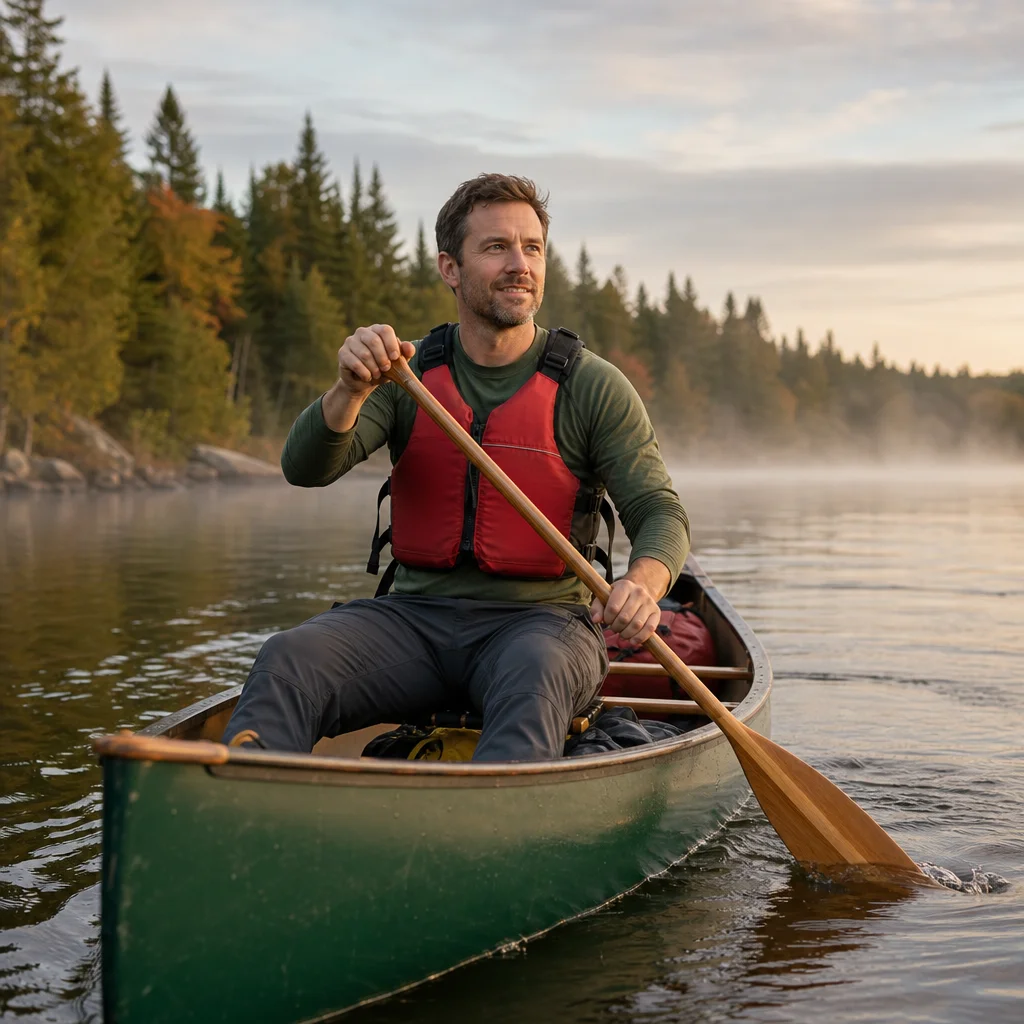
A public holiday weekend can make a familiar canoe route feel like a different trip. Parking fills early, launch queues grow, campsites disappear, and a shuttle that normally takes 20 minutes may take much longer. The paddling is still the point, but the logistics deserve equal attention.
For a beginner, the best holiday-weekend plan is rarely the most ambitious one. It’s the plan with confirmed access, realistic timing, and a backup route that you’d genuinely enjoy paddling.
Start with the access points, not the route map
Many paddlers choose a river or lake first and investigate access later. On a busy weekend, reverse that order. Identify the exact launch, parking area, take-out, campsite, and shuttle arrangements before you commit to distance or scenery.
A route that looks quiet on a map may have only one public launch. If that launch has limited parking or a first-come, first-served system, arriving late can disrupt the entire day. Some access points also restrict overnight parking, require a reservation, or close when lots reach capacity.
Look for these details:
- Whether the launch is public, private, or restricted to permit holders
- Parking capacity and any overflow area
- Hours for gates, kiosks, or staffed access points
- Overnight parking rules
- Restroom and drinking-water availability
- Whether trailers, roof racks, or larger vehicles have separate rules
- Distance between the put-in and take-out
- Cell coverage around the access points
A short route with dependable access is usually a better choice than a longer route that depends on several uncertain arrangements.
Confirm holiday access before you load the canoe: Check the managing agency, park, landowner, or outfitter for current parking rules, launch reservations, closures, permits, operating hours, and holiday-specific restrictions. Policies and fees can vary by location and may change between seasons.
Expect congestion at the launch
Crowding creates more than an inconvenient wait. It can make loading rushed, increase the chance of forgotten gear, and put pressure on beginners to launch before they’re ready.
Plan to arrive with the canoe mostly organized. Keep paddles, personal flotation devices, water, and a simple bailer easy to reach. If you’re carrying a dry bag, pack it so the items needed immediately are near the top. A long parking-area search for sunscreen or a missing strap isn't the best opening ceremony.
When you arrive, find out how the launch works before unloading. Some places have separate areas for unloading and parking. Others expect paddlers to clear the ramp quickly and finish organizing at a nearby staging area.
A useful holiday-weekend rhythm is:
- Park or check in according to the posted rules.
- Walk the launch area and identify where the canoe can be unloaded.
- Confirm where the vehicle will remain and how you’ll retrieve it.
- Put on personal flotation devices before getting near the water.
- Load evenly, keeping heavy gear low and centered.
- Move away from the ramp as soon as the canoe is safely afloat.
If the launch is visibly chaotic, pause and reassess. Waiting for a calmer moment may be safer than trying to force your way into a crowded ramp.
Reserve campsites earlier than feels necessary
Holiday weekends are among the least forgiving times to improvise an overnight canoe trip. Campsites near road access, popular lakes, and well-known river corridors may be reserved weeks or months ahead, depending on the local system.
Availability isn't the only issue. A campsite may have a reservation but still require a separate permit, parking pass, fire authorization, or check-in step. Some backcountry systems assign a specific site, while others allow camping only in designated zones. A reservation also may not guarantee that you can arrive at any hour, especially if access gates close in the evening.
Before finalizing an overnight route, confirm:
- The exact date and campsite or zone
- The maximum group size
- Whether the reservation is transferable or refundable
- Check-in and check-out requirements
- Drinking-water and waste-disposal arrangements
- Fire rules and current fire restrictions
- Food-storage requirements
- A legal place to leave the vehicle
- What happens if high water, storms, or a closure prevents the trip
Print or save confirmation details where you can reach them without a signal. Keep the reservation holder’s name and confirmation number with the group, not only on one person’s phone.
If campsites are full, don’t quietly switch to an undesignated shoreline. Consider a day trip, a different waterway, a private campground with confirmed availability, or a route with a legal walk-in option.
Build shuttle time into the day
A shuttle can be the weak link in an otherwise sensible plan. During a holiday weekend, outfitters may have more customers than usual, limited drivers, or longer turnaround times. If you’re using two vehicles, the second driver may also be delayed by traffic or parking limitations.
Ask the outfitter specific questions rather than simply asking whether a shuttle is available. Confirm the meeting point, latest pickup time, canoe capacity, payment method, cancellation policy, and what happens if you finish late. If the shuttle operates on a schedule, arrive early enough to load without rushing.
For a self-shuttle, allow time to place one vehicle at the take-out, return to the put-in, unload, and deal with holiday traffic. A route that takes four hours to paddle might require several additional hours of driving and coordination.
Write the plan down in a simple sequence:
- Vehicle A starts at the put-in.
- Vehicle B goes to the take-out.
- The group returns to the put-in.
- The canoe launches by a stated time.
- The take-out must be reached by a conservative deadline.
- The group knows whom to contact if plans change.
Don’t set the deadline at sunset. Leave room for wind, rests, navigation mistakes, a slow paddler, and the inevitable conversation about whether that “short portage” was accurately described.
Choose an alternative route before you need one
A backup plan should be more specific than “we’ll find somewhere else.” Pick at least one alternative and record its access details, paddling distance, parking situation, and likely limitations.
Useful alternatives include:
- A less popular launch on the same waterway
- A shorter section with several take-outs
- A lake or slow river away from the main holiday destination
- A day route instead of an overnight trip
- A route with walk-in access when vehicle parking is the main problem
- A sheltered waterway if wind is forecast to affect a larger lake
Your backup doesn’t have to be equally scenic. It needs to be legal, accessible, and suitable for the group’s ability. A modest outing that launches on time is generally more enjoyable than an impressive route that begins with an argument over parking.
Check conditions and group readiness
Holiday traffic is predictable enough to plan around, but water and weather can change the character of a route quickly. Check the forecast for the waterway rather than relying only on conditions at home. Wind direction and speed matter particularly on broad lakes, where a comfortable morning can become difficult by afternoon.
For moving water, review current flow, water level, recent rainfall, known hazards, and any warnings from the relevant authority. Beginners should avoid treating a busy weekend as a reason to attempt water beyond their experience. Crowding doesn’t make rapids safer, and a full river can complicate rescue or landing decisions.
Every paddler should have a properly fitted personal flotation device and know the basic plan for staying with the canoe, reaching shore, and contacting help. Carry enough water, food, sun protection, extra clothing, and a way to keep essential items dry. The exact equipment depends on the route, season, and local requirements.
Also consider the least experienced person in the group. Plan the distance, pace, and turnaround point around that paddler—not around the strongest person’s optimistic estimate.
Use a holiday-weekend timeline
A simple timeline exposes problems before they become stressful:
Several weeks ahead
Choose the route, confirm permits and campsites, check shuttle availability, and identify the main and backup access points. Make sure everyone understands the distance, expected conditions, and meeting arrangements.
A few days ahead
Recheck weather, water conditions, closures, fire restrictions, parking information, and operating hours. Pack according to the forecast, but include a dry layer and rain protection even when the outlook seems favorable.
The evening before
Fuel the vehicle, charge phones and navigation devices, download maps, organize the canoe and safety gear, and save reservation details offline. Confirm the departure time with the whole group.
On the morning
Leave earlier than you would on a normal weekend. Allow extra time for holiday traffic near towns, marinas, campgrounds, and popular parks. If parking is full or access has changed, switch to the backup plan rather than creating a roadside parking problem.
Practical next steps
Before committing to a public holiday weekend canoe outing, answer five questions:
- Where exactly will we park and launch?
- Is overnight access or camping confirmed in writing?
- How long will the shuttle or vehicle transfer realistically take?
- What conditions would make us shorten or cancel the route?
- What is our specific backup plan?
Once those answers are clear, keep the paddling plan modest enough to absorb delays. The most reliable holiday-weekend outing is one that treats parking, reservations, traffic, and retrieval as part of the adventure—not as details to solve after the canoe is already on the roof.