Planning a Low-Impact Canoe Camp on a Busy Summer Weekend
I’ll show you how to plan a low-impact canoe camp for a busy summer weekend, from choosing a resilient site and carrying minimalist food to reducing waste and checking rules that can change by season.
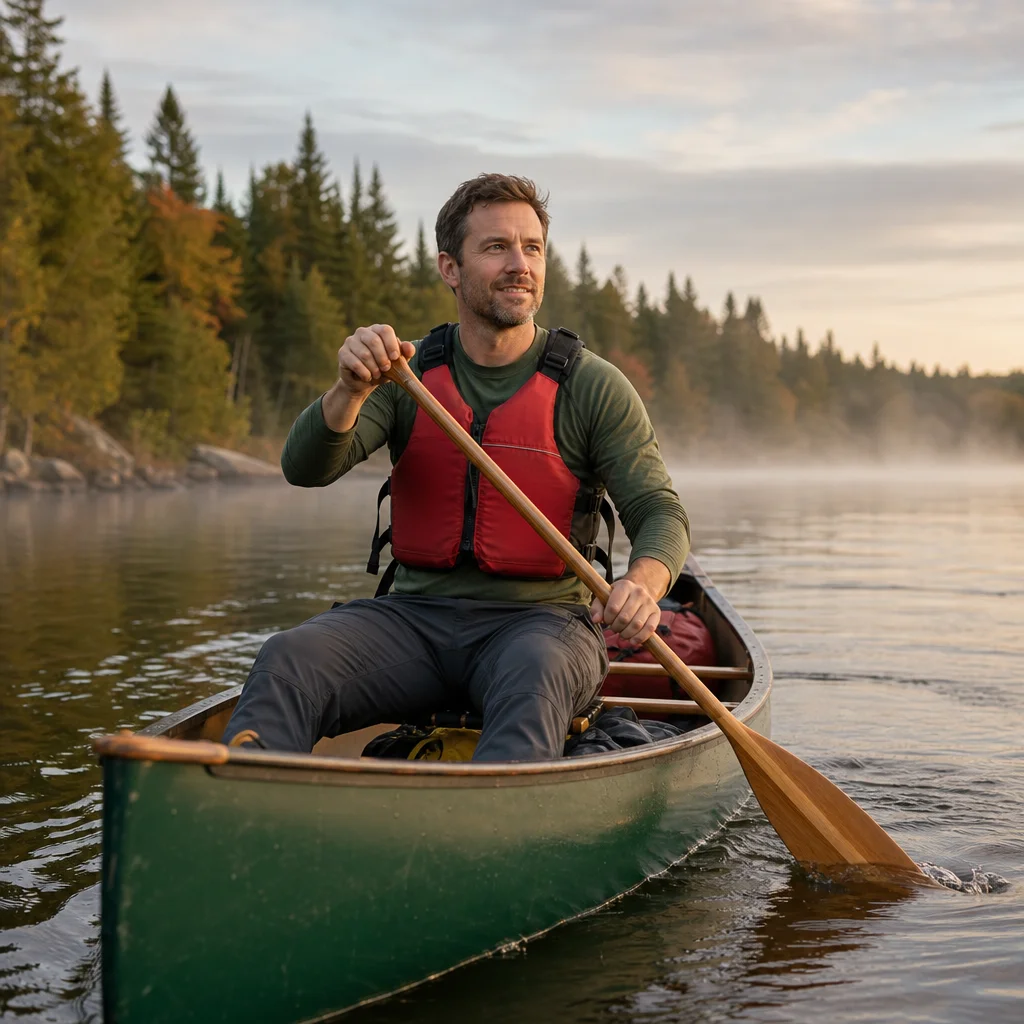
A busy summer weekend changes the planning problem. The goal isn’t simply to find an open campsite; it’s to avoid concentrating people, noise, fires, food scraps, and landing damage in the same few places. A lighter camp can make that easier while also reducing the amount of gear you need to load and unload.
For an intermediate canoe camper, low impact usually comes down to four decisions: choose a destination that can handle your trip, travel when pressure is lower, bring only what you’ll use, and leave no reason for the next group to know you were there.
Start with the destination, not the campsite photo
Popular lakes and rivers often have a small number of attractive campsites. Those sites may be durable and well established, but they can also be heavily used on holiday weekends. If every group aims for the same scenic point, even a well-managed area can experience overflowing latrines, trampled vegetation, litter, and conflicts over space.
Look for destinations with several reasonable camping options rather than one famous site. A route with multiple landing points, a choice of short and long campsites, or a nearby alternative waterbody gives you room to adapt when the first choice is full.
Prefer durable camping surfaces
When comparing options, favor established tent pads, rock, sand, gravel, or other surfaces already suited to camping. Avoid spreading tents into fragile vegetation, moss, wetlands, dunes, or the edges of small islands. A site that looks empty may be recovering from years of use, and a new tent spot can become a permanent scar surprisingly quickly.
On a busy weekend, a less spectacular but resilient site is often the better choice. You’re protecting the landscape and reducing the chance that your group will compete with several others for the same narrow strip of shoreline.
Build a backup plan with stopping points
Plan at least two alternatives before launching. Note their approximate distance, landing conditions, water access, and whether camping is actually permitted. A backup that exists only on an old map isn't a backup.
If the route includes permits, reservations, designated sites, or quotas, confirm those requirements before you leave. Rules may differ between a state park, national forest, provincial or state-managed shoreline, private land, and a municipal recreation area—even when they share one lake.
Confirm your weekend options: Check the managing agency’s current campsite, permit, fire, water, and closure information before launching. Confirm whether your backup sites are legal and available, rather than relying on a map, guidebook, or previous trip.
Reduce pressure by changing the timing
A low-impact trip doesn’t have to mean avoiding popular destinations entirely. You can often reduce pressure by shifting your schedule.
Consider launching early, traveling on the edges of the weekend, or camping one night farther from the primary access point. If your plans are flexible, a Sunday-to-Tuesday trip may use the same route with fewer groups competing for campsites. Start times should still account for daylight, weather, navigation, and your group’s paddling ability; arriving late and rushing for a site creates its own safety problems.
You can also choose a route with a longer approach. The first accessible campsite on a lake or river tends to receive the most use, while sites requiring a longer paddle may be quieter. Don’t assume that distance alone makes a site appropriate, though. Check whether it has durable surfaces and whether overnight use is allowed.
Pack a minimalist camp that creates less waste
Minimalist doesn’t mean unprepared. It means each item has a clear job, and the group doesn’t carry disposable extras that become rubbish or attract wildlife.
Plan meals around low-packaging food
Before shopping, write down the meals and portions for the actual group and trip length. Repackage food at home into reusable bags or containers, removing cardboard sleeves and excess wrapping before it reaches the canoe. Keep labels or a simple meal list so ingredients don’t become mysterious halfway through the trip.
Good canoe-camping choices are compact, stable, and easy to prepare: oats, tortillas, dried fruit, nuts, hard cheese where appropriate, dehydrated meals, pasta, rice, and shelf-stable sauces. The best menu depends on weather, food restrictions, storage, and how much cooking your group actually wants to do.
Avoid carrying more food than you can reasonably eat. Extra food increases pack weight, storage demands, and the amount of packaging that must come home. If you do carry fresh food, protect it from crushing and keep it separate from clothing and sleeping equipment.
Bring a waste system, not just a trash bag
Use a durable, sealable bag for all outgoing waste, including food scraps, tea bags, used paper towels, twist ties, and packaging fragments. A second bag can separate recycling if you’ll be able to keep it clean and transport it home. Pack an extra liner in case the first bag leaks.
Don't burn food packaging, foil, plastic, or leftover food. Burning can leave toxic residue, attract animals, and create litter that is difficult to remove. Strain dishwater and carry out the food particles according to local practice; don’t scatter scraps around camp or bury them unless the responsible authority specifically permits that method.
A small scoop, unscented soap when allowed, and a dedicated dish-cleaning cloth are usually more useful than a large collection of disposable wipes. If you use wipes, pack every one out.
Keep food and camp routines quiet
Wildlife learns quickly where campers are careless. Store food, trash, toiletries, and scented items as required for the area, using the approved container, hanging system, or food locker. Don’t leave a cooler open beside the tent, and don’t treat a closed vehicle or canoe as automatically wildlife-proof.
Prepare only the food you’re ready to manage. Clean spills immediately, wipe down cooking surfaces, and inspect the camp before bed and before departure. A small dropped piece of bacon or granola can matter more than a perfectly swept tent platform.
Keep your cooking area separate from sleeping areas when the campsite layout and local rules support that arrangement. At the same time, don’t create a new cleared area just to improve the setup. Work with the established site.
Treat fires as optional equipment
A campfire can be pleasant, but it’s not essential to a successful canoe camp. On a busy summer weekend, skipping the fire is often the simplest low-impact choice. It eliminates firewood gathering, smoke, ash, sparks, and the risk of leaving a poor fire ring for the next group.
If fires are allowed and you choose to have one, use the existing ring or designated grate. Follow local restrictions on fire size, fuel, hours, and weather-related closures. Use only permitted firewood sources; transporting firewood across regions can spread pests and plant disease, and collecting live wood damages the campsite.
Burn the right fuel completely, keep water available, and extinguish the fire until the ashes are cold. Never leave it unattended. If conditions are dry or windy, or if a fire restriction is active, the responsible decision is to cook without one.
Check fire conditions at the last stop: Verify the current fire restriction, permitted fuel, and extinguishing requirements for your exact campground or waterway. A rule that applied earlier in the season—or at a nearby lake—may not apply to your site.
Share a busy campsite without taking over
Set up inside the established footprint. Keep boats, paddles, tarps, and drying lines from blocking landings, paths, cooking areas, or shared facilities. If another group is already using part of a designated site, communicate before spreading out; a little planning can prevent a tense evening.
Control noise, especially near shorelines where sound travels across water. Music, shouted conversations, and late-night activity affect campsites farther away than you may expect. Keep lights low and directed toward the ground when possible.
Use established paths to reach the water and latrine. If there is no latrine, follow the area’s designated human-waste procedure and carry the required supplies. Don’t improvise based on what seems acceptable in a different region.
Leave the site ready for the next group
Pack out everything you brought, including damaged gear, food residue, charcoal, and small bits of cord. Check under tables, around the fire ring, beneath the canoe, and along the path to the water. A final sweep is most effective when the whole group participates.
Restore only what your local guidance asks you to restore. In some places, moving natural objects or dismantling established structures can cause more disturbance than leaving them alone. Don’t build furniture, carve trees, add rocks to fire rings, or create shortcuts.
The most useful final question is simple: did your group increase the site’s footprint? If the answer is yes, remove what you can, report significant damage to the managing agency, and choose a more durable approach next time.
A low-impact weekend checklist
Before leaving home:
- Confirm permits, reservations, campsite limits, closures, and fire rules.
- Identify two legal backup options with durable camping surfaces.
- Repackage meals and remove unnecessary packaging.
- Prepare sealable waste bags and wildlife-resistant food storage.
- Check the forecast, water conditions, and daylight for the planned route.
At camp:
- Use only established tent, cooking, landing, and latrine areas.
- Keep food, waste, and scented items secured.
- Skip the fire unless it’s permitted, safe, and genuinely useful.
- Keep noise and lighting considerate of nearby groups.
- Carry out every scrap, including food particles and ash.
A busy weekend rewards flexibility more than elaborate equipment. Choose a resilient site, carry a controlled amount of food, keep fire optional, and verify the rules for the exact place you’re visiting. Those choices reduce pressure on popular canoe destinations without making the trip feel austere—or turning your careful planning into another load of unnecessary gear.