How to Choose a Canoe Campsite Without Creating a Bad Night
A beautiful shoreline can still mean standing water, falling branches, a rough landing, or food-storage problems after dark. I’ll show you how to assess a canoe campsite before unloading so the site works for both comfort and safety.
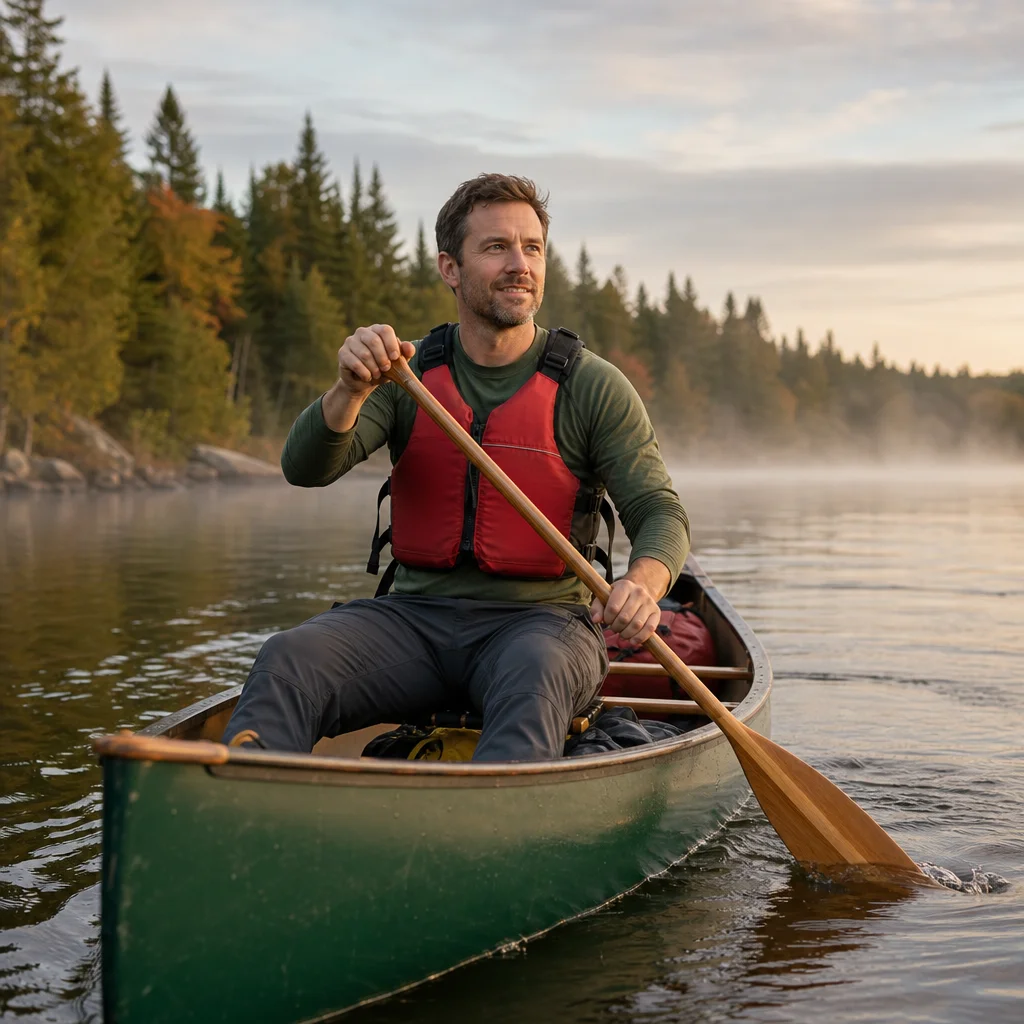
Choosing a canoe campsite is less about finding the prettiest patch of shoreline and more about noticing what that shoreline will be like at midnight, in rain, or after the wind changes. A site that looks inviting from the water can have poor drainage, an awkward landing, dead trees overhead, or nowhere sensible to secure food.
I like to treat the first few minutes ashore as a site inspection, not as the beginning of camp setup. Walk the area, look up, check the waterline, and imagine how you’ll handle the least pleasant likely condition. If the answer is “not well,” keep paddling while you still have daylight.
Start with the landing, not the view
Before bringing every pack ashore, inspect the landing from the canoe. Look for a gently sloping bank, stable footing, and enough room to unload without stepping into deep mud or scrambling up a steep wall. A beautiful campsite is a poor choice if the only landing requires balancing on slippery rocks while carrying a loaded canoe.
Pay attention to what happens just below the surface. Shallow rocks, submerged logs, sharp edges, and soft silt can make landing difficult, especially if waves are pushing the canoe sideways. If the bank drops sharply, consider whether you can safely get out and back in with your actual load—not just an empty boat.
A good landing usually has three useful qualities:
- A controlled approach: You can reach shore without being pushed into hazards.
- A stable exit: There’s somewhere solid to place your feet and hands.
- A practical unloading area: Packs can come out without rolling into the water or blocking the canoe.
If the landing is marginal in calm conditions, it may become a real problem after rain, wind, or fatigue. Leave the canoe lightly loaded until you’re sure the site is workable, and don’t assume a landing will be easier in the morning.
Read the ground for drainage
The flattest-looking place near the water is often where water collects. Before pitching a tent, look for depressions, dark soil, flattened vegetation, channels, and patches of moss or mud. These clues can reveal where runoff travels or where puddles form after a storm.
Choose ground that is slightly elevated and naturally drains away from the shoreline. You don’t need a hilltop, but you do want to avoid a basin. A gentle slope can be comfortable if your tent is positioned across it rather than directly downhill. Test the area with your feet: soft spots, hidden roots, and hollow-feeling ground are useful warnings.
Don’t create drainage trenches around your tent. They damage the site and may be prohibited under local land-management rules. Instead, move to better ground, use a tent with an appropriate waterproof setup, and keep sleeping areas away from obvious runoff paths.
Consider the forecast as part of the ground assessment. Rainfall totals, storm timing, and recent wet weather can matter more than how dry the site looks when you arrive. A campsite that is acceptable on firm ground may become uncomfortable if the soil is already saturated.
Check the night’s conditions: Before committing to the site, review the current forecast and any local advisories for rain, wind, thunderstorms, flooding, or temperature changes. Conditions and official camping restrictions vary by park, forest, province, state, and waterway.
Look up before you look around
Dead trees and broken limbs are among the most important campsite hazards because they can be easy to miss from the water. Scan the entire area above and around where you might sleep, cook, sit, and store gear.
Avoid tents and gathering areas beneath:
- Dead or leafless trees in an otherwise leafy stand
- Trees with hanging or broken limbs
- Large dead branches suspended over the campsite
- Trunks with major cracks, cavities, or loose bark
- Trees leaning noticeably toward camp
- Trees or limbs that could fall if wind increases
A single dead branch isn’t always easy to evaluate, and even healthy trees can lose limbs in strong wind or ice. The safest response to overhead hazards is usually relocation, not trying to predict exactly when something will fall. Keep in mind that a tree can be outside your tent area but still threaten the landing, cooking spot, or route to the water.
Wind direction matters as well. A campsite protected from the breeze may feel pleasant, but a narrow stand of trees or a steep bank can funnel gusts. Look for fresh debris, swaying treetops, and exposed branches that show how wind moves through the site. If stronger weather is expected, favor an open, defensible area away from hazardous trees rather than the most sheltered-looking pocket.
Balance shelter and wind exposure
A campsite beside a calm inlet may become rough if wind travels directly down the lake. Check the orientation of the shoreline and consider whether the site faces a broad stretch of open water. Waves can make the canoe difficult to secure and can turn a simple morning departure into a wet, unstable launch.
You want enough protection to keep the camp comfortable, but not so much that you’re surrounded by questionable trees or trapped in a low, damp hollow. A modestly elevated site with a clear route to the water is often a better compromise than a deeply sheltered pocket.
Secure the canoe above the active waterline, but don’t drag it so far inland that it becomes difficult to move. Use a reliable tie-off method appropriate to the site and your equipment. Check the canoe again before bed and after a change in wind or water level. Never rely on a loose painter line that can snag, drift, or pull the boat into rocks.
Decide how much privacy you actually need
Privacy affects more than comfort. A secluded site can be quieter and feel more restful, but it may also be harder to find if you need help, less visible to passing boaters, or farther from a reliable communication route. A site near a commonly used landing may offer easier access but bring noise and foot traffic.
Look for signs of established use, such as a worn path, fire ring, tent pads, or cleared landing. These can make setup easier, but they also indicate that others may use the area. Don’t expand the site for extra privacy by cutting vegetation, moving large rocks, or creating new paths.
If you’re camping in a designated area, use the sites provided and follow local rules about where tents, fires, and food may be placed. On dispersed public land, keep your group compact and avoid occupying a fragile shoreline when a durable site is available nearby.
Privacy should also include a practical view of the water. You don’t need to sleep beside the canoe, but being able to check conditions and reach it without stumbling through brush is useful. Keep the route clear without removing living plants.
Plan food storage before unpacking food
Food storage is a campsite decision, not a late-evening chore. Before choosing a site, identify where food, cooking equipment, garbage, toiletries, and other scented items will be secured. The correct method depends on the area and may involve a certified bear-resistant container, a food locker, a hanging system, or another locally specified approach.
Never assume that a remote shoreline is free from wildlife. Bears, raccoons, rodents, birds, and other animals can be attracted to food smells, dirty cookware, toothpaste, sunscreen, and garbage. A sealed tent isn't a food-storage system, and keeping snacks in a pack beside your sleeping area can create both wildlife and gear problems.
Choose a site with enough space to separate sleeping, cooking, and food-storage areas as local guidance requires. Check whether food must be stored in a particular container or location, and find out whether hanging food is permitted or effective in that area. Some parks prohibit certain methods, while others require them.
Confirm the local food-storage rule: Before you unpack dinner, check the managing agency’s current requirements for bear-resistant containers, food lockers, hanging systems, cooking areas, and garbage. Follow the stricter site-specific instruction when rules differ, and never rely on a method you haven’t practiced.
Clean up immediately after eating. Strain dishwater as required, pack out food scraps, wipe cooking surfaces, and store scented items with the rest of your food. A campsite that works well for sleeping but offers no reasonable way to secure supplies isn't a good campsite.
Use a short inspection sequence
When daylight is limited, use the same sequence every time so excitement doesn’t replace judgment:
- Pause at the landing. Check the approach, footing, water depth, and unloading space.
- Walk the tent area. Look for drainage problems, roots, rocks, fragile vegetation, and animal signs.
- Scan overhead. Check trees and limbs where people will sleep, cook, and sit.
- Read the shoreline. Consider wind, waves, water level, and the canoe’s tie-off point.
- Locate food storage. Confirm that the required method is practical at this site.
- Assess the exit. Make sure you can reach the canoe and launch safely in the morning.
Then ask a simple question: if rain begins, wind rises, or someone needs to leave after dark, does this site still work? If not, the site is asking too much of you.
When to reject a campsite
Keep looking when the site has multiple concerns, even if each one seems manageable alone. A steep landing, saturated ground, hazardous trees, exposed shoreline, and poor food-storage options can combine into a genuinely bad night.
Reject or reconsider a site when you can’t identify safe sleeping ground, when dead trees threaten the usable area, when the canoe can’t be secured above changing water, or when local food-storage requirements can’t be met. Don’t let a long day on the water turn a questionable site into an automatic decision.
The best campsite is rarely the one with the most dramatic view. It’s the one that gives you firm ground, a manageable landing, sensible shelter, a secure canoe, and a realistic plan for food. Inspect those conditions before unloading, and you’ll prevent many of the problems that only become obvious after dark.