The Quiet Skill of Stopping a Moving Canoe
I’ll clarify how braking strokes, posture, and tandem timing work together to stop a moving canoe. You’ll also learn why a hard stroke on one side can replace forward motion with an awkward turn—and how to avoid that trade-off.
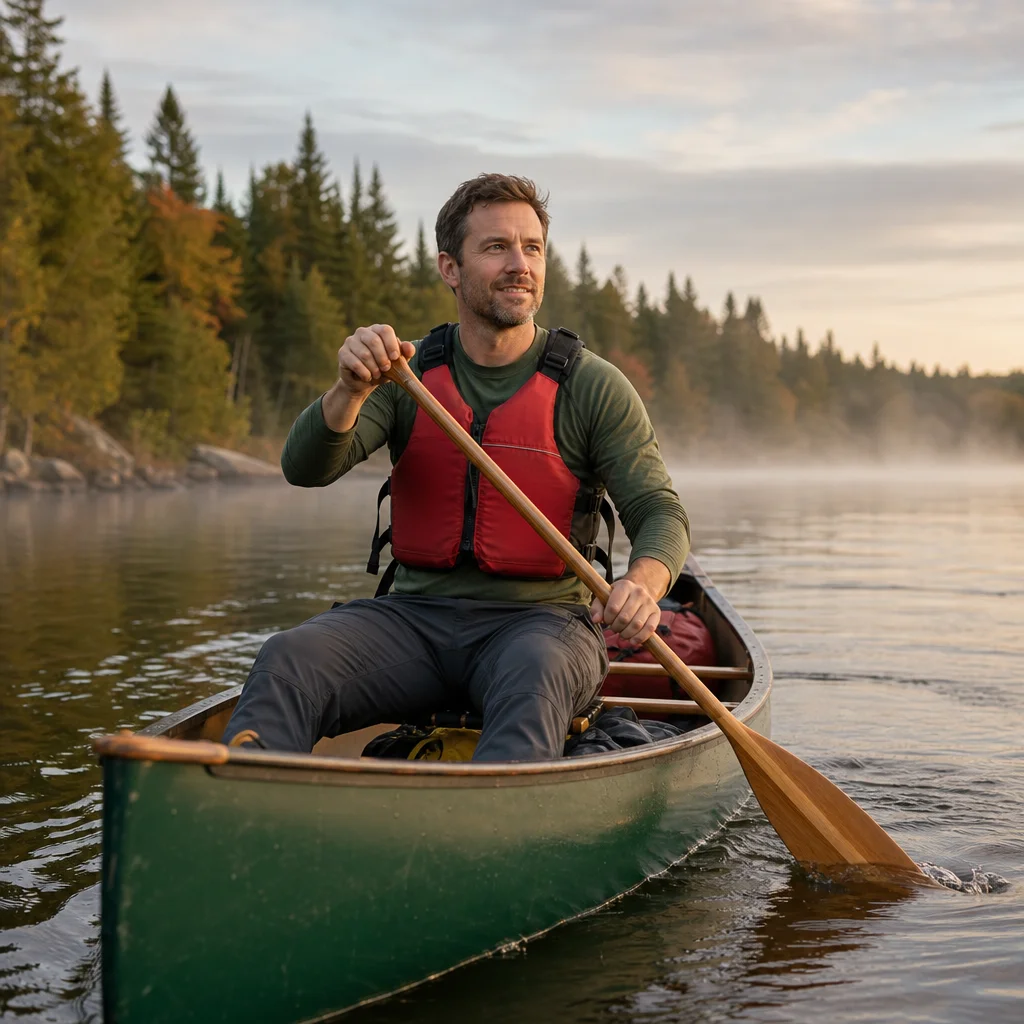
Stopping a canoe sounds simple until the shoreline gets closer, the current picks up, or your last forward stroke has left the boat pointed somewhere unhelpful. The quiet skill isn't simply pushing water in the opposite direction. It’s reducing speed while keeping the canoe balanced, predictable, and pointed where you want it to go.
I think of a controlled stop as three decisions made together: how much momentum to remove, where the canoe should face, and who is responsible for the correction if the boat starts to turn. The right braking stroke depends on all three.
Understand what “stopping” means
A canoe can stop moving in several different ways:
- It can stop moving through the water while the current carries it downstream.
- It can stop moving relative to the shore by paddling against current or wind.
- It can lose forward speed but continue rotating.
- It can slow briefly and then begin drifting backward.
Those are different outcomes. If you’re approaching a landing in still water, reducing forward speed may be enough. In moving water, you may need to keep the canoe pointed upstream or toward a safe escape route even after its forward motion has disappeared.
A canoe also has momentum. The heavier the load and the faster the boat is traveling, the more time and distance you need to slow it. Cold water, poor visibility, wind, and obstacles reduce the margin for experimenting, so practice the basic motion in open, calm water first.
The basic braking stroke
The most direct way to slow a canoe is a reverse stroke, sometimes called a backstroke. Rather than pulling water toward the stern as you do in a forward stroke, you place the blade in the water near your hip and push water toward the bow. The canoe loses forward speed as the blade resists its motion.
Use this sequence:
- Sit or kneel in a balanced position with your torso upright.
- Rotate your upper body slightly so the blade can enter near your hip without reaching far behind you.
- Submerge the blade cleanly, keeping the shaft reasonably vertical.
- Push the blade forward through the water with controlled pressure.
- Slice the blade out before it reaches an uncomfortable position in front of you.
- Repeat as needed, then return the blade to a neutral position.
The stroke should feel firm, not frantic. A long, deep, powerful stroke on one side may stop the canoe quickly, but it can also swing the bow. Several moderate strokes, especially on alternating sides, usually give you more control.
Keep the blade fully engaged during the power phase, but don’t bury it so deeply that you have to lean or yank to recover it. A sudden pull against a deep blade can disturb your balance and make the canoe respond more sharply than expected.
Keep your body over the canoe
When people are trying to stop quickly, they often lean forward, brace against the gunwale, or reach aggressively behind them. Each choice can make the canoe less stable.
Keep your weight centered over the hull. Your head and shoulders should stay inside the canoe’s stable working area, and your hips should remain relaxed rather than locked against the side. Let your torso rotate, but avoid twisting so far that your balance depends on the paddle.
If you kneel, keep both knees supported and your weight low. If you sit, stay centered on the seat rather than sliding toward the side where the blade is working. A low, balanced position gives you room to make a correction without turning a braking stroke into a capsize risk.
In a loaded canoe, gear should be secured and distributed so the boat isn’t excessively bow- or stern-heavy. A canoe that is trimmed poorly may respond unevenly to reverse strokes, especially in wind or current.
Stopping without creating a steering problem
A paddle blade is both a brake and a steering surface. If you brake on only one side, you’ll usually create some turning force. The canoe may yaw away from the side of the stroke, although the exact response depends on the paddler’s position, the canoe’s design, and whether the boat is still moving strongly forward.
That turning effect isn’t always bad. You might want the bow to angle toward a landing or away from an obstacle. The problem comes when the turn is accidental and you notice it only after the canoe has lost most of its speed.
To make a straighter stop:
- Use shorter, moderate reverse strokes.
- Alternate sides when your position and paddling style allow it.
- Start braking earlier instead of waiting for an urgent stop.
- Keep the blade path close to the canoe rather than sweeping it widely.
- Use a light correction stroke after the canoe has slowed, rather than forcing one huge braking stroke.
A reverse stroke can also be combined with a small pry or draw to manage the bow. These are useful when you need to slow and adjust direction at the same time, but they require more practice than a simple straight stop. Learn the individual strokes first, then combine them in open water.
Tandem canoe communication
In a tandem canoe, stopping is a shared maneuver, but the two paddlers don’t have identical jobs.
The stern paddler generally has the strongest influence over direction because the stern paddle acts close to the canoe’s steering end. The bow paddler can help remove speed and can influence the bow, but uncoordinated strokes from both ends may produce a turn, a wobble, or conflicting corrections.
Agree on simple commands before you need them. For example:
- “Stopping” means both paddlers prepare to reduce speed.
- “Back, both” means both paddlers use controlled reverse strokes.
- “Bow left” or “bow right” identifies the direction for a bow-side correction.
- “Hold” means place the paddle in a neutral or light braking position without adding a strong steering input.
Use whatever commands your team understands consistently. The important part is that one person doesn’t assume the other knows what’s coming. A brief call is especially valuable when approaching a dock, rock, swimmer, strain of current, or narrow landing.
For a straight stop, both paddlers can use moderate reverse strokes on opposite sides, then switch sides if needed. If the canoe begins to turn, the stern paddler should usually make the primary steering correction while the bow paddler reduces speed without adding a competing sweep. In tight spaces, decide beforehand who has final authority over direction.
Stopping in wind and current
A braking stroke only changes the canoe’s motion relative to the water. Wind and current continue acting on the boat.
In current, stopping your forward motion may leave you drifting downstream. If the downstream path is unsafe, don’t wait until the last moment to brake. Angle toward a safe area early, maintain enough control to keep the canoe aligned, and use the current’s edge or an eddy when appropriate. Avoid entering unfamiliar moving water simply to practice stopping.
Wind can push the bow or stern around as the canoe slows. A canoe that was easy to steer at speed may become more weathercocked or difficult to hold once momentum drops. If you need to stop near shore, approach at an angle that gives you room to drift rather than aiming directly at an obstacle.
A stop in moving water is also a stability issue. Keep your paddle ready, stay low and centered, and avoid sudden weight shifts while the boat is being turned by the environment.
Check the water before practicing stops
Before working on braking near shore or in current, check local conditions, hazards, access points, water temperature, and any applicable boating requirements. Wear a properly fitted personal flotation device, and practice where a mistake has room to develop safely.
Common mistakes to correct
Waiting too long
The most common error is treating braking as an emergency-only skill. Start with gentle reverse strokes while you still have plenty of open water. Early braking gives you time to correct direction without a dramatic stroke.
Using one huge stroke
A large one-sided stroke can turn the canoe more than it slows it. If you need a fast reduction in speed, use a sequence of strong but controlled strokes and be prepared for the turning effect.
Looking only at the obstacle
Keep scanning beyond the immediate obstacle. A canoe may stop forward motion while drifting sideways, rotating, or moving downstream. Look at the whole space you’re trying to enter, not just the object you want to avoid.
Bracing against the gunwale
Leaning hard over the side may feel like it adds power, but it reduces stability. Keep your weight centered and let your torso rotation create reach.
Giving vague tandem commands
“Stop!” may not tell your partner whether to back paddle, hold the boat straight, or prepare for a turn. Use short commands that identify the action and, when needed, the side.
A simple practice progression
Start in calm, open water with plenty of room. Paddle forward at an easy speed, call “stopping,” and use two or three moderate reverse strokes. Notice how far the canoe travels and whether the bow changes direction.
Repeat at different speeds. Try braking on one side, then alternating sides. Practice stopping while facing a harmless reference point, such as a distant buoy or shoreline feature, without approaching it closely.
Next, add a deliberate steering goal: slow down while keeping the bow within a chosen corridor. In a tandem canoe, practice the commands at low speed before trying them with more momentum. Only after the basic stop feels predictable should you introduce light wind or gentle current—and always with a clear route to safety.
The goal isn’t to make the canoe freeze in place. It’s to reduce momentum early enough that you still have choices. Keep your body centered, use controlled reverse strokes, communicate before the maneuver, and remember that stopping the boat and controlling its direction are related but separate tasks.