What Fog Does to a Canoe Route and How to Make a Conservative Call
Fog can turn a familiar shoreline into either a manageable delay or a serious navigation problem. I’ll show you the first checks to make, the warning signs to respect, and how to choose between waiting, turning around, or continuing conservatively.
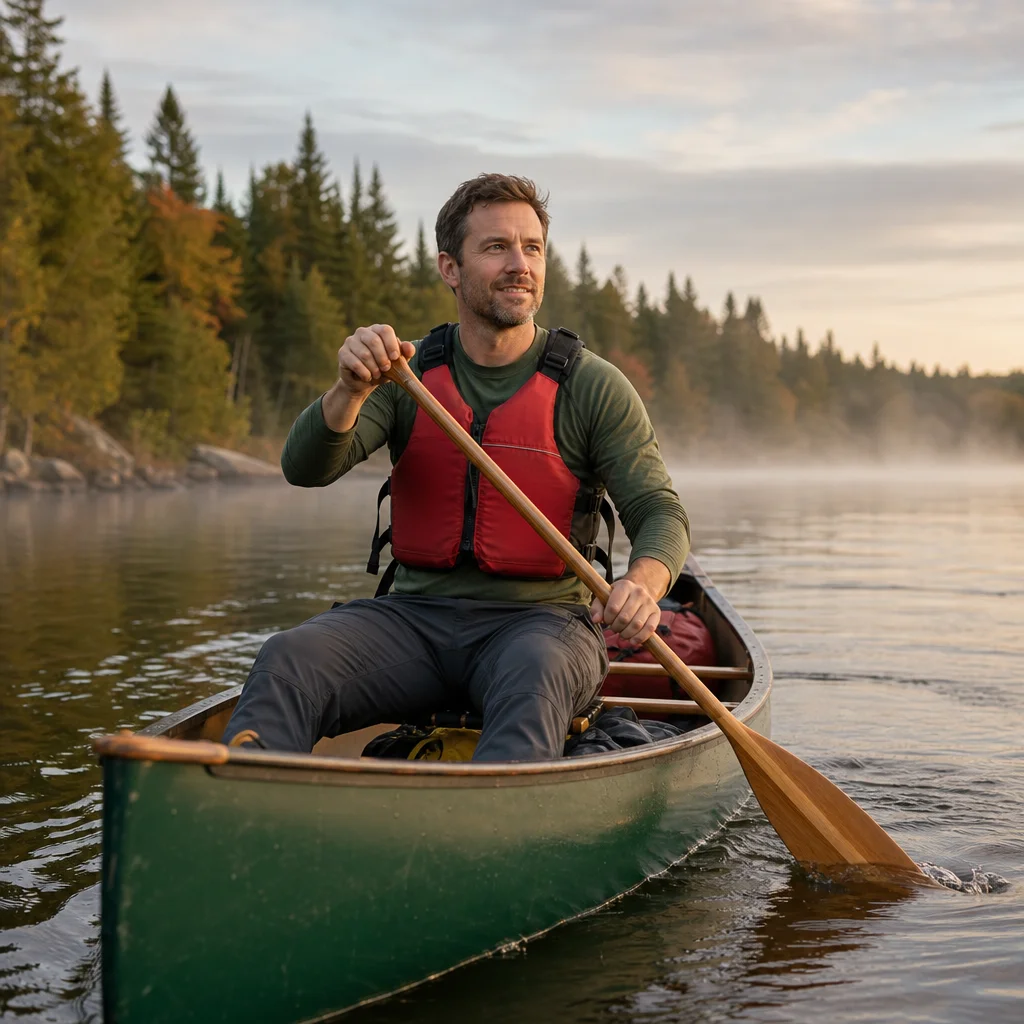
Fog changes a canoe route before it changes the weather on your skin. A calm lake can still become difficult when the far shore disappears, landmarks blend together, and another boat may not see you until it’s dangerously close.
For a beginner, the safest response usually isn’t finding a clever way to push through. It’s making a simple decision early, while you still have good options. I treat fog as a visibility problem first and a paddling problem second.
Why fog makes a familiar route harder
When visibility drops, you lose more than a view. You lose the reference points that help you confirm where you are and where you’re going.
A route that normally depends on a prominent point, an island, a channel opening, or a distinctive house may become a series of uncertain guesses. Small navigation errors accumulate. If you paddle toward the wrong shoreline for several minutes, correcting the mistake can require crossing more open water in even poorer visibility.
Fog also affects distance judgment. A nearby shoreline may seem farther away than it is, while a larger object can appear close even when it’s well across the lake. Sound can be useful, but echoes and muffled noise may make it difficult to judge direction.
There’s a practical psychological effect, too: once the route becomes unclear, paddlers often continue because turning around feels like admitting the trip has failed. It’s better to treat a change in visibility as new information. The plan should change when the conditions change.
The main risks on a foggy canoe route
Losing orientation
The most obvious problem is drifting away from your intended route without realizing it. Wind, current, and repeated corrective strokes can move a canoe sideways while it appears to be traveling forward.
A compass, offline map, and a route divided into short legs can help, but they don’t remove the need for judgment. Basic navigation tools are most useful when you already know your position and have a clear plan for avoiding hazards. They’re not a reason to continue into conditions you can no longer manage confidently.
Missing the shoreline or landing
If your destination is a beach, cove, campsite, or ramp, fog can make the final approach particularly confusing. You may pass the landing without noticing it, enter a shallow or reedy area, or follow the wrong section of shoreline.
The safest route is usually one that keeps you near a clearly identifiable shoreline without putting the canoe into breaking waves, heavy vegetation, private property, or other hazards. “Stay near shore” isn’t an instruction to scrape along an unknown bank. It means choose a shoreline you can follow and leave room to maneuver.
Being missed by boat traffic
Motorboats, personal watercraft, sailboats, and larger commercial vessels may have limited ability to see a canoe in fog. Even if you can hear an engine, you may not know its direction or distance.
A canoe’s low profile makes visibility a serious concern. Bright clothing, a light-colored or high-visibility PFD, and a properly carried signaling device can improve your chances of being noticed, but none of these makes it safe to assume other operators can see you.
Misreading changing weather
Fog can form or thicken as temperature, humidity, wind, and water conditions change. It may lift quickly, or it may persist and combine with rain, stronger wind, or falling temperatures. A forecast that looked acceptable at the launch doesn’t guarantee that the route will remain comfortable or navigable.
Check the lake before you commit: Before launching or crossing open water, check the current local forecast, visibility information where available, marine or lake advisories, water-temperature guidance, and any local boating rules. Conditions and requirements vary by location, and safety advice should be adapted to the specific lake and season.
Make the decision before the route disappears
I use a simple three-part test: Can I identify where I am? Can I identify where I’m going next? Can other water users reasonably see me?
If the answer to any of those questions is no, I don’t consider continuing across open water a conservative choice. A strong paddler isn’t the person who refuses to change plans. It’s the person who notices when the original plan no longer fits.
Wait when the problem is likely to improve
Waiting can make sense when:
- You’re still at a safe launch, landing, or sheltered campsite.
- You have enough food, water, warmth, and battery power to wait comfortably.
- The forecast and local observations suggest visibility may improve soon.
- You can stay clear of boat traffic and avoid blocking a landing.
- You’re not depending on a tight schedule to reach a destination.
Keep the canoe secured and stay with your group. Don’t drift offshore while waiting for the fog to lift. If temperatures are cool, remember that wet clothing and wind can become a bigger problem than the fog itself.
Turn around when you still know the way back
Turning around is often the best choice when the route ahead is unclear but the return route remains identifiable. The decision becomes harder if you’ve already crossed open water, passed an unmarked turn, or lost sight of the shoreline behind you.
Turn back early if the fog is thickening, boat traffic is increasing, your group is separating, or anyone is becoming cold, anxious, or disoriented. Head back using the safest identifiable route rather than attempting to retrace every paddle stroke exactly.
If you’re using a compass or map, stop periodically to confirm your position instead of paddling continuously on an unverified bearing. Keep the group together and agree on what to do if someone loses sight of the canoe ahead.
Continue only under conservative conditions
Continuing may be reasonable on a familiar, sheltered route when visibility remains sufficient to identify the next shoreline feature, boat traffic is minimal, the group is equipped and calm, and you have a clear alternative landing nearby.
That doesn't mean continuing across a broad lake because the fog “doesn’t look too bad.” It means making short, reversible moves with frequent checks. If the next decision depends on a landmark you can’t see, pause rather than guessing.
Avoid committing to a narrow channel, exposed crossing, or complex shoreline when you can’t confirm the entrance. A route that requires precision is a poor route for reduced visibility.
How to prepare before launching
Build a route with escape points
Mark launch sites, public landings, sheltered coves, and other places where you could safely stop or shorten the trip. Note which sections require open-water crossings and which can be followed along a recognizable shoreline.
Share your route and expected return time with someone who isn’t on the water. Include the canoe description, group size, vehicle location, and the point at which they should become concerned. Use local emergency procedures rather than assuming a phone call will work everywhere.
Carry navigation and communication tools
A basic kit for a fog-prone lake can include:
- A waterproof map of the lake and a compass.
- A phone or GPS device in a waterproof case, with offline maps and spare power.
- PFDs worn by everyone throughout the trip.
- A sound-producing device suitable for attracting attention.
- A signaling light or other locally appropriate signaling equipment.
- Extra warm layers protected from spray.
- Water, food, and a small first-aid kit.
Equipment requirements differ by jurisdiction and waterway. Check the current rules for the place you’re paddling, especially for required flotation, lights, sound signals, and communication equipment.
Practice before visibility fails
Learn to use the map and compass on a clear day. Identify how your planned shoreline features look from the water and how long each route leg normally takes. Practice stopping the canoe, keeping the group together, and making a turn without rushing.
If you only learn to navigate after the landmarks vanish, you’re learning under the least convenient conditions.
A short decision checklist
Before proceeding into fog, ask:
- Do I know my exact location?
- Can I identify the next safe point on the route?
- Can I return to a known landing without guessing?
- Is the canoe visible enough for other boat users to detect?
- Are wind, waves, temperature, and traffic still manageable?
- Does everyone have a properly fitted PFD and enough warmth?
- Do I have a safe place to stop if visibility worsens?
One uncertain answer deserves a pause. Several uncertain answers point toward waiting, turning around, or ending the trip.
Fog doesn’t have to ruin a canoe outing, but it does remove the margin that makes casual navigation comfortable. The useful first step is to stop early, confirm your position, check the people and equipment in the canoe, and choose the option that keeps the next decision simple. A shorter trip with clear landmarks is a much better outcome than a long crossing built on guesses.