How to Keep a Canoe Comfortable for Paddlers of Different Sizes
A tall adult, a shorter child, and a tired beginner can make one canoe feel like three different boats. I’ll show you how to balance seating, support, trim, and clothing so everyone can paddle with less strain and fewer mid-trip adjustments.
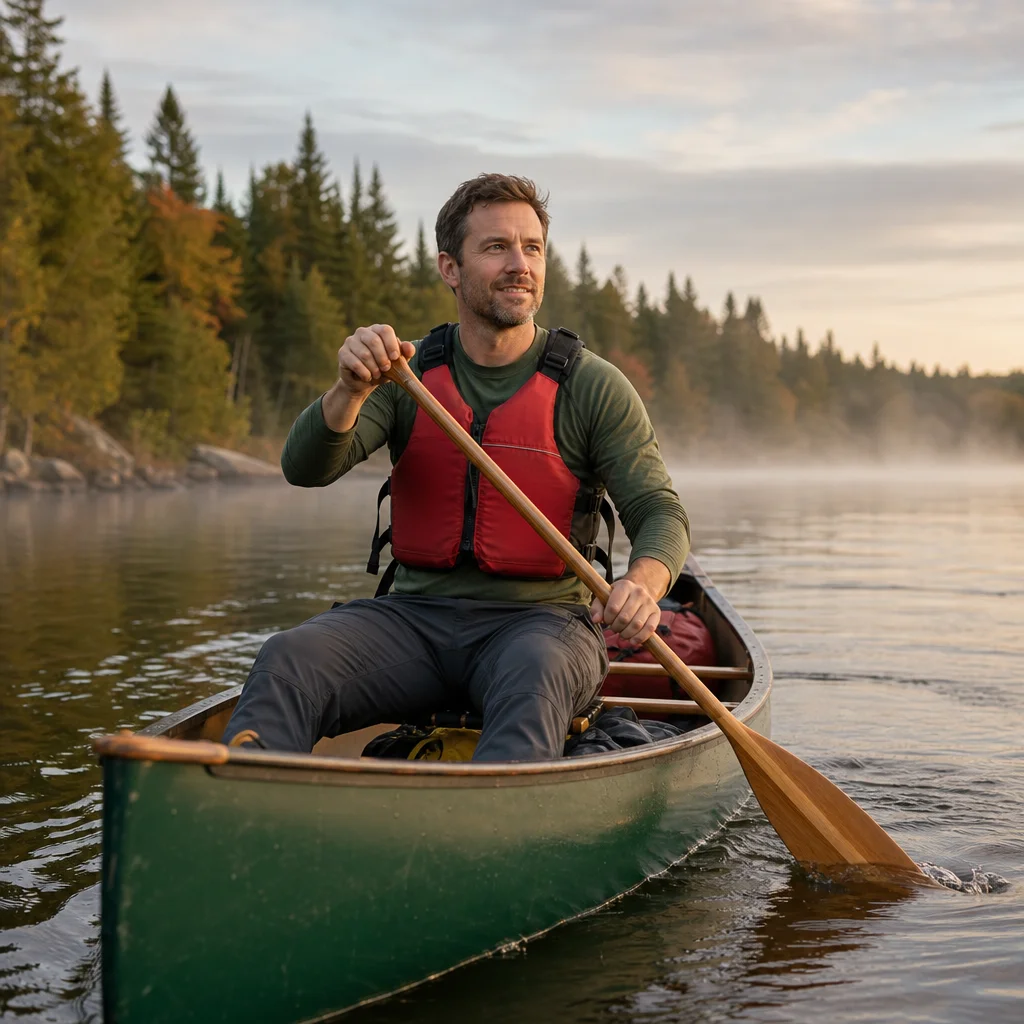
Start with the paddlers, not the seats
A canoe rarely feels uncomfortable because one person is simply “the wrong size” for it. More often, the seating positions, foot support, clothing, and trim don’t match the people using them. A short paddler may struggle to reach the water comfortably, while a taller paddler runs out of legroom. A beginner may need a stable, supported position that an experienced paddler can manage without noticing.
The useful question isn't, “Which seat fits everyone?” It’s, “What does each paddler need to maintain a relaxed position?”
Before launching, consider four things:
- Reach: Can the paddler place the paddle in the water without leaning excessively?
- Support: Can they brace their feet, knees, or hips without pressure points?
- Posture: Can they keep a neutral back and relaxed shoulders?
- Balance: Does the arrangement keep the canoe level and predictable?
Make those decisions on shore. It’s much easier than trying to solve a cramped knee or numb foot in the middle of the lake.
Match each seating position to the person
The bow paddler
The bow paddler usually has a straightforward job: paddle, watch for obstacles, and communicate with the stern paddler. Because the bow seat often has limited adjustment, the person’s legroom and foot position matter more than their exact height.
A shorter paddler may be comfortable in the bow if the seat height lets them reach the water without lifting their shoulders. If the seat is too high or the gunwales are wide, they may compensate by leaning far outboard. That can make paddling tiring and make the canoe feel less steady.
A taller paddler may need to angle their knees or extend their legs forward. Check that their feet aren’t pressing hard against a bulkhead, flotation compartment, or awkward part of the hull. Continuous pressure in one place can become painful even when the position initially seems acceptable.
For children, the main concern is usually not whether they can reach the bow perfectly. It’s whether they can sit securely without sliding, twisting, or leaning over the side. Keep their weight low and centered. A loose cushion can improve comfort, but it shouldn’t create a high, unstable perch.
The stern paddler
The stern paddler controls more of the canoe’s direction, so this position often suits the stronger or more experienced paddler. It also tends to offer more room for foot bracing, which can make a meaningful difference for a taller person.
A stern paddler shouldn’t have to rotate their torso around a locked hip or reach forward from a rounded back. If the seat is fixed, adjust the person’s foot contact and clothing first. A small change in knee angle can make the same seat feel much more usable.
If a smaller paddler is in the stern, avoid assuming that they need to sit on a thick cushion to gain height. Raising the body can reduce stability and change the paddle’s working angle. A thin, secure pad may help, but better foot support and a properly sized paddle are often more effective.
Center positions and kneeling
Some canoes have a center seat, removable seat, kneeling thwart, or enough open space for a paddler to kneel. These options can make a mixed-size group more comfortable, but they need careful attention to weight distribution.
Kneeling can give a paddler a lower center of gravity and a stronger connection to the canoe. It can also create pressure on the ankles, shins, and knees. A properly shaped kneeling pad or closed-cell foam mat helps spread that pressure. The pad should stay in place without becoming a thick, slippery cushion.
Not every paddler should kneel just because it gives more legroom. A beginner who lacks balance or has knee limitations may be more comfortable sitting. A taller paddler may prefer kneeling for short stretches and sitting for the rest of the trip. Treat it as an option, not a requirement.
Don't remove or relocate seats, thwarts, or flotation components casually. They can contribute to the canoe’s structure, handling, or safety. Use the manufacturer’s approved adjustment points and hardware, especially if you’re converting a family canoe for different seating arrangements.
Improve support without overcomplicating the boat
Comfort comes from several small contact points working together. The goal is firm support, not maximum padding.
Feet
A paddler’s feet should have something stable to press against or rest on. Without foot contact, the legs may dangle, slide, or brace against the hull at an awkward angle. That can make the hips and lower back do too much work.
Useful options include:
- An adjustable foot brace designed for the canoe
- A secure footrest or foot bar supplied by the manufacturer
- A firm foam block placed where it can't shift
- A folded, tightly secured mat for light support
A foot brace should allow a slight bend in the knees rather than forcing the legs straight. If the knees are locked, small movements become harder and pressure builds behind them. If the brace is too close, the paddler may feel folded into the seat.
Keep improvised supports clear of the bilge and away from areas where they could interfere with drainage, flotation, or an emergency exit. A loose cooler may appear to solve a legroom problem, but it can slide and become a hazard.
Knees and thighs
A seat that supports only the sitting bones can leave the legs unsupported. Some paddlers find comfort by placing their knees slightly higher, using a shaped cushion or a stable kneeling position. Others need their thighs free so they can change position regularly.
Avoid wedging someone’s knees tightly beneath a thwart or against the sides of the canoe. A position that feels secure at the dock may become painful after repeated strokes. Leave enough room for the paddler to change leg position without striking another person or losing balance.
Hips and back
A backrest can help a relaxed recreational paddler, particularly on a calm-water outing. It shouldn’t push the torso so far forward or upright that the paddle stroke becomes restricted. Nor should it make it difficult to rotate the trunk.
A backrest is most useful when it supports the lower back lightly while allowing the paddler to sit tall. If someone needs to lean heavily into it to remain comfortable, check the seat angle, foot support, and clothing before adding more padding.
Adjust paddle length and grip for reach
A well-fitting seating position can still feel wrong if the paddle is too long, too short, or too heavy. Smaller paddlers often struggle with a paddle that is sized for a taller adult. They may lift the top hand too high, reach too far forward, or use their shoulders instead of their torso.
A suitable paddle lets the paddler place the blade in the water near the toes without stretching aggressively. The grip should feel manageable in both hands, and the shaft shouldn’t force the wrists into a sharp bend.
For a mixed group, carrying paddles in different lengths and weights is usually more useful than trying to make everyone share one adult paddle. A child or smaller adult may benefit from a narrower, lighter blade. A taller paddler may need a longer shaft, but length alone won’t fix an uncomfortable seat.
Have each paddler take several slow strokes beside the launch before committing to the trip. Look for raised shoulders, locked elbows, excessive leaning, and hands sliding repeatedly along the shaft. Those are signs that the equipment or position needs attention.
Use trim to balance the canoe
Trim is the canoe’s balance from bow to stern. A canoe that sits noticeably low at one end may handle poorly and make one paddler work harder. Paddler size is part of the equation, but gear placement can often correct a modest difference.
Place heavier gear low and near the canoe’s center, while keeping it secured. Small items can be distributed toward the lighter end to bring the hull closer to level. Avoid putting a large amount of weight at the extreme bow or stern, where it can make the canoe more sensitive to waves and steering corrections.
A taller or heavier paddler doesn’t automatically belong in the stern. The decision should account for skill, steering responsibility, and the canoe’s loaded balance. If the larger paddler is in the bow and the stern sits high, move gear or reconsider the seating arrangement rather than asking the bow paddler to compensate by leaning forward.
Check the loaded balance at shore: Before setting off, look at the canoe from the side and confirm that neither end is unusually low or high. Reposition gear or people while the canoe is stable on land or in shallow water, and repeat the check if passengers change seats.
A level canoe isn't the only acceptable trim. Wind, waves, and the canoe’s design can affect the best arrangement. The practical aim is a predictable hull that doesn’t require constant corrective effort.
Choose clothing that preserves movement
Clothing can create as much discomfort as the seat. Thick seams beneath the hips, stiff waistbands, bulky jackets, and damp cotton can all make a reasonable position feel restrictive.
For warm conditions, choose quick-drying layers that allow the knees and hips to move. For cool conditions, avoid piling thick insulation beneath the paddler if it changes their balance or prevents them from settling securely into the seat. Add warmth around the torso and legs in ways that don’t trap the feet or interfere with a quick change of position.
Footwear should stay on securely and protect the feet from the canoe, shore, and submerged surfaces. Oversized boots may make foot bracing difficult, while loose sandals can slip off. Match footwear to the launch area and local conditions rather than treating it as an afterthought.
If rain or spray is likely, test the clothing while seated. A waterproof layer that works while standing may bunch behind the knees or restrict the shoulders during a stroke.
Build in adjustment breaks
Even a carefully fitted canoe won’t keep everyone comfortable for hours without movement. Schedule short breaks before discomfort becomes pain. On shore or in a secure calm-water location, paddlers can change leg position, loosen a layer, adjust a footrest, or switch seats if the canoe remains properly balanced.
Ask specific questions instead of relying on “Are you okay?” Try:
- Are your feet supported without pressure or numbness?
- Can you take a full stroke without lifting your shoulders?
- Can you change leg position comfortably?
- Is any part of the seat or clothing pressing in one place?
- Do you feel secure, or are you bracing constantly?
A child or novice may not recognize that their discomfort is an equipment problem. Watch for frequent fidgeting, shortened strokes, leaning against another paddler, or suddenly losing interest in paddling. Those signs call for a break and a reassessment, not encouragement to push through.
A simple setup for mixed-size groups
When several paddlers share one canoe, this sequence keeps the decisions manageable:
- Put the most experienced person in the position that requires the most control for the planned conditions.
- Place each paddler where their reach, balance, and comfort are reasonable.
- Adjust foot support before adding thick cushions.
- Keep the heaviest gear low, secured, and close to the center.
- Test each paddle with several strokes near shore.
- Check that every paddler can change position without losing balance.
- Plan a comfort break early rather than waiting for pain or numbness.
If one arrangement works for the first half of the outing but not the second, don’t treat that as failure. Fatigue changes posture, and a position that is fine for an hour may need a small adjustment later.
Practical next steps
For your next outing, bring a thin firm pad, a secure foot-support option, paddles in appropriate sizes, and clothing that allows free movement. Test the boat fully loaded before launch, then give each paddler a few quiet minutes to find a relaxed leg and shoulder position.
The best setup is the one that lets different-sized people make ordinary adjustments without fighting the canoe. Keep the center of gravity low, support the feet, protect the knees and hips, and make trim a shared responsibility. Comfort won’t eliminate every tired muscle, but it can prevent a peaceful paddle from becoming an avoidable struggle.