Canoe Sun Protection That Still Lets You Paddle Normally
I’ll compare hats, sun clothing, sunscreen, gloves, and shade so you can build protection that stays comfortable, preserves visibility, and doesn’t disrupt a normal canoe stroke. I’ll also cover the upkeep habits that keep each option dependable over time.
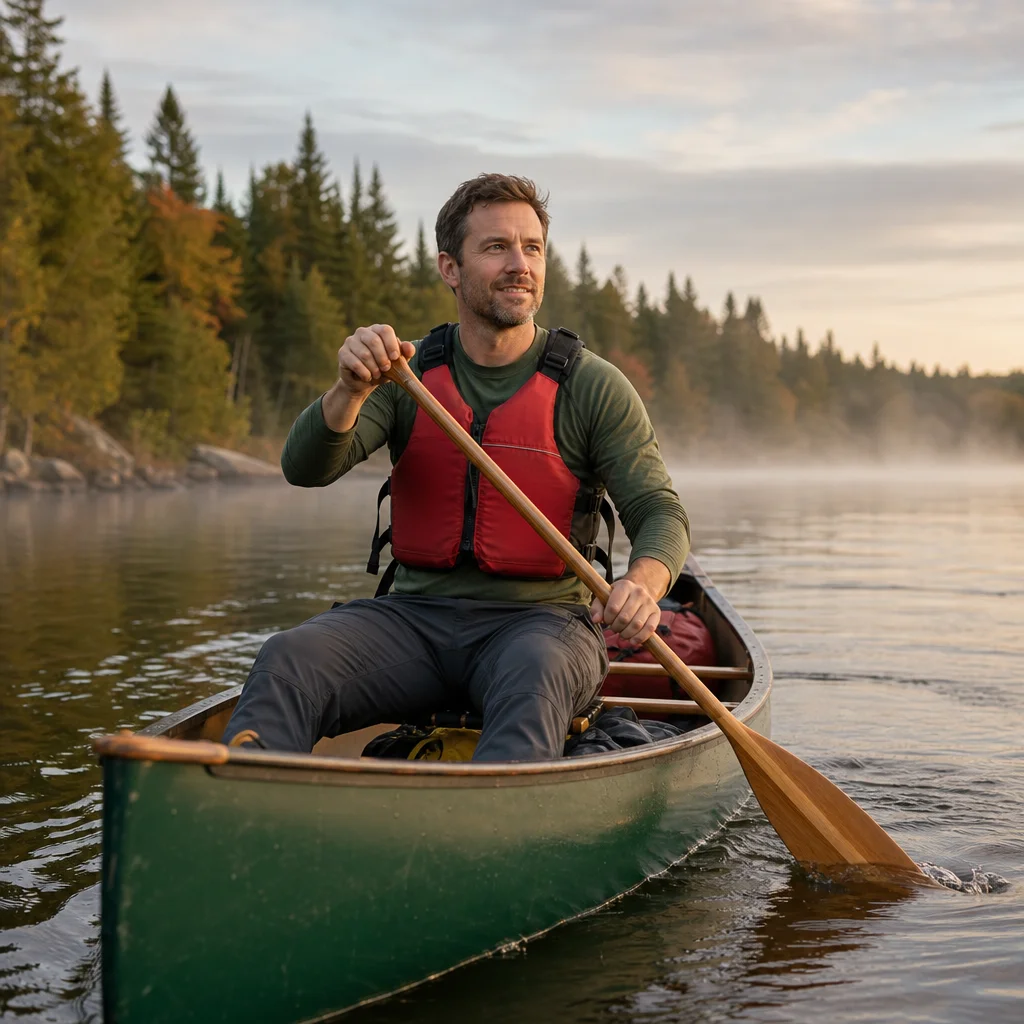
Sun protection can become a paddling problem when it’s treated as an all-or-nothing choice. A stiff hat blocks your view, sunscreen washes away, gloves make the paddle feel unfamiliar, and too many layers turn a pleasant outing into a hot one.
The better approach is to combine a few low-interference options. I’d start with protection that works passively—clothing, a suitable hat, and smart timing—then add sunscreen and shade where exposed skin remains.
Start with the options that don’t interrupt your stroke
Every sun-protection choice has a trade-off. The most useful one is usually the option you can wear or use without repeatedly adjusting it.
| Option | Main strength | Common drawback | Best use |
|---|---|---|---|
| Long-sleeved sun shirt | Covers much of the arms and torso continuously | Can feel warm if poorly ventilated | Longer trips and open water |
| Wide-brim or legionnaire-style hat | Protects the face, ears, and neck | May interfere with vision or catch wind | Calm water and moderate wind |
| Baseball-style cap | Stable and familiar | Leaves ears and neck exposed | Short trips or as part of a layered system |
| Sunscreen | Covers exposed skin and works with any clothing | Needs correct application and reapplication | Hands, face, neck, and other gaps |
| Fingerless paddling gloves | Protects the backs of hands and may reduce blisters | Adds another layer between hand and paddle | Bright, long outings or sensitive hands |
| Shade strategy | Reduces direct exposure and heat | Isn’t always available on the route | Rest stops, shore breaks, and sheltered sections |
There isn’t one perfect setup. The reliable combination depends on your route, weather, skin exposure, and how often you can stop to adjust or reapply.
Compare hats by visibility, not just coverage
A hat should protect the areas that burn while staying out of your sightline. That matters especially when you’re scanning for other boats, submerged obstacles, landing points, or a changing current.
Wide-brim hats
A wide brim can protect the face, ears, and neck better than a standard cap. Look for a brim that holds its shape without being so large that it brushes your shoulders or blocks peripheral vision. A chin cord is useful in wind, but it should be adjustable and comfortable rather than tight.
A soft, flexible brim is easier to pack, while a firmer brim is less likely to collapse into your field of view. Whichever you choose, test it with the head movements you’ll use while paddling. Look left, right, and over each shoulder before committing to it on a longer trip.
Caps and neck coverage
A cap is often more stable and familiar, but it leaves the ears and sides of the neck exposed. It can work well with a sun shirt that has a collar or a lightweight neck flap.
A cap also gives you a clear forward view, which can be valuable in busy waterways. Its weakness is that the brim may not shade your face when the sun is low or off to one side.
Neck gaiters and face coverings
A lightweight neck gaiter can cover the back and sides of the neck, but it shouldn’t be so loose that it catches on equipment or becomes distracting. If you use one over your face, make sure it doesn’t restrict breathing or fog eyewear.
For normal paddling, I’d rather see a simple, breathable layer that stays put than a complicated arrangement that requires constant adjustment.
Use clothing as your most dependable layer
A long-sleeved shirt with a close but nonrestrictive fit usually offers the best balance of coverage and freedom of movement. Look for breathable fabric, quick drying, and enough stretch for the reach and rotation of a canoe stroke.
A shirt doesn’t need to be tight. Excess fabric can snag on a seat, catch wind, or become heavy when wet, but an overly close fit can feel restrictive across the shoulders. Raise your arms, rotate your torso, and mimic a few strokes when checking the fit.
Light colors may feel cooler in direct sun, while darker colors can hide stains and wear. The more important factors are ventilation, comfort when damp, and whether the fabric continues to cover your shoulders and lower back as you move.
A collar or hood can add coverage, although a hood may reduce peripheral vision. If you choose one, keep it loose enough to turn your head and check your surroundings.
Don’t forget legs and feet
Shorts leave knees and lower legs exposed, particularly when you’re seated for several hours. Lightweight trousers or paddling pants can add coverage without the bulk of heavier outdoor clothing. Choose fabric that allows the knees and hips to bend comfortably.
Sandals and water shoes can leave the tops of the feet exposed. Sunscreen helps there, but footwear that covers more of the foot may be preferable on bright, long outings or routes with rocky landings.
Treat sunscreen as gap protection
Sunscreen is most useful where clothing and shade don’t reach: the face, ears, neck, hands, forearms, and tops of the feet. It’s less dependable as your only defense because water, sweat, rubbing, and forgotten areas gradually reduce coverage.
Apply it before launching, allowing enough time for the product to set according to its label. Pay attention to the ears, hairline, back of the neck, and the hand that sits higher on the paddle. Many paddlers remember their face and forget their hands.
Water-resistant doesn’t mean waterproof or permanent. Reapply according to the product directions and after swimming, heavy sweating, or towel drying. Keep a small container in a dry bag where it can be reached during a planned break, rather than burying it under spare clothing.
Choose a formula that you’ll actually use. If it stings your eyes, feels too greasy on the paddle, or causes irritation, it’s not a dependable part of your system. Test a product before a long trip, and follow its label for age restrictions, application, and storage.
Check the product and waterway details: Before your trip, read the current sunscreen label for water-resistance and reapplication instructions, and check local waterway or protected-area rules if they apply. Requirements and environmental guidance can differ by jurisdiction in North America and Australia.
Decide whether gloves help or hinder
Fingerless paddling gloves can protect the backs of your hands from sun and may reduce hot spots or blisters. They’re particularly useful for paddlers who spend hours gripping a paddle or who burn easily on their hands.
The downside is reduced direct contact with the grip. A glove that bunches, slides, or has thick seams can encourage a tighter grip, which may cause fatigue. Try gloves with the paddle you normally use, and check that the closure doesn’t press against your wrist during the stroke.
Some paddlers do better with sunscreen and no gloves. Others prefer thin gloves for reliable coverage. Neither choice is automatically better; comfort and control are the deciding factors.
Keep gloves clean and dry between trips. Salt, grit, sunscreen, and sweat can stiffen fabric and irritate skin. Rinse them according to the care instructions, dry them completely, and replace them when the palm loses its grip or seams begin to fail.
Build shade into the route
Shade is a useful supplement, not a reason to assume you’re protected all day. Trees, banks, and clouds can reduce direct sun but don’t eliminate reflected light from the water. Plan breaks in shaded areas when the route allows, and use those pauses to drink, reapply sunscreen, and check clothing.
Launching earlier or paddling later can reduce the harshest exposure, but daylight conditions vary by season and location. Don’t trade sun reduction for poor visibility, cold, wind, or a rushed return. A calm, well-lit route is usually the better choice.
A canoe canopy or umbrella may provide shade on suitable flat water, but it can interfere with visibility, paddle movement, loading, and wind handling. Treat it as a route-specific accessory rather than a universal improvement. Stow it securely whenever wind rises or maneuvering becomes more demanding.
Maintain the system between launches
Sun protection works best when it remains comfortable and serviceable. After each trip, rinse salt, sand, mud, and sunscreen residue from hats, shirts, gloves, and footwear. Follow the garment or equipment care label instead of assuming that hot water, bleach, or a dryer is harmless.
Inspect the parts that affect reliability:
- Check hat brims for cracks, warping, or loose stitching.
- Replace stretched or damaged chin cords.
- Look for thinning fabric, especially across shoulders and the back of the neck.
- Examine glove palms and finger openings for worn seams.
- Confirm that sunscreen containers are closed, within their labeled use period, and stored as directed.
- Keep spare protection in a dry bag, away from sharp gear and prolonged heat.
Fabric can fade without becoming obviously weak, so visible color isn't a reliable test of protection. Use the garment’s labeling and condition as your guide, and replace items when they no longer provide the coverage, fit, or comfort you need.
A simple setup for most paddlers
For a typical daytime trip, I’d use a breathable long-sleeved shirt, a stable hat that preserves peripheral vision, sunscreen on exposed skin, and a small dry-bagged backup. Add fingerless gloves if they improve comfort rather than changing your grip. Plan at least one shaded or sheltered break when the route permits.
Before launching, make a quick movement check: turn your head, look along both sides of the canoe, reach through a full stroke, and confirm that nothing slips or blocks your view. Protection that stays in place is more useful than protection with impressive coverage that you keep removing.
The practical next step is to test your chosen combination on a short outing. Adjust the fit, note which areas remain exposed, clean and dry the gear afterward, and make those small improvements before committing to a longer paddle.