Choosing a Canoe Campsite for a Quiet Morning Departure
I’ll clarify how to choose a canoe campsite that makes your morning launch calm rather than awkward. You’ll learn how shoreline shape, wind, tent placement, landing access, and nearby campers affect the first paddle of the day.
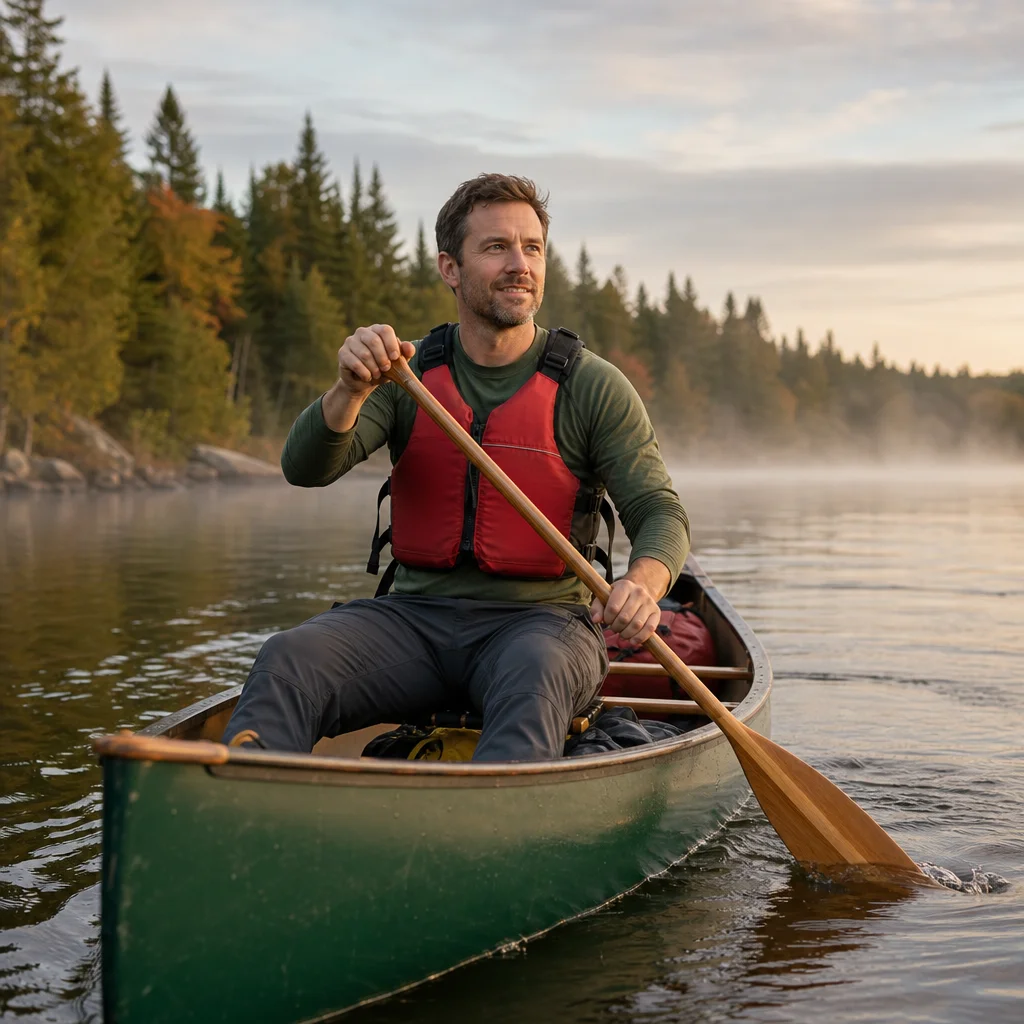
The campsite that feels perfect at dusk can be a poor launch point at dawn. A broad, sunny beach may become windy overnight, while a quiet cove may leave you dragging a loaded canoe through mud in the morning.
For a dependable departure, I look beyond the tent view. The best canoe campsite balances a usable landing, protection from changing wind, enough room for camp, and distance from other groups. You don’t need to predict every weather shift, but you can remove many avoidable problems before unpacking.
Start with the morning, not the evening view
When you arrive, imagine the first ten minutes after waking:
- Where will you carry the canoe?
- Where will you load it without stepping into deep water?
- What direction will wind and waves approach from?
- Will other campers be walking through your camp or using the same landing?
- Can you leave without disturbing people who are still asleep?
These questions change how you evaluate a site. A pretty, exposed point may offer a wonderful sunset but a rough launch if the wind rises. A sheltered bay may be comfortable for sleeping but have a shallow, soft shoreline that makes loading difficult.
If possible, inspect the landing before carrying gear from the canoe. Walk a short distance along the shore and look for a second launch option. Spending a few minutes scouting is easier than moving a fully established camp later.
Read the shoreline shape
Shoreline shape affects both comfort and access. Each type has useful features and potential drawbacks.
Small coves
A cove often provides protection from wind-driven waves, especially when its opening faces away from the prevailing weather. It can be a good choice for a calm morning departure.
Look closely at the cove’s bottom, though. Mud, underwater branches, and soft sediment can make it hard to push off. A sheltered cove can also collect floating debris or become cramped if several boats use it.
Choose a spot where the shore transitions gradually into water and where you can place the canoe parallel or slightly angled to the beach. Avoid relying on a single narrow gap between rocks or trees.
Points and exposed beaches
Points usually offer easy visibility and more room to land, but they receive wind from multiple directions. Wind wrapping around a point can create confused waves, even when the nearby bay looks smooth.
An exposed beach may still work when the forecast and shoreline orientation are favorable. Keep the canoe above the reach of small waves, secured so it can’t drift away, and leave enough room to relaunch without carrying gear through brush.
Reed beds, boulder shores, and steep banks
Reeds can hide shallow water, uneven footing, and insects. Boulder shores may protect the bank but make it difficult to put a loaded canoe in the water without damaging its hull or your ankles. Steep banks can be manageable for a light boat and frustrating for a loaded one.
A landing doesn’t need to be sandy. It does need a stable place for your feet, a clear path for the canoe, and enough water depth to float the boat before you climb in.
Consider wind exposure overnight
The shoreline that is comfortable at arrival may not remain comfortable after dark. Wind commonly changes with weather systems, local terrain, and temperature differences between land and water. Hills, islands, and forest can shelter one direction while leaving another completely exposed.
Look for clues rather than assuming that still water means safe shelter. Check:
- Which way waves are arriving along the shore
- Whether trees or shrubs show prevailing wind damage
- Whether exposed branches could fall near your tent
- If the campsite faces a long, open stretch of water
- Whether an island, point, or hill blocks the likely wind direction
A site tucked just inside a bay is often more useful than the very back of a narrow inlet. The back may be sheltered but can have poor drainage, thick vegetation, or a difficult launch. Balance wind protection with a dry, accessible camp area.
Don’t pitch a tent directly beside the canoe landing just because the ground is convenient. Leave enough space to move boats and gear without tripping over guylines. If the shoreline is the only practical route for launching, keep your sleeping area out of that traffic path.
Confirm the local limits before settling in: Check the current land-manager rules for designated sites, camping zones, fires, food storage, quiet hours, group size, and shoreline access. Regulations and conditions vary among national, provincial, state, local, and private waters, and restrictions may change with season or fire danger.
Separate the tent from the launch area
A quiet morning depends partly on how people move through camp. Place the tent far enough from the landing that you can load without stepping over sleeping bags, but close enough that you can keep an eye on the canoe.
A useful layout has three zones:
- Sleeping zone: level, dry ground away from runoff, dead branches, and the main walking route
- Cooking and food zone: positioned according to local rules and separated from the tent when required
- Boat and loading zone: a clear path between the canoe, packs, and water
Avoid putting your tent in a low depression beside the beach. It may feel level and protected at dusk, but rain can collect there overnight. Morning condensation and damp ground are also more likely close to the water.
Look overhead before choosing a sleeping spot. Dead limbs, leaning trees, and damaged trunks deserve more concern than a few inconvenient roots. If there’s no safe tent location away from the water and hazards, the site may not be worth using.
Make the landing work with a loaded canoe
An empty canoe is forgiving. A canoe packed for an overnight trip is less so. Packs raise the boat’s weight, change its balance, and make every awkward step more consequential.
Before unloading, test the landing on foot. Check whether you can:
- Carry or slide the canoe without scraping it across sharp rock
- Set one end down while keeping the other end stable
- Stand in the shallows without sinking or slipping
- Float the canoe before loading heavy packs
- Step into the canoe without pushing it into deeper water
If the shore is rocky, consider using a short section of durable fabric or a purpose-made canoe landing mat only where permitted and where it won’t damage vegetation. Don’t drag a hull over living plants or fragile shoreline areas to create a better path.
For a particularly awkward landing, load the canoe in stages. Put in lighter items first, stabilize the boat, and add heavier packs once it’s floating securely. Keep essential items accessible until you’re safely underway.
Account for other groups
A campsite can be physically excellent and still be a poor choice if it creates constant contact with other paddlers. Nearby groups affect sleep, privacy, and the ease of a quiet departure.
Before claiming a site, look for signs that it is shared or commonly used: multiple fire rings, several cleared tent areas, worn paths, spare paddles, or boats pulled above the same beach. If another group is already present, ask courteously whether the landing or shoreline is shared.
Give extra space to sites near popular portages, junctions, fishing areas, and narrow channels. People may pass through before sunrise even if the campsite itself seems quiet at night.
If you need to leave early, avoid setting up beside another group’s tent or cooking area. A respectful departure usually involves less noise than trying to move around a crowded camp. Pack items that won’t be needed in the morning before going to sleep, and keep buckles, dry bags, and loose equipment from rattling.
Pick a site for the actual forecast
A general weather forecast is useful, but the campsite decision should also account for local exposure. Compare the forecast wind direction with the orientation of the shoreline. A modest wind aimed down a long fetch of open water can produce more difficult conditions than a stronger wind blocked by a nearby island or forested shore.
If the forecast is uncertain, favor options that preserve choices. A site with two possible launch directions is more flexible than one with a single exposed beach. A sheltered landing near a clear walking path is usually preferable to an attractive but committed position on an open point.
Check conditions for the launch window: Before turning in, review the latest weather, wind, water-level, and hazard information available for your route. Recheck any local advisories or closures in the morning, especially if your departure depends on an exposed crossing or a narrow landing.
A simple campsite decision order
When several sites are available, evaluate them in this order:
- Can I launch safely and legally? Eliminate sites with unstable footing, hazardous trees, prohibited camping, or no workable water access.
- Will the site remain usable if wind or rain changes? Prefer shelter with drainage and more than one reasonable route to the water.
- Can I sleep and move without disturbing others? Separate the tent from the launch path and nearby groups.
- Can I secure the canoe and gear? Choose a site where the boat can sit above wave reach and where packs won’t block camp traffic.
- Is it comfortable enough? A level tent area, manageable insects, and a pleasant view matter after the practical requirements are met.
This order prevents a common mistake: choosing comfort first and discovering later that the boat is difficult to launch.
Common campsite mistakes to avoid
Camping below the visible waterline
A calm evening can hide changing water levels, waves, or runoff. Keep the canoe and sleeping gear above the highest reasonable reach of water, and never assume a smooth beach is safe simply because it is empty.
Blocking the only landing
Your canoe, packs, and firewood can quickly turn a shared access point into an obstacle course. Keep the path clear, especially at campsites used by passing paddlers.
Ignoring the exit route
A campsite that requires a steep climb or a long carry may be manageable when you’re fresh and less appealing after a wet night. Walk the route once with your expected load in mind.
Choosing silence over safety
A remote, secluded site isn't automatically a good one. If it has unstable trees, a dangerous bank, no reasonable launch, or poor weather exposure, move on. Quiet is valuable, but it shouldn’t be the only criterion.
Your evening campsite check
Before settling in, take a final walk from tent to canoe. Confirm that the path is clear, the landing is stable, and the boat is secured above likely wave reach without damaging it. Note where shoes, PFDs, paddles, and headlamps will be in the morning.
Then look back toward camp from the water. This often reveals low branches, awkward turns, or a better place to load that wasn’t obvious from shore.
For a quiet morning departure, choose the campsite that makes the first steps simple: sheltered but drained, private but not isolated from help, and close to a stable landing without putting your tent in the traffic lane. If you can launch safely, follow local rules, and leave the site without waking half the shoreline, you’ve made a sound choice.