How to Salvage a Canoe Day When the Main Route Is Blocked
A blocked route can turn a relaxed paddle into a rushed judgment call. I’ll help you compare a safe landing, a controlled turnaround, a shortened trip, or a confirmed alternative before conditions and daylight narrow your choices.
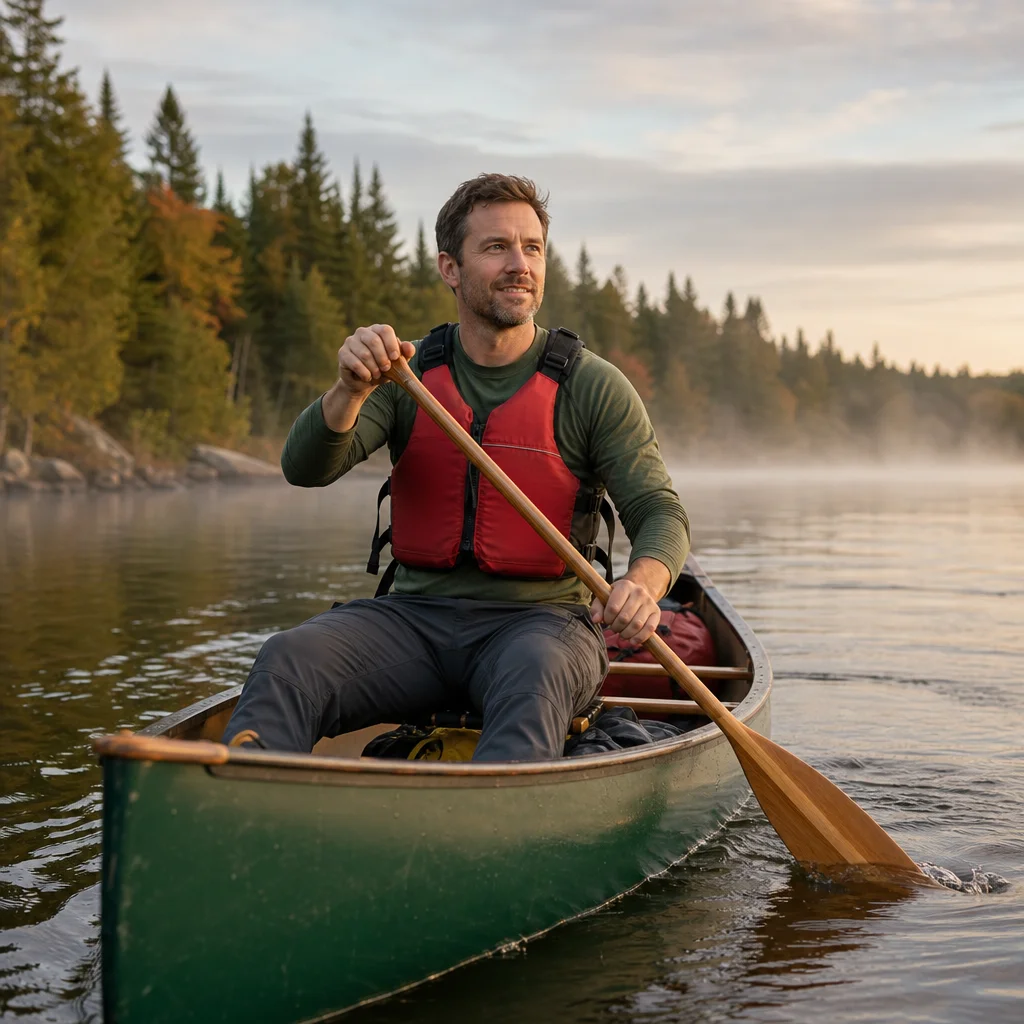
A blocked canoe route is rarely the moment to improvise boldly. A fallen tree, low bridge, private shoreline, unsafe current, closure, or missing take-out can leave a trip leader choosing between several imperfect options while the group waits in moving water.
The goal isn’t to preserve the original itinerary at any cost. It’s to keep people, boats, and communication under control while choosing the least risky workable plan.
Stop before the blockage
Make the decision from a stable position, not while the bow is pointed at an obstacle. If possible, eddy out, reach a calm shoreline, or land at an established access point before discussing options. On a narrow or moving section, keep enough distance from the obstruction that a missed paddle stroke won’t send a canoe into it.
Take a quick head count and check the basics:
- Is anyone cold, injured, seasick, or unusually tired?
- Does every canoe still have its required equipment?
- How much daylight remains?
- Are the wind, rain, water level, and current changing?
- Is the group still within reliable phone or radio range?
- Does anyone have a hard deadline, medical need, or limited paddling ability?
A blockage that is manageable at 10 a.m. may be a serious problem at 4 p.m. The available margin matters as much as the obstacle itself.
Identify what “blocked” actually means
Not every obstruction calls for the same response. Before choosing a route, identify the category and the consequences of approaching it.
Physical obstruction
A strainer, logjam, ice, debris, washed-out bank, or damaged portage may make the channel impassable. Treat trees and debris in current as especially serious. Water can pass through gaps that are too small for a canoe and can pin a person or boat against the wood.
A low bridge or culvert deserves similar caution. If you can’t clearly see the passage, the water beyond it, and a safe exit, don’t enter just because the canoe appears to fit.
Water conditions
A route may be open on a map but unsuitable at the current level. Shallow water can expose rocks and force awkward dragging. High water can erase eddies, cover landing areas, or increase current around bends and bridges.
If the obstacle is paired with fast water, unfamiliar rapids, cold conditions, or limited visibility, the sensible choice is usually to retreat or land well before it—not to scout from the canoe’s bow.
Access or legal restriction
A closed launch, private shoreline, seasonal gate, construction area, or posted portage can block a planned route even when the water itself is passable. Don't assume that a nearby bank is a legal or safe landing.
Confirm today’s access before redirecting: Check the managing agency, park, landowner, outfitter, or local authority for current closures, launch conditions, portage status, and any restrictions that apply to your alternate landing. Maps and older trip reports can lag behind conditions on the ground.
Missing or unusable take-out
Sometimes the main route is open, but the planned exit isn't. A flooded landing, damaged dock, locked gate, or inaccessible road can turn a normal finish into a difficult carry. This is why the take-out should be treated as part of the route, not as an afterthought.
Build four realistic options
Once the group is stable and the blockage is understood, compare these options in order. The best choice depends on the hazard, but this sequence helps prevent wishful thinking.
1. Use a confirmed alternate landing or route
An alternate is useful only if it is both reachable and usable. Confirm more than its name on a map:
- Is the landing open and legal to use?
- Can a canoe reach it without running the original hazard?
- Is there enough room to land and gather the group?
- Can boats and people be carried from the water?
- Is there a road, shuttle point, or safe way to finish?
- Does the alternate add distance, current, exposure, or darkness risk?
A short alternate on a map may involve a steep bank, a long carry, or a road crossing. If nobody has verified those details, label it a possibility rather than a plan.
2. Turn around while the route is still manageable
Turning back is often easiest before fatigue and frustration build. The group may need to retrace the route to the last known landing or return to the launch.
Plan the turnaround rather than ordering every canoe to reverse at once. In current, move one canoe at a time into a calm position if possible. Keep the group together, leave space between boats, and identify the next stopping point before departing. A leader should know whether the weakest paddler can make the return comfortably.
If the route back includes the same difficult water, the decision may be more complicated. Don’t assume that “back the way we came” is automatically safer; compare the hazards in both directions.
3. Shorten the trip
A shortened route can preserve the day without preserving the original endpoint. This works when the group can reach a safe, confirmed exit before conditions deteriorate.
Shortening still requires a real finish. Identify where the canoes will land, where people will wait, and how equipment will be transported. If a vehicle or shuttle is involved, confirm that the driver knows the new location and that the access road is open.
Don't let a shortened distance create false confidence. A difficult landing at the end of a tired day may be more demanding than several additional minutes on calm water.
4. Portage or bypass the blockage
A portage is a route, not merely a place where you can drag a canoe ashore. Consider the terrain, distance, footing, overhead hazards, private property, water access at the far end, and how the group will move boats and gear.
Use a portage only when it is known, permitted, and within the group’s ability. A steep or muddy bank can cause injuries, and carrying a loaded canoe near a road adds a different set of hazards. If the route isn’t established or you can’t inspect enough of it safely, don’t turn an uncertain landing into an expedition.
Communicate one clear change of plan
Uncertainty grows when different canoes make separate decisions. Gather the group where conditions allow and state the plan plainly:
- What is blocked or unsafe.
- Which option the group is taking.
- Where the next regrouping point is.
- Who leads and who stays at the rear.
- What signal means “stop,” “come in,” or “emergency.”
- How the change will be communicated to a shuttle, contact, or waiting party.
If the group is spread out, send the message from canoe to canoe and confirm that it was understood. A phone message to someone on shore is helpful, but it doesn’t replace managing the paddlers who are already on the water.
Keep the explanation calm and direct. The group doesn’t need a dramatic account of every possibility; it needs a shared next step.
Manage the practical details after the decision
Before leaving the area, secure loose gear, close dry bags, and check that every canoe has its paddle and personal flotation device. If you’re landing, move boats above the waterline where waves or a rising level won’t carry them away. Keep people together unless there is a specific reason to split the group.
If the plan changes the expected finish time, update your designated contact or shuttle driver as soon as you have a reliable communication method. Give them the new landing, expected arrival time, and any important access detail. If communication fails, prioritize reaching a safe public access point over continuing toward the original schedule.
For a delayed or overnight return, reassess warmth, shelter, food, water, lighting, and first-aid needs. If there is an injury, imminent weather danger, or no safe way to continue, use the appropriate emergency service for the area rather than relying on an improvised self-rescue.
Mistakes that make a blockage worse
- Paddling close to inspect: A canoe is a poor observation platform beside strainers, strong current, or unstable banks.
- Treating a map as current: Access, closures, water levels, and portages can change.
- Splitting the group without a strong reason: The fastest canoe can leave the least experienced paddlers with less support.
- Choosing a landing because it is nearby: Near doesn't mean legal, safe, or connected to a usable road.
- Continuing to protect the schedule: A late finish is inconvenient; a rushed passage can be dangerous.
- Forgetting the return route: A turnaround is only a solution if the group can make it back with adequate daylight and energy.
A simple decision test
Before committing, ask four questions:
- Can we reach the option without passing the hazard?
- Is the landing or route confirmed, permitted, and usable today?
- Can the whole group complete it with current energy, weather, and daylight?
- Does it leave a safer fallback if conditions worsen?
If the answer to any question is no or unknown, choose the more conservative option or stop and obtain better information. The original plan has already failed; there’s no value in pretending an unverified substitute is certain.
The most useful preparation is to mark one or two realistic bailouts before launching, note the last reliable turnaround points, and tell the group that changing course is a normal part of trip leadership. When the main route disappears, a successful canoe day is simply the one that ends with everyone accounted for, safely ashore, and able to try the route another time.