Recovering a Canoe Trip After a Lost Paddle
A lost paddle changes the trip from routine to risk management, especially in wind, current, or cold water. I’ll explain what to prioritize, how to reach shore safely, and which simple backups prevent a minor problem from becoming an emergency.
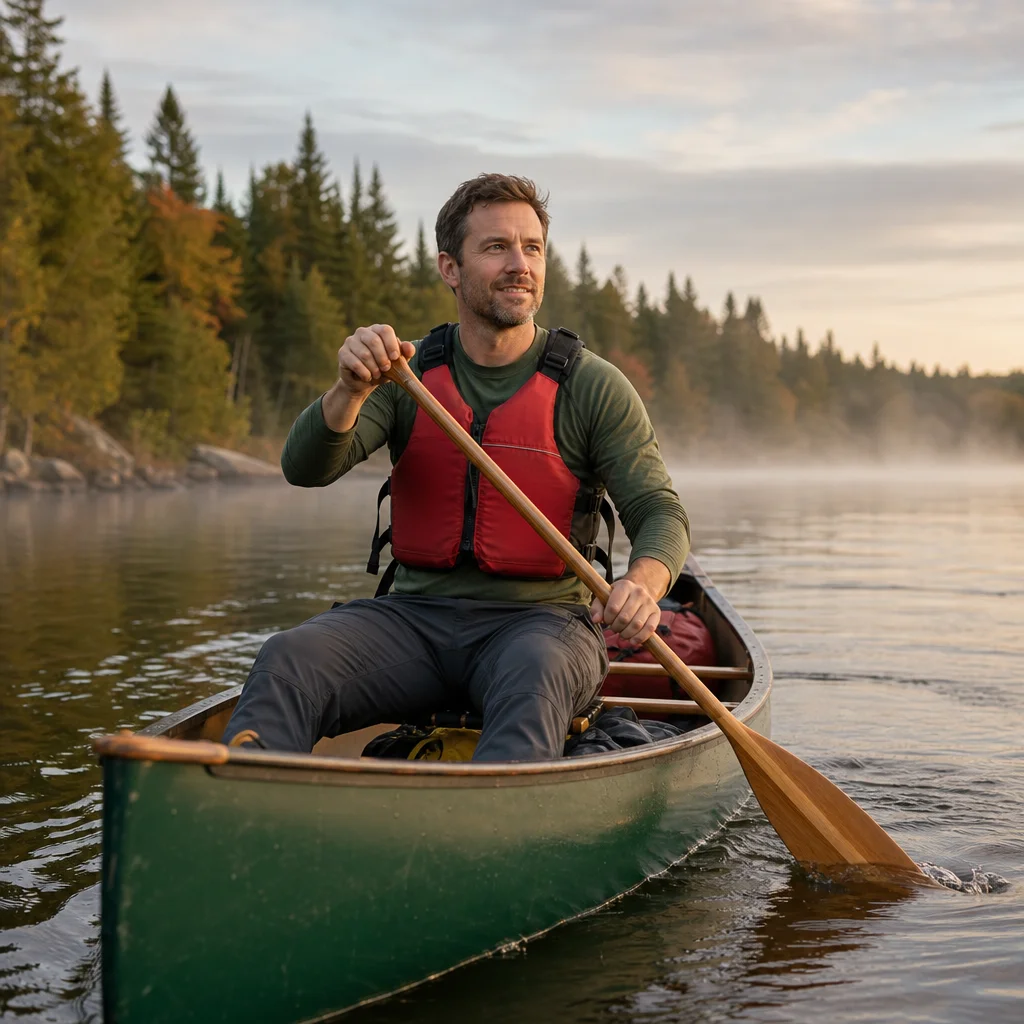
Losing a paddle can turn a calm canoe outing into a difficult decision within seconds. The first priority isn’t getting the paddle back; it’s keeping the canoe stable, the occupants together, and the situation from becoming a swim.
The safest response depends on wind, current, distance from shore, water temperature, canoe loading, and whether you’re paddling alone or with a partner. A deliberate recovery is usually better than a quick, risky grab.
Stabilize the canoe first
Keep everyone seated or kneeling low. Don’t stand up to reach for the paddle, and don’t lean far over the gunwale. A canoe can become unstable before the danger feels obvious, particularly when one paddler moves suddenly or gear has shifted.
Confirm that everyone is wearing a properly fitted personal flotation device (PFD). Account for children, pets, and loose equipment. If the canoe is taking on water, address that before worrying about propulsion.
Take a few seconds to identify what’s happening:
- Is the canoe drifting toward rocks, a dam, a strainer, boat traffic, or another hazard?
- Are wind or current moving you away from shore?
- Is the lost paddle floating nearby and reachable without leaning dangerously?
- Do you have a spare paddle or another suitable means of control?
- Is anyone cold, injured, panicked, or separated from the canoe?
If the canoe is stable and the paddle is immediately beside you, retrieve it only from a secure seated position. If it has drifted away, let it go unless reaching it is clearly safe. A paddle is replaceable; a person in cold or moving water may not be able to swim back effectively.
Check your local safety requirements: Before your next launch, confirm the current PFD, signaling, lighting, and equipment rules for the waterway and jurisdiction you’ll use. Requirements can differ between states, provinces, lakes, rivers, and waterways managed by different agencies.
Decide whether to recover the paddle
A nearby paddle may look harmless to retrieve, but the canoe’s stability matters more than the distance. A short reach can become a capsize if the paddler twists, braces against the gunwale, or shifts weight while the canoe is turned broadside to waves.
A paddle is more reasonable to recover when:
- The canoe is on calm, shallow, protected water.
- The paddler can reach it without standing or leaning far over.
- The canoe remains pointed into wind or waves as much as possible.
- No one needs to enter the water.
- Current, traffic, and underwater hazards aren’t a concern.
Don't swim after the paddle in open, cold, windy, or moving water. Swimming removes your control of the canoe and can separate you from your PFD, partner, or other safety equipment. Even strong swimmers can be surprised by cold shock, current, weeds, or a submerged obstruction.
If you’re paddling tandem, the person nearest the paddle can retrieve it while the other keeps the canoe stable—provided both people can do so without an awkward weight shift. Communicate before moving: say who is reaching, which direction, and what happens if the canoe starts to roll.
Use a spare paddle if you have one
A spare paddle is the cleanest solution. Keep it secured where it can be reached without unloading the canoe or making a large movement. In a tandem canoe, one person can use the spare while the other helps with balance and direction.
With one paddle, the goal is controlled movement, not normal cruising speed. A forward stroke on one side will turn the canoe, so use corrective strokes deliberately. Short forward strokes alternated with brief reverse strokes can help you maintain a heading. A stern paddler may use a sweep or draw stroke to manage the turn, while the bow paddler provides short strokes when needed.
If you’re solo, kneel near the center of the canoe if that position is safe and comfortable, keeping your weight low. A kneeling position can improve control, but don’t make a large adjustment in rough water just to achieve it. Stability comes first.
Avoid tying the paddle to your wrist or body. A leash can entangle a paddler during a capsize, especially in current or around branches. If you use a paddle-retention system, follow its design instructions and consider how it releases during an emergency.
Move toward the safest shore
With limited propulsion, choose a landing place rather than simply aiming for the closest shoreline. The nearest shore may be a bad one if it has steep banks, breaking waves, dense branches, private property, heavy boat traffic, or a downstream hazard.
On a lake, angle toward a protected shoreline if wind is pushing you across open water. Don’t aim directly across a strong wind if that leaves the canoe broadside to waves for too long. A slightly longer route toward a sheltered cove may be safer than a straight route to an exposed beach.
On a river, look downstream as well as toward shore. Avoid sweepers, strainers, low-head dams, rapids, bridge supports, and areas where the current accelerates. If the canoe is drifting toward a known hazard, prioritize getting clear of it over recovering equipment. Use the remaining paddle to angle toward a calm bank or eddy when possible.
If the current is strong enough that you can’t control your course, keep everyone in the canoe and prepare for a controlled landing or capsize response. Don’t jump out in an attempt to stop the canoe. Water that looks shallow can still have a strong force, uneven footing, and hidden obstacles.
Improvise carefully when no spare is available
Improvised propulsion can help on calm water, but it won’t replace a paddle in every situation. A canoe bailer, sturdy seat, or broad, rigid object may provide limited movement. Use only equipment that won’t break into sharp pieces or create an entanglement hazard.
Hand paddling can move a canoe slowly over calm water. Keep your body low and use short strokes close to the hull. It’s tiring and provides little control in wind or current, so treat it as a way to make small corrections or reach a nearby safe landing—not as a plan for crossing a large lake.
A partner can use coordinated hand strokes from opposite sides, but don’t allow both paddlers to lean out at the same time. If the canoe begins to roll, stop the improvisation and stabilize it.
If you have no reliable way to make progress, use your signaling equipment and conserve energy. A whistle, flashlight, phone, satellite communicator, or other communication device may be more useful than exhausting yourself with ineffective paddling. Keep the group together and make your location clear.
If the canoe capsizes
The response changes from trip recovery to self-rescue. Stay with the canoe whenever possible; it is easier for rescuers to see than a person in the water and may provide flotation. Keep your PFD on, account for everyone, and move toward shore only if it is clearly safe and reachable.
Don’t abandon the canoe to chase a floating paddle. In cold water, limit unnecessary swimming and get as much of your body as possible out of the water when you can. If a person is missing, injured, or unable to reach shore, call emergency services and provide the waterway, nearest access point, direction of travel, and visible landmarks.
A phone in a waterproof case is useful only if it remains accessible and charged. Store emergency communication equipment where it can be reached while wearing a PFD, not buried beneath dry bags.
Prevent the next lost-paddle problem
A few habits make this incident much less consequential:
- Carry a spare paddle suited to the canoe and keep it secured but accessible.
- Use drip rings and a grip that feels secure without relying on a wrist tether.
- Practice switching hands and paddling on either side.
- Rehearse a simple tandem plan for one-paddle movement and shoreline selection.
- Keep essential gear attached to the canoe or packed in secured, floating dry bags.
- Check wind, current, weather, water temperature, and route hazards before launch.
- Tell someone your route, launch point, expected return, and how to raise an alarm if plans change.
A short practice session in calm, shallow water is more useful than discovering your limitations during a real equipment failure. Practice staying seated, controlling a canoe with one paddle, reaching a safe shore, and communicating with a partner.
Practical next steps
If you lose a paddle, pause before acting. Stabilize the canoe, keep everyone in their PFD, assess hazards, and recover the paddle only if it’s genuinely within safe seated reach. Otherwise, use a spare or controlled improvisation to reach the best available shore.
After the trip, replace missing equipment, inspect the canoe and flotation gear, and update your emergency plan. The most valuable lesson is simple: a paddle is propulsion equipment, not a reason to risk a person. Carrying a spare and practicing one-paddle control turns that lesson into useful preparation.