Portaging With a Loaded Canoe: Making the Carry Less Miserable
A loaded canoe feels awkwardest when the trail is steep, wet, or cluttered, and small packing mistakes quickly become exhausting. I’ll show you how to prepare the carry, choose what goes first, and avoid the common errors that turn a portage into several miserable trips.
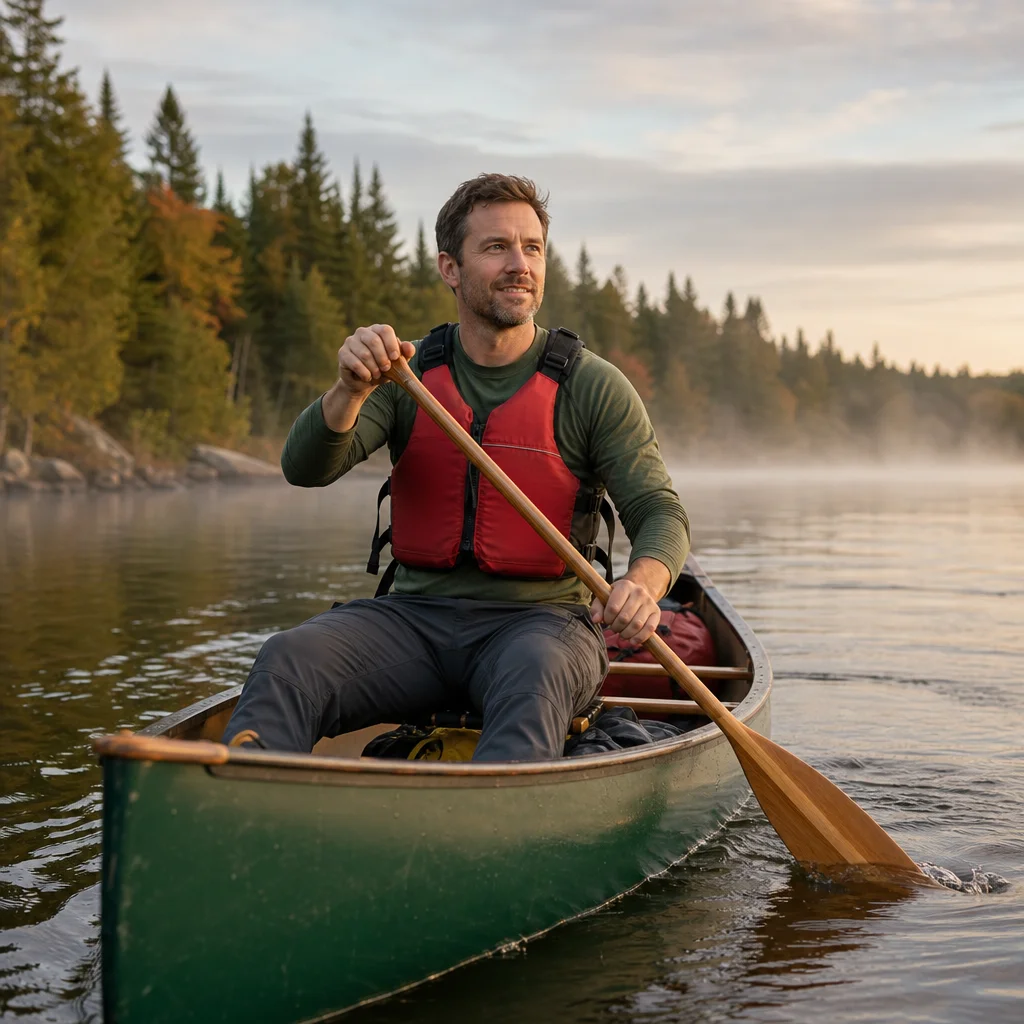
The canoe is often the lightest part of a portage. The trouble starts when packs shift, loose gear catches on branches, and the person carrying the boat can’t see the next rock or muddy step.
A loaded canoe doesn’t have to make every carry miserable. The goal isn't to move everything in one heroic trip. It’s to make each load stable, manageable, and easy to set down when the trail demands it. In the Boundary Waters and across the Canadian Shield, that usually means planning for uneven ground, exposed roots, granite, mud, beaver activity, and short portages that take longer than their map distance suggests.
Start by making the canoe carry predictable
Before lifting the canoe, decide how it will behave on your shoulders. A canoe that is balanced and clear of loose straps is much easier to control than one that is merely light.
Check the yoke fit
A good yoke rests securely across your shoulders and allows the canoe to sit level without constant correction. If the yoke has pads, position them so they contact your shoulders comfortably rather than pressing into your neck. Adjust the canoe’s position before starting, not after you’re already stumbling down the trail.
If the yoke is removable, make sure its hardware is fully seated and tightened. If it uses adjustable supports or a center thwart system, test the fit with the empty canoe first. Small changes in height and position can make a noticeable difference once the hull is overhead.
Lift with help when the canoe is loaded or the launch area is awkward. One person can steady the bow while the other raises the stern, then the carrier can settle the yoke onto their shoulders. Don’t twist sharply while taking the weight.
Clear the carry path around the hull
Secure paddles, bailers, fishing rods, and other long items inside the canoe or in a pack. Nothing should dangle below the gunwales or swing near your legs. A loose paddle can catch a branch; a fishing rod can become a snagging device with an expensive handle.
Keep the canoe’s trim reasonably balanced. A heavy bow or stern makes the boat harder to lift and can cause it to tilt as you walk. You don’t need laboratory precision, but you do need enough balance that the hull isn’t constantly trying to rotate.
Do a short test walk near the landing. If the canoe leans, your shoulder is taking uneven pressure, or equipment shifts inside, fix it before committing to the trail.
Check the day’s conditions and rules: Before leaving the landing, confirm current permit requirements, portage restrictions, fire or water advisories, and any route-specific closures for your Boundary Waters or Canadian Shield destination. Wet rock, high water, wind, and recent storms can change the sensible carrying plan even when the map is unchanged.
Divide packs by what you need first
The best pack system isn't necessarily the one with the fewest bags. It’s the one that lets you load, carry, and set up without opening every container.
Use waterproof or reliably water-resistant packs for sleeping gear, clothing, food, and other items that would create a serious problem if soaked. A pack liner can add protection, but it shouldn’t be treated as permission to carry a poorly closed pack through a swamp.
Separate gear into three useful groups:
- Carry-critical gear: items needed to move or protect the load, such as paddles, a map, water, and basic first-aid supplies.
- Camp-critical gear: shelter, sleep system, cooking equipment, food, and clothing.
- Convenience gear: fishing equipment, camp chairs, extra clothing, and items that can wait if the trail requires a second trip.
Keep a map, communication device, water, and first-aid supplies accessible without unpacking the canoe. On a longer or rougher portage, the person walking with the canoe shouldn’t be dependent on someone far ahead for every small need.
Heavy items should be packed low and close to the center of each pack. A high, loose load sways when you step over roots or climb exposed rock. Put soft items around hard gear so contents don’t shift, and close every compartment before leaving the landing.
Decide whether one trip is actually sensible
A single carry can save time, but only if the load remains safe and controllable. Carrying a canoe overhead while also balancing an oversized pack may leave you unable to see your feet, step around obstacles, or recover from a slip.
A second trip is usually the better choice when:
- the pack prevents the canoe from sitting correctly on the yoke;
- the load blocks your view of the trail;
- loose items can fall or snag;
- the trail has steep rock, slick roots, deep mud, or narrow ledges;
- you’re tired enough that foot placement is becoming careless;
- the canoe, pack, or person carrying it is near a comfortable limit.
If you make a double carry, leave the first load in a sensible location. Keep it above expected runoff, away from the water’s edge, and out of the main walking line. Don’t scatter small items along the trail. A concentrated, closed pack is easier to find and less likely to be forgotten.
A useful sequence is to carry the canoe with a small essentials pack first, return for the main pack, then continue. On a short portage, that may feel inefficient. On a rough one, it can be faster than recovering from a fall or repacking gear that spilled into the mud.
Walk the trail instead of fighting it
A yoke changes your balance and limits how quickly you can react. Take shorter steps than you would without a load, especially on rock slabs and descents. Look several steps ahead, then briefly check the immediate foot placement when the surface becomes complicated.
Use the terrain’s safer line
The straightest route is rarely the best route. Walk around wet rocks if the detour gives you secure footing. Step on the broad, stable part of a root rather than the rounded section that acts like a roller. In mud, avoid the deepest center if the edges are firm enough to support you.
On a slope, keep the canoe reasonably level and angle your body rather than forcing the hull to tilt sharply. Watch for branches that can catch the bow or stern and rotate the canoe unexpectedly. If the hull begins to swing, stop and regain control instead of trying to correct it while moving.
Treat descents as a separate problem
Going downhill with a canoe can be harder than climbing because the load wants to move ahead of you. Slow down before the slope, shorten your steps, and use the trail’s solid edges when they provide better traction. Don’t jump from rock to rock simply because the canoe is overhead.
If you need both hands for a difficult section, set the canoe down in a stable place and move through the obstacle deliberately. A brief pause is preferable to using a branch as a handhold without knowing whether it will hold your weight.
Communicate at landings
When two people are carrying gear, agree on who is leading and how you’ll signal a stop. The canoe carrier may have a restricted view and may not hear a quiet warning over wind, water, or the hull rubbing against vegetation.
At a landing, set the canoe down away from the water’s edge if waves or current could move it. Place packs where they won’t slide into the lake. Don’t assume an apparently flat rock is stable; granite can be slick with water, algae, or fine grit.
Avoid the mistakes that create extra misery
Packing too late
Sorting gear beside the water encourages rushed decisions. Pack before reaching the landing when possible, and keep each bag’s purpose clear. If you must repack, move out of the launch area so other groups can use it safely.
Carrying every loose item in the canoe
The canoe is convenient, but it turns small objects into obstacles. Put loose gear into a pack or a closed bag. Secure items that must remain in the hull so they can’t roll under your feet or fall out when the canoe tilts.
Ignoring fatigue
Fatigue affects judgment before it makes you feel completely exhausted. When your grip, footing, or concentration deteriorates, stop. Drink water, eat something if needed, and reassess whether the next section calls for a second trip.
Leaving the portage without a count
Use a simple gear check at both ends: canoe, paddles, packs, fishing gear, food, and small essentials. Count bags by type rather than trusting memory. A forgotten rain jacket or stove component can be more than an inconvenience once you’re back on the water.
A simple portage routine
Before lifting, use this sequence:
- Secure and close every pack and loose item.
- Confirm the canoe’s trim and yoke fit.
- Identify the hardest section of trail.
- Choose a one-trip or two-trip plan.
- Keep water, navigation, communication, and first aid accessible.
- Lift with a stable stance and avoid twisting.
- Walk slowly enough to place each foot deliberately.
- Set gear down securely at the far landing.
- Count everything before pushing off.
Portaging improves when you stop treating it as a test of toughness. A loaded canoe rewards preparation, modest loads, and a willingness to make a second trip when the terrain or your energy calls for it. Pack for control, use the yoke as a support rather than a challenge, and let the trail determine your pace. Your next launch will feel much better for it.