Minimalist Day-Trip Gear: What Belongs in the Canoe and What Doesn't
I’ll clarify which day-trip gear protects you from realistic canoeing problems and which extras mainly add clutter. You’ll get a simple way to sort safety equipment, clothing, food, repairs, and comfort items before leaving the launch.
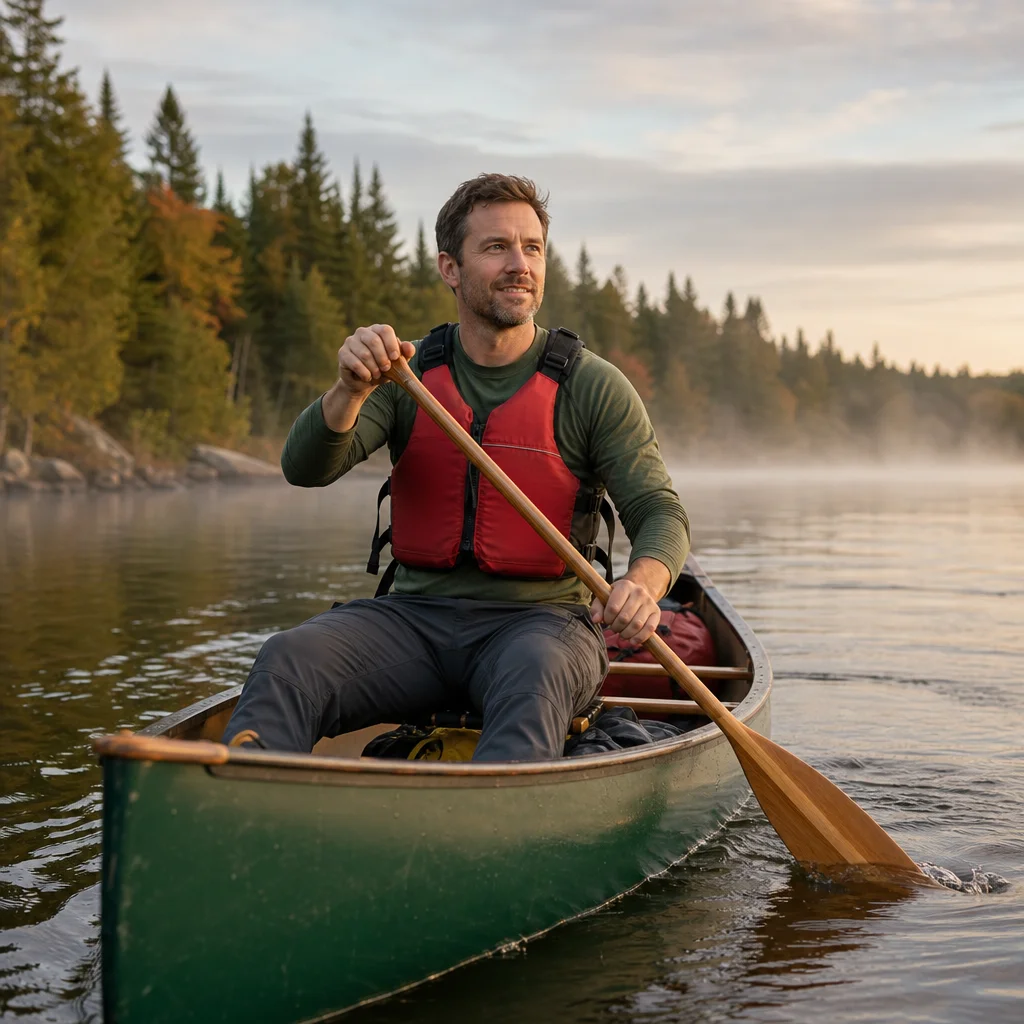
A minimalist canoe setup isn’t the same as an empty canoe. The goal is to carry enough equipment for a capsize, changing weather, minor damage, and a delayed return—without filling every available space with items you probably won’t use.
For a day trip, I’d sort gear by consequence rather than by frequency. Something can be worth carrying even if you hope it stays untouched. A spare paddle, for example, may spend the whole season unused, but losing your only paddle can turn a small problem into a serious one.
Start with the gear that protects a bad outcome
The first layer is equipment that helps you stay afloat, communicate, navigate, or deal with exposure. It belongs in the canoe even when the forecast looks friendly and the route seems familiar.
Wear your personal flotation device
Each paddler should have a properly sized, serviceable personal flotation device (PFD), and wearing it is more useful than merely bringing it along. A PFD stowed under a seat won’t help much during a sudden capsize.
Choose one designed for paddling, with a fit that allows comfortable arm movement. Check that it’s in good condition, fastens securely, and remains comfortable when worn for several hours. Children and weaker swimmers deserve particular attention to fit and supervision; a loose or oversized PFD can perform poorly.
Carry a way to call for help
A charged phone in a waterproof case is a reasonable communication layer for many day trips, but don’t assume it will work everywhere. Remote shorelines, wooded valleys, and large bodies of water can all create coverage gaps.
Depending on the route, a satellite messenger, emergency beacon, or other off-grid communication device may be more appropriate. These devices have different activation, subscription, battery, and rescue capabilities, so understand how yours works before relying on it.
Keep communication equipment accessible without making it vulnerable to immersion. A phone buried in a dry bag at the bottom of the canoe is protected, but not especially useful during an emergency.
Bring basic navigation
For a familiar pond, a phone map may be enough for orientation, but a waterproof printed map is a worthwhile backup on larger or more complex water. Mark your launch, intended route, exit points, campsites or facilities, and likely shelter before setting out.
A small compass adds value only if you know how to use it. It shouldn’t be treated as a magic replacement for planning, but it can help confirm direction when landmarks look alike or visibility drops.
Pack for exposure, not just air temperature
The water can be much colder than the air, and wind can make a comfortable launch feel unpleasant later. A dry insulating layer in a waterproof bag is more useful than a bulky outfit that becomes soaked and heavy.
A sensible clothing system usually includes:
- Quick-drying base layers rather than cotton for cool or wet conditions.
- A warm layer sized to fit over your paddling clothes.
- A waterproof or highly weather-resistant shell.
- Sun protection, including a brimmed hat, sunglasses, and sunscreen.
- Footwear that stays secure when stepping in or out of the canoe.
- Spare socks or a complete change of clothes when immersion is plausible.
Avoid dressing based only on the launch-time forecast. Wind, cloud cover, shade, and an unexpectedly long paddle can change the comfort equation quickly.
Check your local water rules: Before launching, confirm current requirements for PFDs, lights, sound-producing devices, registration, access permits, and any restrictions that apply to your canoe and destination. Rules differ across states, provinces, territories, waterways, and sometimes parks; official transport, boating, wildlife, or park agencies are the right sources.
Carry the tools that solve likely small problems
A minimalist kit still needs a few repair and recovery items. The trick is to choose compact tools that address failures you can realistically handle on the water.
Keep a spare paddle available
A spare paddle is one of the strongest candidates for a day-trip kit. A broken or lost paddle may be inconvenient on a protected pond and dangerous on windy, open water. A compact two-piece or take-apart paddle can be secured where both paddlers can reach it.
It doesn’t need to match your primary paddle perfectly. It does need to be usable, long enough for the canoe, and attached or stored so it won’t become a hazard during a capsize.
Pack a small repair kit
For most recreational day trips, a repair kit can stay modest:
- Strong tape wrapped around a card or small container.
- A knife or multitool, carried safely and legally.
- A few cable ties or short lengths of cord.
- A small length of webbing or strap.
- A pump or bailer suitable for removing water.
- A sponge for clearing the last puddles.
- A paddle-float or other recovery aid if your route and skill level justify it.
A canoe can take on water from waves, a careless landing, a damaged hull, or a loose drain plug. A bailer isn't just a convenience item. It gives you a way to reduce water weight and regain control, but it doesn’t replace learning how to recover a swamped or capsized canoe.
Don’t bring a full workshop unless you’re traveling far from help or in a boat that requires specialized maintenance. A repair kit is useful when it matches your own ability to use it.
Plan food and water without overpacking
For a short outing, food should be easy to eat, resistant to crushing, and packaged to avoid loose wrappers. Sandwiches, fruit that travels well, trail mix, bars, and other familiar foods are usually more useful than elaborate meals requiring cooking equipment.
Water deserves more attention than snacks. Bring enough for the expected duration, weather, exertion, and access to reliable refill points. Treating lake or river water generally requires an appropriate filtration or purification method; clear water isn’t automatically safe to drink.
A water filter, purification tablets, or boiling system can make sense on longer or remote day trips, but learn its limitations. Some methods address organisms but not chemicals, sediment, or every type of contamination. If you’re unsure about local water quality, carry sufficient drinking water instead of assuming treatment will solve the problem.
A small amount of extra food and water is sensible when a delayed return is possible. That’s different from carrying a full expedition pantry for a two-hour paddle.
Add comfort items only after the essentials are covered
Comfort gear can make a trip better, especially for children, older paddlers, or anyone managing a physical limitation. It becomes a problem when it displaces equipment that helps with safety or recovery.
Useful comfort items may include:
- A seat pad or modest back support.
- A towel or small absorbent cloth.
- Insect repellent.
- A dry bag for valuables.
- A camera or binoculars, secured against loss.
- A small trash bag.
- Hand sanitizer or basic hygiene supplies.
- A simple first-aid kit suited to the group and route.
A first-aid kit doesn’t need to contain every medical product. It should cover ordinary issues such as minor cuts, blisters, headaches, allergies that the paddlers already manage, and tape or dressings for common skin problems. Personal medications belong in the kit too, with protection from water and heat.
Choose one container for small loose items. A few organized dry bags are easier to manage than a canoe full of individual pouches, bottles, and unrestrained accessories.
Leave these items behind—or change how you carry them
Some gear creates clutter without providing much practical value on a normal day trip. Other items are useful but become dangerous when poorly stored.
Too many clothes
Three spare outfits rarely improve a day on the water. One weather-appropriate warm layer and one dry change of clothes are usually more manageable, provided they’re sealed properly. The exception is a cold-weather outing, a trip with young children, or a route where an unplanned swim would create serious exposure concerns.
Fragile kitchen equipment
If you’re not cooking, leave the stove, fuel, cookware, utensils, and elaborate meal supplies at home. A compact snack and water bottle are simpler and reduce both weight and cleanup.
Unsecured hard objects
Loose metal bottles, fishing tackle, cameras, and heavy tools can injure a paddler or damage the canoe during a capsize. Secure them in appropriate compartments or soft-sided bags, while keeping critical emergency equipment reachable.
Gear you don’t know how to use
An emergency device, navigation instrument, or rescue accessory adds little value if it has never been tested or practiced. Learn the basics on shore, and build difficult recovery skills through qualified instruction rather than experimenting for the first time in bad conditions.
Excessive “just in case” equipment
Ask three questions about each item:
- What problem does it solve?
- How serious is that problem if it occurs?
- Can I use this item effectively with the people, conditions, and canoe I have?
An item that solves a high-consequence problem stays. An item that solves a minor inconvenience can usually be left behind. An item that sounds reassuring but can't be used properly should be replaced with training, a simpler tool, or neither.
Use a simple packing order
Pack in layers so the gear you need most often is easy to reach and the gear that protects against emergencies isn’t trapped underneath everything else.
- Wear: PFD, suitable clothing, footwear, sun protection.
- Reach: Paddle, spare paddle, bailer, water, communication device, and navigation backup.
- Protect: Dry clothing, first aid, food, and personal items in waterproof bags.
- Secure: Repair tools, comfort items, and heavier objects low and centered.
- Review: Remove duplicates, loose objects, and anything nobody can explain.
Keep weight distributed so the canoe remains balanced. A heavily loaded bow or stern can make paddling and turning less predictable. Bags should be secured against drifting away but not tied in a way that could trap a paddler during a capsize.
A practical minimalist checklist
For many recreational day trips, the foundation is:
- Properly fitted, worn PFD for every paddler.
- Primary paddles and an accessible spare.
- Bailer or pump and sponge.
- Water and simple food.
- Weather-appropriate clothing plus a dry layer.
- Waterproof communication method and navigation backup.
- Small first-aid and repair kits.
- Sun, insect, and personal medication supplies.
- Dry bags, a trash bag, and a way to secure loose gear.
The exact list should expand for cold water, remote routes, open crossings, changing weather, fishing, photography, children, or an inexperienced group. Minimalism isn't a fixed number of items; it’s a deliberate match between the gear, the route, the conditions, and your ability to respond.
Before the next launch, lay everything out and remove one item at a time only after checking what risk it covers. Then confirm the weather and water conditions, tell someone where you’re going and when you expect to return, and keep the essential gear accessible. A tidy canoe is pleasant. A tidy canoe with the right emergency equipment is much better.